Dieffenbachia seguine

Dumb Cane Care & Identification Guide

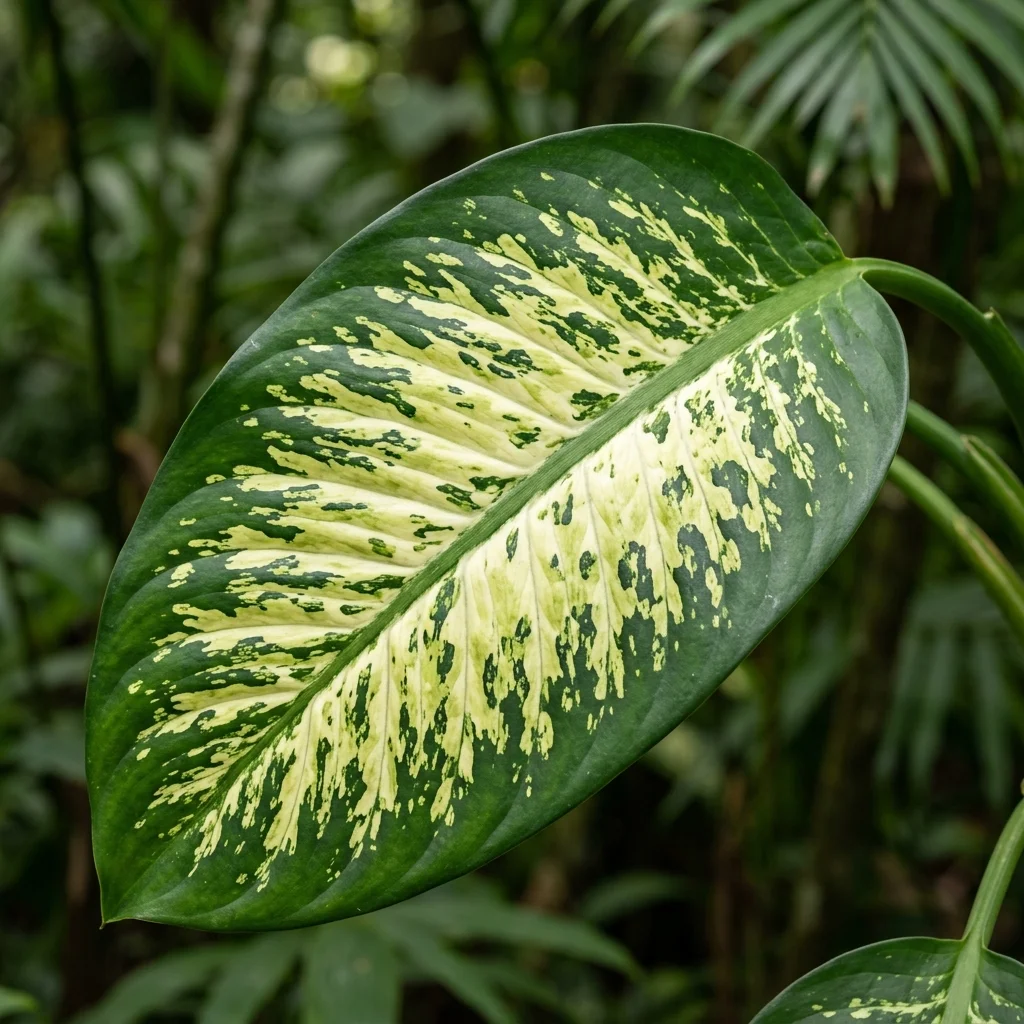
Dieffenbachia seguine, the classic Dumb Cane, is a timeless, exceptionally bold tropical foliage favorite. Famous for its thick canes and massive oval leaves splashed with a beautiful, complex marbled pattern of cream, yellow, and green, it offers an instant tropical jungle vibe to bright rooms.


Sunlight Icon
Sunlight Medium to Bright Indirect Light
Watering Icon
Watering Moderate
Soil Mix Icon
Soil Mix Rich Fast-draining Soil
Temperature Icon
Temperature 18°C - 27°C
Toxicity Warning Icon
Toxicity Highly Toxic to Pets
Botanical macro photography of Dumb Cane (Dieffenbachia seguine) - Plant AI care database

How to Identify Dumb Cane

Dumb Cane (Dieffenbachia seguine) is a remarkable ornamental species widely appreciated for its unique aesthetic and structural foliage. Recognizing its definitive visual traits is key to distinguishing it from other similar plants.

  • Key Visual Features: Thick cane-like stems packed with massive, broad oval leaves displaying heavily marbled yellow-cream variegation.
  • Color Variations: emerald-green borders with stark contrasting yellow-cream marbled centers; leaf veins are light green.
  • Common Confusions: Confused with Aglaonema Spring Snow (which stays much smaller, has pure white stems, and is less toxic than Dieffenbachia).
💡 Plant AI Tip: Not sure? Take a photo with Plant AI to identify your houseplants instantly.

Complete Care & Cultivation Guide

Follow our detailed scientific care guide to keep your Dumb Cane thriving and gorgeous all year round.

Water when the top 2 inches of potting mix feel dry. Do not let the soil dry out completely, but avoid soggy roots.
Prune in spring to maintain desired height. Always wear gloves to protect from the highly irritating, toxic milky sap.
Apply half-strength liquid foliage fertilizer once every 4 weeks in spring and summer. Skip winter feeding.
Thrives in bright to medium indirect light. Variegation will fade, and leaves will turn green if kept in dim light.
Rich, well-draining potting mix: 2 parts organic potting soil, 1 part peat moss, and 1 part perlite.
Easily propagated by stem cuttings or 'cane cuttings' placed in moist soil under warm, humid conditions.
Stable warm room temperatures (18°C-27°C). Highly sensitive to cold drafts, which cause immediate leaf dropping.
Repot every 2 years in spring into a larger pot with drainage holes. Snug pots prevent root rot.
Prone to mealybugs, scale, and spider mites. Wipe the massive leaves monthly with a damp cloth.
Susceptible to root rot if overwatered, and Erwinia bacterial rot if stems remain wet.
Always wash hands immediately after handling this plant. Keep far away from pets and curious children.

Is your Dumb Cane leaves turning yellow, dry or brown?

Keep your indoor garden vibrant. Take a photo with Plant AI to diagnose pests and leaf spot diseases instantly.

Diagnose My Plant

Common Diseases & Treatment

Erwinia Stem Rot

Symptoms: Stems turn soft, mushy, black, and emit a foul smell near the soil line.

Action: Cut off infected canes immediately, disinfect tools, and reduce humidity.

Root Rot

Symptoms: Leaves turn yellow, drop off rapidly, and roots turn black and mushy.

Action: Trim rotten roots and repot immediately into fresh, fast-draining chunky potting soil.

Frequently Asked Questions

Why is it called Dumb Cane?

Its sap contains calcium oxalate crystals. If chewed, it causes severe swelling of the mouth and vocal cords, making it impossible to speak.

Why are my Dieffenbachia leaf tips turning brown?

Brown leaf tips are typically caused by low humidity, dry drafts, or chemicals in tap water. Use filtered water and use a humidifier.

How large does Dumb Cane grow?

Indoors, it can grow up to 4-6 feet tall, forming a beautiful, lush clump of structural tropical foliage.

Is Dieffenbachia safe for cats?

No! It is highly toxic to dogs and cats, causing severe oral pain, swelling of the tongue and throat, drooling, and vomiting.

No more dying plants. Grow healthy greens today!

Get Started for Free