Ficus Audrey Care & Identification Guide
Ficus benghalensis 'Audrey', the gorgeous sacred Banyan tree cultivar, is rapidly becoming the modern darling of interior decorators. Showcasing striking matte, velvet-textured emerald leaves with bright cream-white veins offset by a smooth, ghostly-pale white bark, it offers a softer, more sophisticated minimalist aesthetic than the Fiddle Leaf Fig.





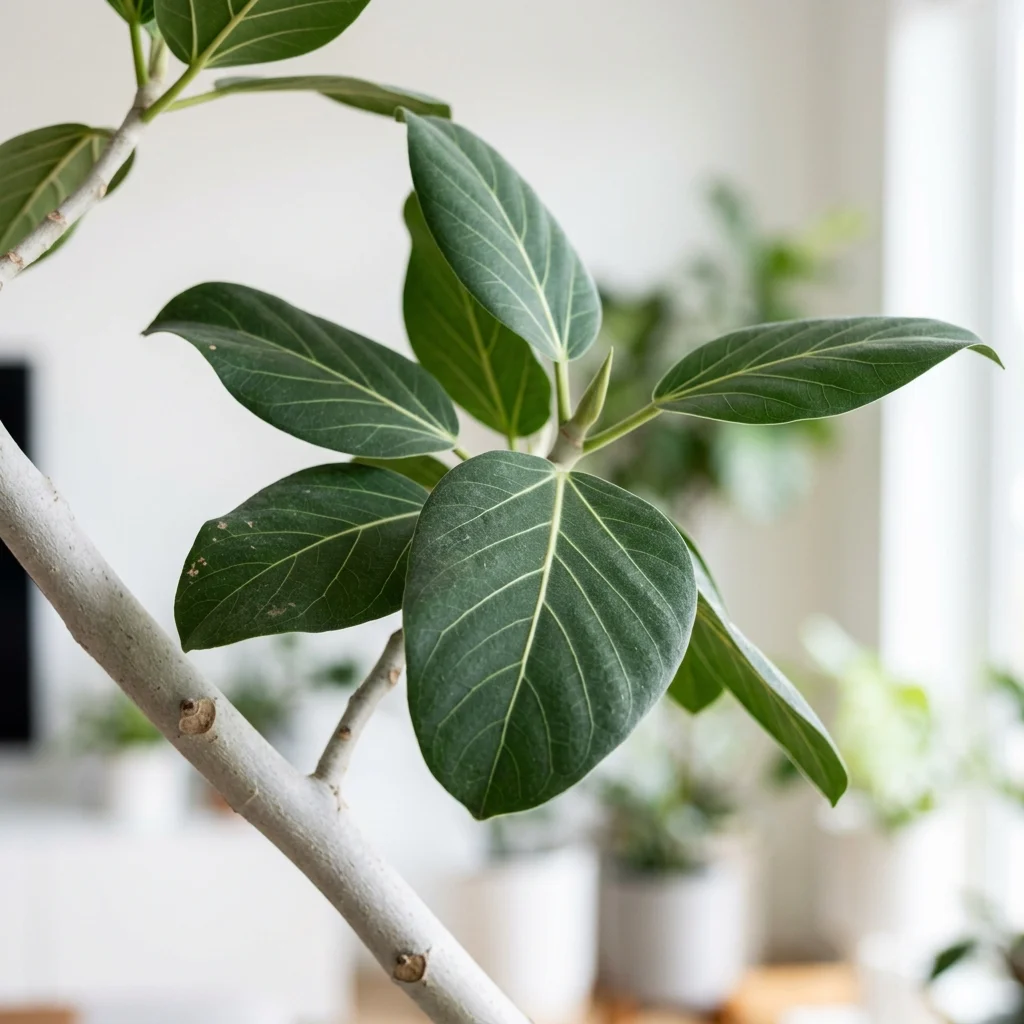
How to Identify Ficus Audrey
Ficus Audrey (Ficus benghalensis 'Audrey') is a remarkable ornamental species widely appreciated for its unique aesthetic and structural foliage. Recognizing its definitive visual traits is key to distinguishing it from other similar plants.
-
✔
Key Visual Features: Matte, velvety oval leaves with glowing pale cream-white veins growing on a stunning, smooth light-gray or white bark trunk.
-
✔
Color Variations: Matte emerald-green leaves with highly defined silver-cream veins; new leaves display a soft velvety texture.
-
✔
Common Confusions: Confused with Rubber Plant (which has thick glossy leathery leaves, whereas Audrey has matte, velvety leaves with cream veins).
Complete Care & Cultivation Guide
Follow our detailed scientific care guide to keep your Ficus Audrey thriving and gorgeous all year round.
Common Diseases & Treatment
Root Rot
Symptoms: Lower leaves develop dark brown or black spots, turn yellow, and drop off.
Leaf Spotting (Fungal)
Symptoms: Small brown spots with yellow halos expand on the matte velvety leaves.
Frequently Asked Questions
Is Ficus Audrey easier to care for than a Fiddle Leaf Fig?
Yes! Ficus Audrey is generally considered much more robust, less finicky, and less prone to dropping leaves in response to minor stress.
Why are the leaves of my Ficus Audrey dropping?
Sudden leaf drop is typically triggered by cold drafts, insufficient light, or overwatering. Ensure it gets plenty of bright indirect light.
How large does Ficus Audrey grow indoors?
Indoors, Ficus Audrey can easily grow up to 6-10 feet tall, serving as a stunning, structural tall focal plant.
Is Ficus Audrey toxic to dogs?
Yes, like all Ficus trees, its milky sap is toxic to dogs and cats, causing severe oral irritation and gastrointestinal distress if chewed.