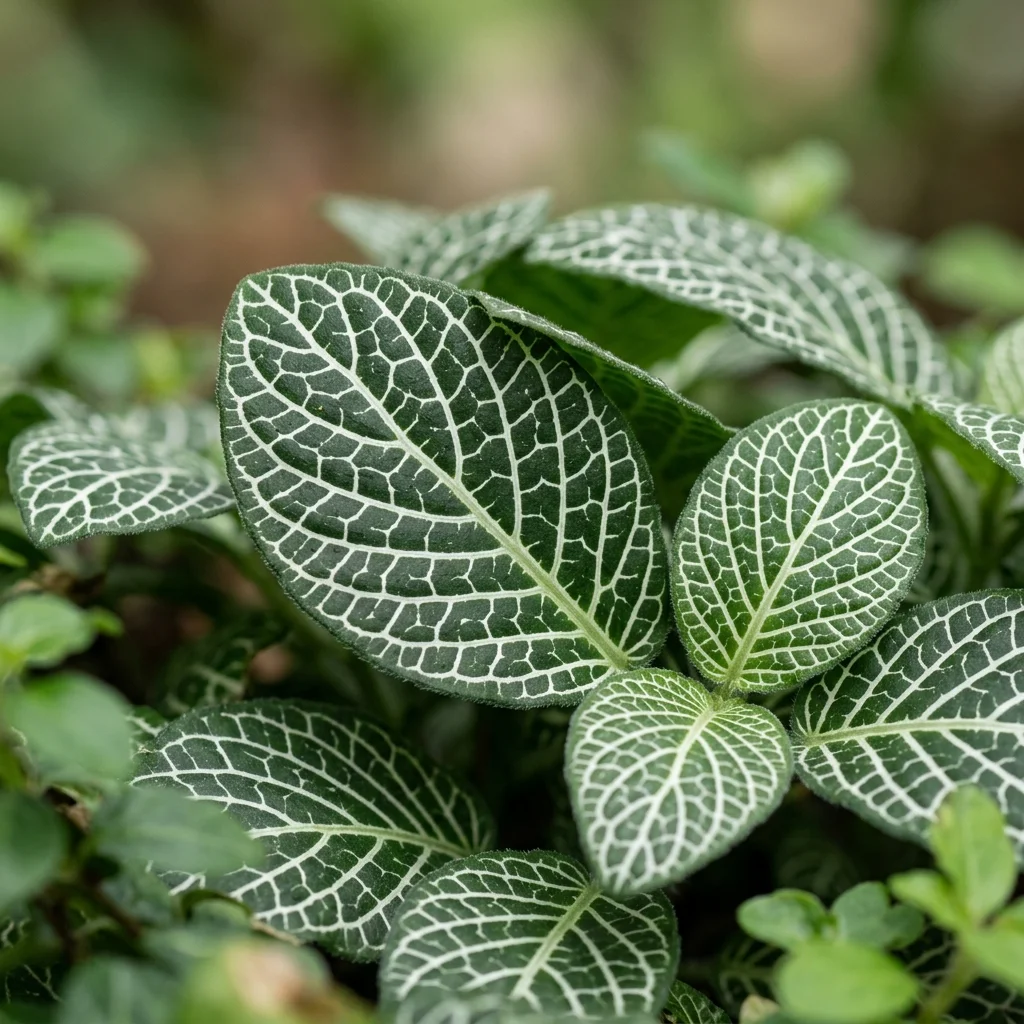
Fittonia albivenis

White Nerve Plant Care & Identification Guide

Fittonia albivenis, the classic White Nerve Plant or Mosaic Plant, is a breathtaking, highly detailed tropical native. Prized for its compact crawling growth and dark green leaves beautifully painted with a complex network of pure white veins, it provides an exceptionally intricate, mosaic-like designer statement.


Sunlight Icon
Sunlight Medium to Bright Indirect Light
Watering Icon
Watering Moderate (High moisture)
Soil Mix Icon
Soil Mix Rich Porous Peat Mix
Temperature Icon
Temperature 18°C - 26°C
Toxicity Warning Icon
Toxicity Completely Non-Toxic
Botanical macro photography of White Nerve Plant (Fittonia albivenis) - Plant AI care database

How to Identify White Nerve Plant

White Nerve Plant (Fittonia albivenis) is a remarkable ornamental species widely appreciated for its unique aesthetic and structural foliage. Recognizing its definitive visual traits is key to distinguishing it from other similar plants.

  • Key Visual Features: Compact crawling leaves display a highly detailed, mosaic-like network of pure white veins on a dark green base.
  • Color Variations: Deep olive-green foliage with stark contrasting silvery-white veins; stems are slightly hairy.
  • Common Confusions: Confused with Fittonia albivenis 'Skeleton' (which has a network of bright red-pink veins, rather than pure white veins).
💡 Plant AI Tip: Not sure? Take a photo with Plant AI to identify your houseplants instantly.

Complete Care & Cultivation Guide

Follow our detailed scientific care guide to keep your White Nerve Plant thriving and gorgeous all year round.

Water when the top inch of potting soil feels dry. Highly sensitive to dry soil; will collapse dramatically when thirsty.
Pinch back the growing tips in spring to maintain a dense, compact carpet-like growth. Pinch off small green flower spikes.
Apply half-strength liquid foliage fertilizer once every 4 weeks in spring and summer. Skip winter feeding.
Requires bright to medium indirect light. Too much direct sun will bleach the white veins and burn the delicate foliage.
Rich, porous potting mix: 2 parts organic potting soil, 2 parts peat moss, and 1 part perlite to retain light moisture.
Easily propagated via stem cuttings rooted in water or directly in moist soil under warm, humid conditions.
Stable warm room temperatures (18°C-26°C). Highly sensitive to cold drafts and temperatures below 15°C.
Repot every year in spring. Prefers shallow containers as it has a very shallow, delicate root system.
Prone to fungus gnats, mealybugs, and spider mites in dry air. Spray weekly with organic neem oil.
Susceptible to root rot if soil remains soggy, and powdery mildew if foliage remains wet.
This plant is famous for fainting. If it collapses dramatically, water it deeply and it will perk up fully in a few hours.

Is your White Nerve Plant leaves turning yellow, dry or brown?

Keep your indoor garden vibrant. Take a photo with Plant AI to diagnose pests and leaf spot diseases instantly.

Diagnose My Plant

Common Diseases & Treatment

Root Rot

Symptoms: Leaves turn yellow or brown, drop off rapidly, and roots turn black and mushy.

Action: Trim rotten roots and repot instantly into fresh, fast-draining chunky potting soil.

Fainting (Dehydration)

Symptoms: Stems and leaves go completely limp, collapsing flat against the pot, without turning brown.

Action: Water the plant deeply immediately; it will fully recover its upright posture within 2 hours.

Frequently Asked Questions

Why is my Nerve Plant fainting so often?

Fittonia has a very shallow root system and thin leaves, meaning it transpires water quickly. Do not let the potting soil dry out completely.

Can I grow White Nerve Plant in a closed terrarium?

Yes! Fittonia loves constant high humidity (above 60%) and warm temperatures, making it one of the absolute best plants for terrariums.

Is White Nerve Plant safe for cats?

Yes! Fittonia albivenis is completely non-toxic and 100% safe for cats, dogs, and all other household pets.

How do I make my Nerve Plant bushier?

Pinch off the top pair of leaves on each stem in spring. This forces the stem to grow two new side branches, creating a dense dome.

No more dying plants. Grow healthy greens today!

Get Started for Free