Red Nerve Plant Care & Identification Guide
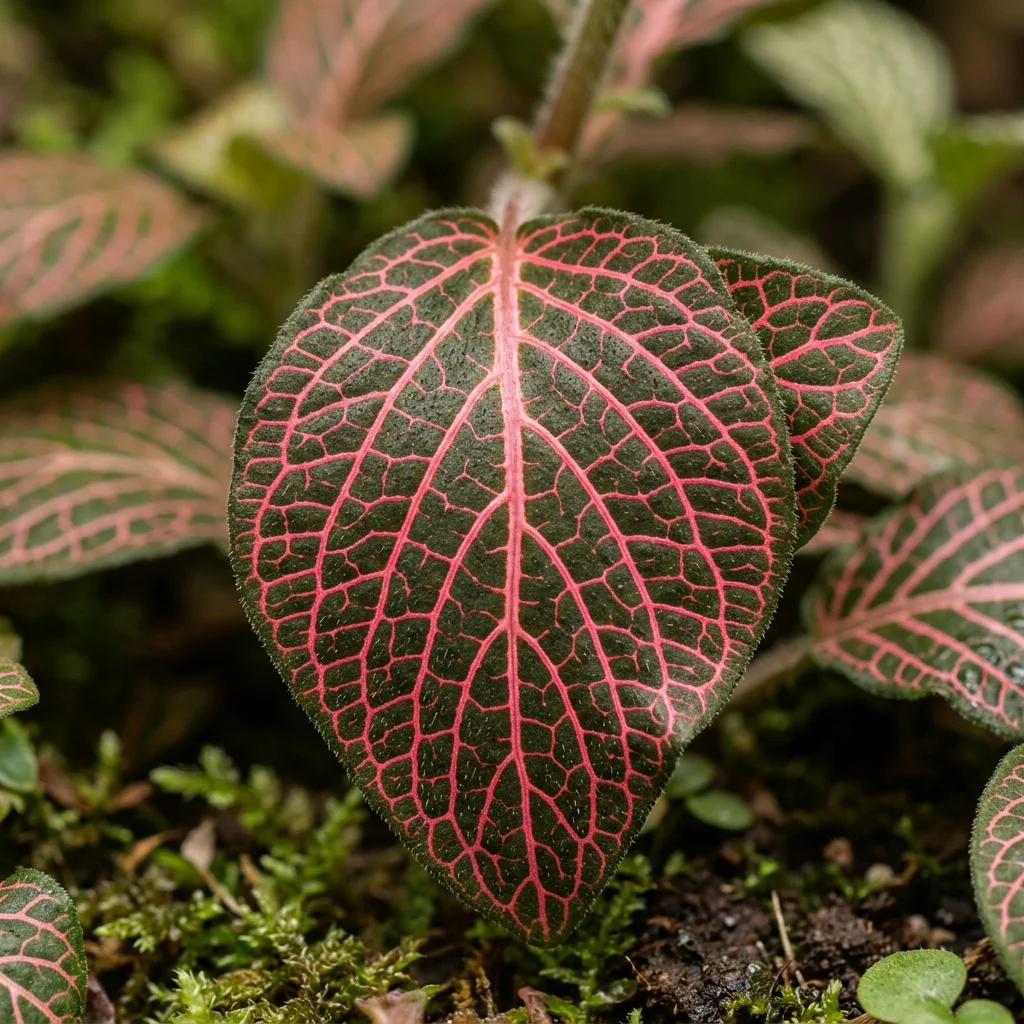
Fittonia albivenis 'Skeleton', the highly dramatic Red Nerve Plant or Skeleton Plant, is a breathtaking, highly detailed tropical native. Prized for its compact crawling growth and dark green leaves beautifully painted with an incredibly intricate, glowing network of bright red-pink veins resembling a skeleton, it provides a premium neon-like statement.




How to Identify Red Nerve Plant
Red Nerve Plant (Fittonia albivenis 'Skeleton') is a remarkable ornamental species widely appreciated for its unique aesthetic and structural foliage. Recognizing its definitive visual traits is key to distinguishing it from other similar plants.
-
✔
Key Visual Features: Compact crawling leaves display a highly detailed, glowing network of bright red-pink veins on a dark green base.
-
✔
Color Variations: Deep olive-green foliage with stark contrasting bright red-pink veins; stems are slightly hairy.
-
✔
Common Confusions: Confused with Fittonia albivenis (White Nerve Plant, which has a network of pure white veins, rather than red-pink veins).
Complete Care & Cultivation Guide
Follow our detailed scientific care guide to keep your Red Nerve Plant thriving and gorgeous all year round.
Common Diseases & Treatment
Root Rot
Symptoms: Leaves turn yellow or brown, drop off rapidly, and roots turn black and mushy.
Fainting (Dehydration)
Symptoms: Stems and leaves go completely limp, collapsing flat against the pot, without turning brown.
Frequently Asked Questions
Why is my Red Nerve Plant turning yellow?
Yellowing leaves are typically a sign of overwatering or root rot. Fittonia loves moisture, but the soil must be aerated and never waterlogged.
How do I maintain the bright red color of my Skeleton plant?
Keep it in a bright spot with plenty of indirect sunlight. If light is too low, the red color will fade, and the leaves will turn green.
Is Red Nerve Plant safe for cats?
Yes! Fittonia albivenis 'Skeleton' is completely non-toxic and 100% safe for cats, dogs, and all other household pets.
How fast does Red Nerve Plant grow?
It has a slow to moderate crawling growth rate, easily spreading to carpet the potting soil within a few months in warm, humid conditions.