Variegated Adansonii Care & Identification Guide
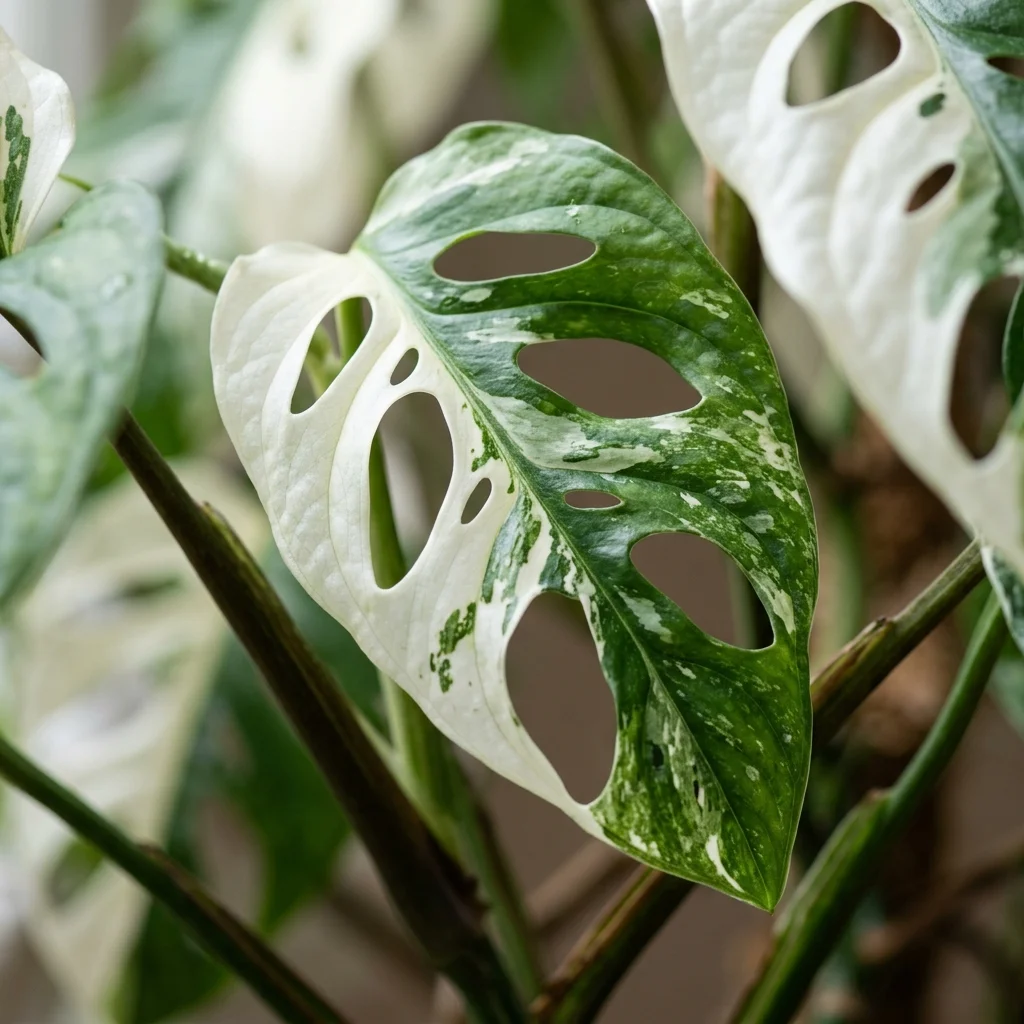
Monstera adansonii 'Variegata', the Variegated Monkey Mask Monstera, is one of the most coveted, luxurious, and visually striking plants in the global horticultural trade. Prized for its compact, trailing or climbing stems draped with delicate, fenestrated (hole-filled) leaves, it features dramatic, high-contrast splashes of marble-white, cream, and mint-green variegation.





How to Identify Variegated Adansonii
Variegated Adansonii (Monstera adansonii 'Variegata') is a remarkable ornamental species widely appreciated for its unique aesthetic and structural foliage. Recognizing its definitive visual traits is key to distinguishing it from other similar plants.
-
✔
Key Visual Features: Fenestrated (hole-filled) leaves displaying dramatic, splashy white, cream, and mint-green variegation, with some leaves showing half-moon patterns.
-
✔
Color Variations: High-contrast variegation of pure marble-white and cream-yellow on a deep green leaf blade; stems are yellow-green striped with white.
-
✔
Common Confusions: Confused with standard Monstera adansonii (which has solid green leaves, while Variegated Adansonii has bold white variegation).
Complete Care & Cultivation Guide
Follow our detailed scientific care guide to keep your Variegated Adansonii thriving and gorgeous all year round.
Common Diseases & Treatment
Root Rot
Symptoms: Leaves turn yellow, white variegated parts turn brown and mushy, and roots turn blackish-brown and soft.
Browning Variegation
Symptoms: The beautiful white patches of the leaves turn papery, dry, and crispy brown, spreading rapidly.
Frequently Asked Questions
Why are the white parts of my Variegated Adansonii turning brown?
White leaf areas lack chlorophyll and are fragile. Brown edges are caused by low humidity, dry soil, or too much direct sun. Boost humidity above 60%.
Can I grow this plant in low light?
No, Variegated Adansonii will revert to solid green in low light to survive. It requires bright, abundant indirect light to maintain its white patterns.
How do I propagate my Variegated Adansonii?
Snip a stem cutting with a node and a leaf, and root it in damp sphagnum moss. Keep it under a humidity dome in a warm, bright spot.
Is Variegated Adansonii safe for pets?
No. Like all Monstera species, it contains calcium oxalate crystals which are toxic to dogs and cats, causing mouth irritation and vomiting.