Goeppertia makoyana

Peacock Plant Care & Identification Guide

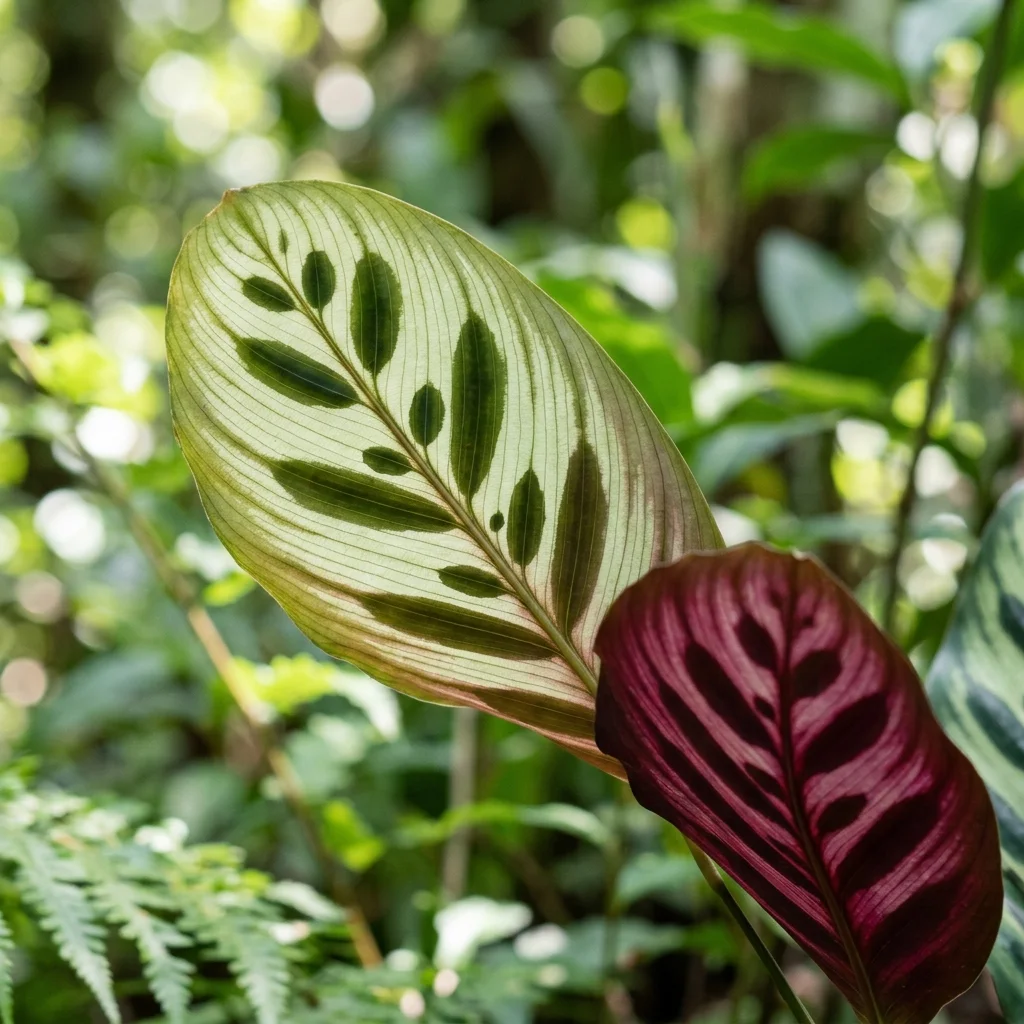
Goeppertia makoyana, famously known as the Peacock Plant, is a stunning tropical showpiece prized for its exceptionally intricate, paper-thin foliage. Displaying pale green translucent leaves patterned with dark green feather-like blotches that mimic a peacock's tail, it features a deep purple mirror-pattern on the underside that rises at night.


Sunlight Icon
Sunlight Medium Indirect Light
Watering Icon
Watering Moderate
Soil Mix Icon
Soil Mix Peaty Well-draining Mix
Temperature Icon
Temperature 18°C - 24°C
Toxicity Warning Icon
Toxicity Non-Toxic to Pets
Botanical macro photography of Peacock Plant (Goeppertia makoyana) - Plant AI care database

How to Identify Peacock Plant

Peacock Plant (Goeppertia makoyana) is a remarkable ornamental species widely appreciated for its unique aesthetic and structural foliage. Recognizing its definitive visual traits is key to distinguishing it from other similar plants.

  • Key Visual Features: Thin, translucent, pale green leaves with striking dark green feather-like patterns radiating from the center; purple mirror-patterns on backs.
  • Color Variations: Pale cream-green background with deep olive-green feather spots; solid deep red-purple under-leaf display.
  • Common Confusions: Confused with Calathea medallion (which has circular border rings instead of delicate translucent feathers) or Calathea orbifolia.
💡 Plant AI Tip: Not sure? Take a photo with Plant AI to identify your houseplants instantly.

Complete Care & Cultivation Guide

Follow our detailed scientific care guide to keep your Peacock Plant thriving and gorgeous all year round.

Water when the top inch of soil is dry. Use room-temperature filtered water. It prefers consistently moist, well-aerated soil.
Prune older yellowed outer leaves in spring. Trim crispy leaf tips with sharp sterilized scissors, leaving a tiny margin of brown to avoid re-damaging tissue.
Feed once a month in spring and summer with a balanced organic liquid food diluted to half strength. Never feed in winter.
Requires consistent, medium indirect light. Direct sunlight easily burns the paper-thin foliage and washes out the feather pattern.
Aerated peat-rich mixture: 50% peat moss, 30% perlite, 10% orchid bark, and 10% organic compost. pH 6.0-6.5.
Propagated by division during spring repotting. Carefully separate rhizomes, ensuring each clump has ample roots and leaves.
Warm tropical spaces (18°C-24°C). Protect from cold window panes, drafty doors, and sudden drops below 15°C.
Fares beautifully in shallow clay or plastic pots. Repot every 1-2 years to provide fresh nutrients and expand the root space.
Prone to spider mites in dry seasons. Keep relative humidity above 50% and clean foliage with a damp cloth monthly.
Vulnerable to Pseudomonas blight and root rot if soil lacks drainage and remains soggy for extended periods.
Place near other plants to create a humid microclimate. The Peacock Plant is slightly more tolerant than other calatheas but loves humidity.

Is your Peacock Plant leaves turning yellow, dry or brown?

Keep your indoor garden vibrant. Take a photo with Plant AI to diagnose pests and leaf spot diseases instantly.

Diagnose My Plant

Common Diseases & Treatment

Pseudomonas Blight

Symptoms: Water-soaked, dark spots spread rapidly across the thin leaf tissue, turning mushy.

Action: Remove infected foliage immediately, avoid misting leaves, improve airflow, and treat with copper fungicide.

Root Rot

Symptoms: Leaves yellow and wilt; stems drop and rot at soil level; roots turn black and stringy.

Action: Prune rotten roots and repot in fresh, highly porous, fast-draining soil mix.

Frequently Asked Questions

Why are the leaves of my Peacock Plant folding up at night?

This is a natural process called nyctinasty. The plant folds its leaves vertically at night to conserve heat and moisture, lowering them in the morning.

Why are the leaves of my Peacock Plant turning yellow?

Yellowing leaves are usually a sign of overwatering or root rot. Let the top inch of soil dry out more between waterings and ensure excellent drainage.

Is the Peacock Plant hard to care for?

It is moderate! While it requires consistent moisture and humidity, it is more adaptable to average indoor light than many other Calatheas.

Is the Peacock Plant safe for cats?

Yes, Goeppertia makoyana is completely safe, non-toxic, and friendly for cats, dogs, and all household pets.

No more dying plants. Grow healthy greens today!

Get Started for Free