Chinese Money Plant Care & Identification Guide
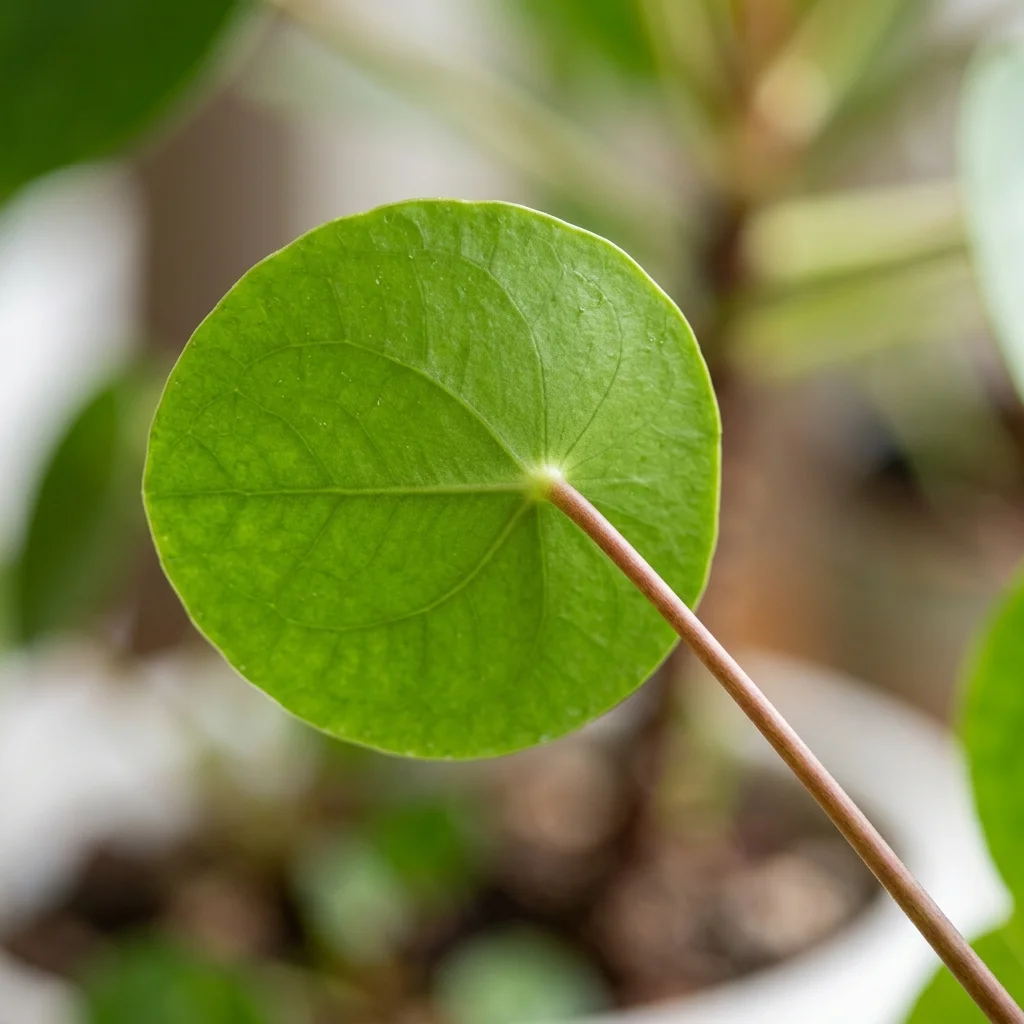
Pilea peperomioides, famously known as the Chinese Money Plant, UFO Plant, or Pancake Plant, is a beloved mid-century modern staple. Prize-winning for its perfectly round, flat, bright green leaves that balance gracefully on long, thin petioles arching from a central upright stem, it is highly sought-after for its unique geometric symmetry and ease of propagation.




How to Identify Chinese Money Plant
Chinese Money Plant (Pilea peperomioides) is a remarkable ornamental species widely appreciated for its unique aesthetic and structural foliage. Recognizing its definitive visual traits is key to distinguishing it from other similar plants.
-
✔
Key Visual Features: Perfect circular, pancake-shaped bright green leaves attached to long, thin stems that grow symmetrically from a single upright stalk.
-
✔
Color Variations: Uniform chartreuse to emerald green foliage; older stems turn woody and pale brown; rare variegation has white mottling.
-
✔
Common Confusions: Confused with Peperomia polybotrya (Raindrop Peperomia, which has much thicker, teardrop-shaped leaves with distinct pointed tips).
Complete Care & Cultivation Guide
Follow our detailed scientific care guide to keep your Chinese Money Plant thriving and gorgeous all year round.
Common Diseases & Treatment
Root Rot
Symptoms: Leaves turn yellow, droop heavily, stem turns mushy near the soil, and roots turn black and soft.
Powdery Mildew
Symptoms: A powdery, white-gray powdery coating covers the round green leaves, causing distortion.
Frequently Asked Questions
Why are my Chinese Money Plant leaves curling inward?
Inward leaf curling (cupping) is typically caused by heat stress, dry drafts, or overwatering. Keep light bright indirect and soil aerated.
How do I get my Chinese Money Plant to produce babies?
A healthy, mature Pilea peperomioides will naturally shoot underground runners that emerge as pups in spring when provided bright indirect light.
Why is my Pilea losing its lower leaves?
Occasional dropping of lower leaves is completely normal as the plant grows taller. If multiple leaves drop, check for overwatering or low light.
Is Chinese Money Plant safe for cats?
Yes! Pilea peperomioides is completely non-toxic and 100% safe for cats, dogs, and all other household pets.