Pink Princess Philodendron Care & Identification Guide
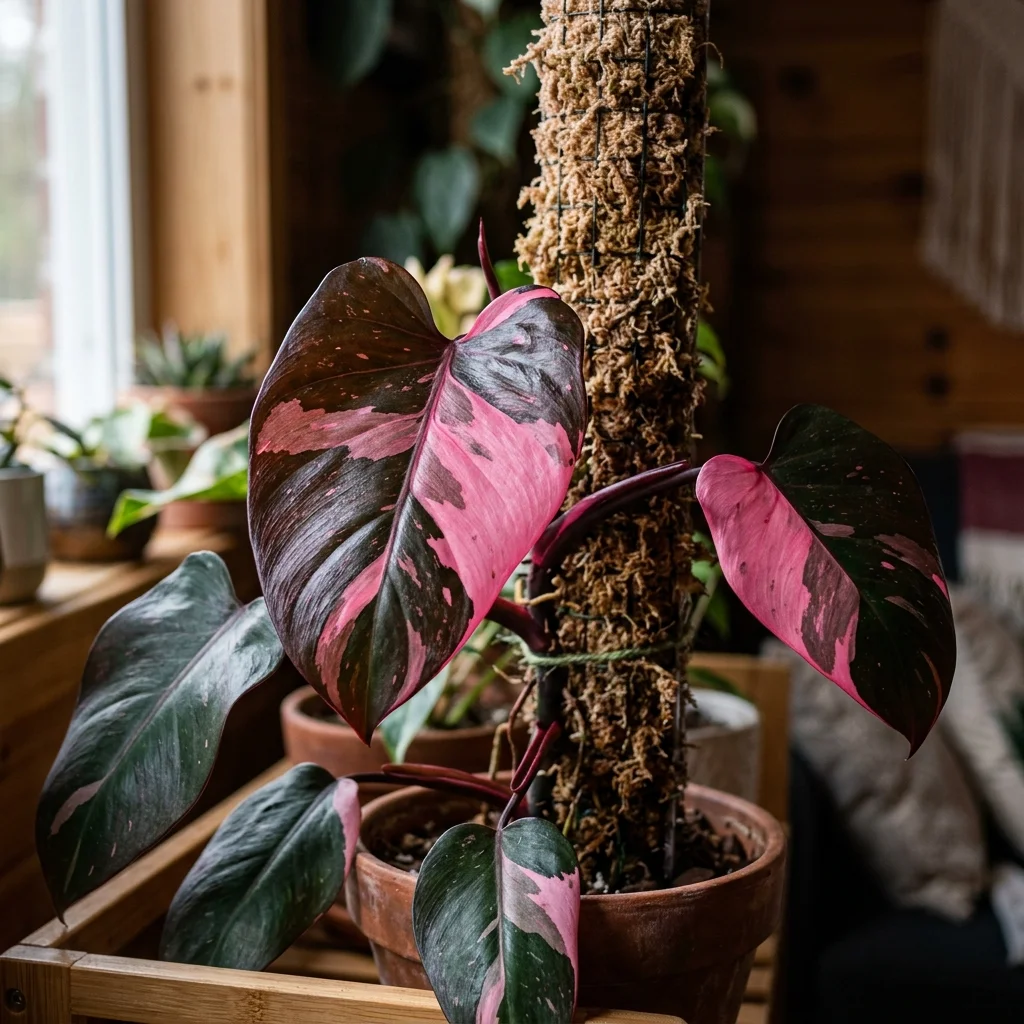
Philodendron erubescens 'Pink Princess' is the ultimate royalty of the houseplant collector world. Highly sought-after for its dramatic color contrast, this stunning climbing cultivar features deep burgundy-green leaves mottled with splashes of bubblegum pink, creating a premium visual display.





How to Identify Pink Princess Philodendron
Pink Princess Philodendron (Philodendron erubescens 'Pink Princess') is a remarkable ornamental species widely appreciated for its unique aesthetic and structural foliage. Recognizing its definitive visual traits is key to distinguishing it from other similar plants.
-
✔
Key Visual Features: Climbing burgundy-black stems bearing dark olive-green leaves mottled with striking bubblegum pink variegation.
-
✔
Color Variations: Deep chocolate-burgundy leaves splashed with pink patches, sectors, or half-moon variegation.
-
✔
Common Confusions: Confused with Philodendron 'Pink Congo' (artificially chemically induced temporary pink foliage, which reverts to plain green).
Complete Care & Cultivation Guide
Follow our detailed scientific care guide to keep your Pink Princess Philodendron thriving and gorgeous all year round.
Common Diseases & Treatment
Root Rot (Fungal)
Symptoms: Leaves turn dull yellow, stems droop, and roots turn mushy and dark.
Foliage Rust
Symptoms: Small orange-brown pustules form on the undersides of the burgundy-pink leaves.
Frequently Asked Questions
How do I get more pink variegation on my Pink Princess?
Provide plenty of bright, indirect sunlight, and strategically prune the plant back to a node that has highly variegated pink tissue.
Why are my Pink Princess leaves turning brown in the pink parts?
The pink parts lack chlorophyll and are highly sensitive to sunburn and dry air. Boost humidity and move the plant out of drafty areas.
Does the Pink Princess climb?
Yes, it is a climbing variety. Providing a moss pole or trellis helps it climb, resulting in larger leaves and better growth.
Is the Pink Princess toxic to dogs?
Yes, like all philodendrons, it contains calcium oxalate crystals. Keep it elevated out of reach of dogs and cats.