Rattlesnake Plant Care & Identification Guide
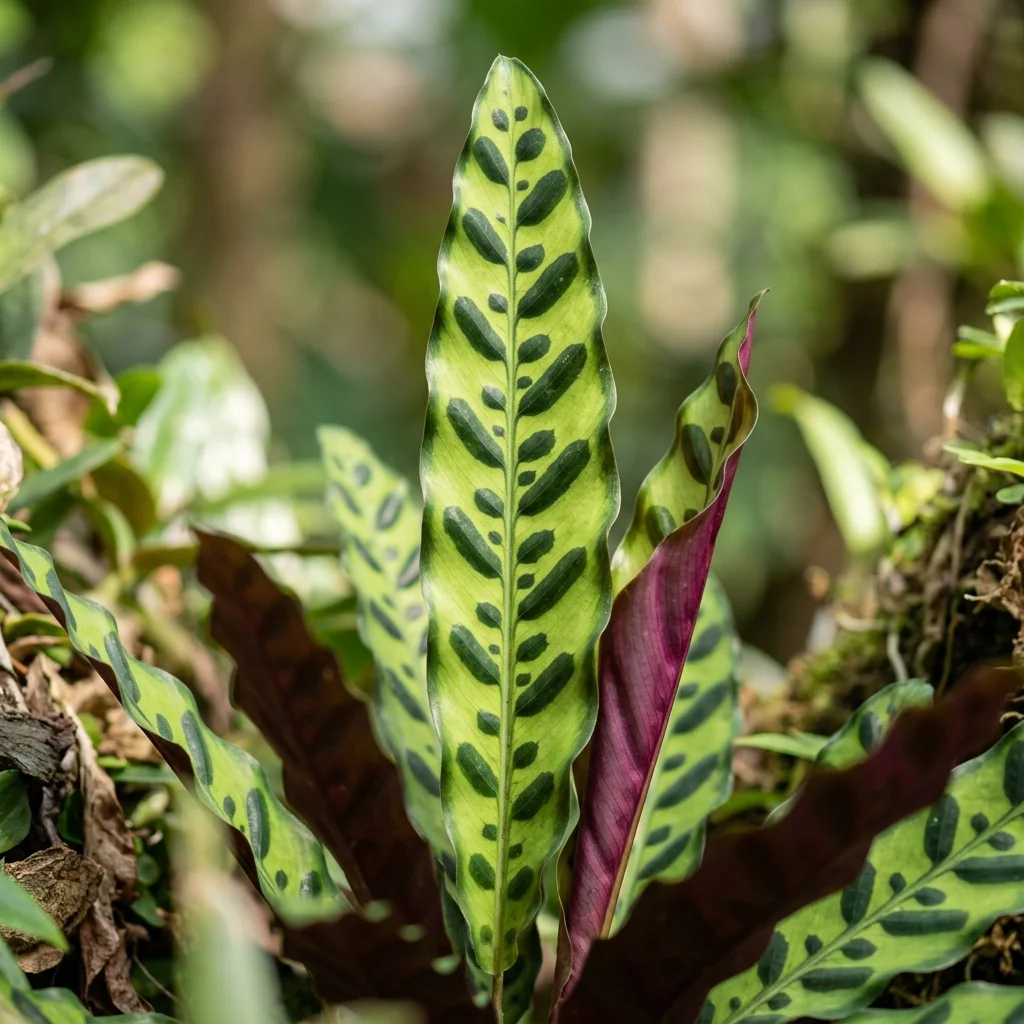
Goeppertia insignis, widely known as the Rattlesnake Plant, is a quirky, highly ornamental tropical native famous for its upright, wavy-edged foliage. Featuring alternating dark green oval spots that resemble reptile markings on a lime-green background, its deep purple-red undersides fold upward at dusk, offering a dynamic, playful botanical display.




How to Identify Rattlesnake Plant
Rattlesnake Plant (Goeppertia insignis) is a remarkable ornamental species widely appreciated for its unique aesthetic and structural foliage. Recognizing its definitive visual traits is key to distinguishing it from other similar plants.
-
✔
Key Visual Features: Elongated, narrow, wavy-edged leaves with alternating large and small dark green spots on a bright light green face; purple undersides.
-
✔
Color Variations: Reptile-like blotched pattern of forest green on lime-green; solid rich royal-purple leaf backs.
-
✔
Common Confusions: Confused with Calathea lancifolia (older naming) or Calathea zebrina (which has uniform stripes instead of spotted blotches).
Complete Care & Cultivation Guide
Follow our detailed scientific care guide to keep your Rattlesnake Plant thriving and gorgeous all year round.
Common Diseases & Treatment
Root Rot (Pythium)
Symptoms: Leaf tips turn yellow and droop; the base of petioles turns black and mushy.
Foliage Spotting
Symptoms: Circular yellow spots develop on the leaves, eventually turning dark brown in the center.
Frequently Asked Questions
Why are the leaves of my Rattlesnake Plant standing straight up?
This is normal behavior! Rattlesnake plants fold their leaves vertically at night (nyctinasty) and lower them horizontally during the day to catch light.
Why are the tips of my Rattlesnake Plant leaves turning brown?
Brown tips are typically caused by low humidity, dry air, or chemicals (fluoride/chlorine) in tap water. Use filtered water and a humidifier.
Can Rattlesnake Plant grow in low light?
Yes, it is highly tolerant of low to medium light, making it a great bathroom or bedroom plant, though growth will be slower than in bright indirect light.
Is Rattlesnake Plant toxic to dogs?
No, Goeppertia insignis is completely non-toxic and safe for dogs, cats, and all other household pets.