Rubber Plant Care & Identification Guide
Ficus elastica, the majestic Rubber Plant or Rubber Tree, is an ultra-classic, bold tropical houseplant. Renowned for its thick, leathery, oblong leaves that showcase a stunning polished, high-gloss shine, it provides unparalleled architectural drama, filtering indoor air while demanding incredibly minimal maintenance.





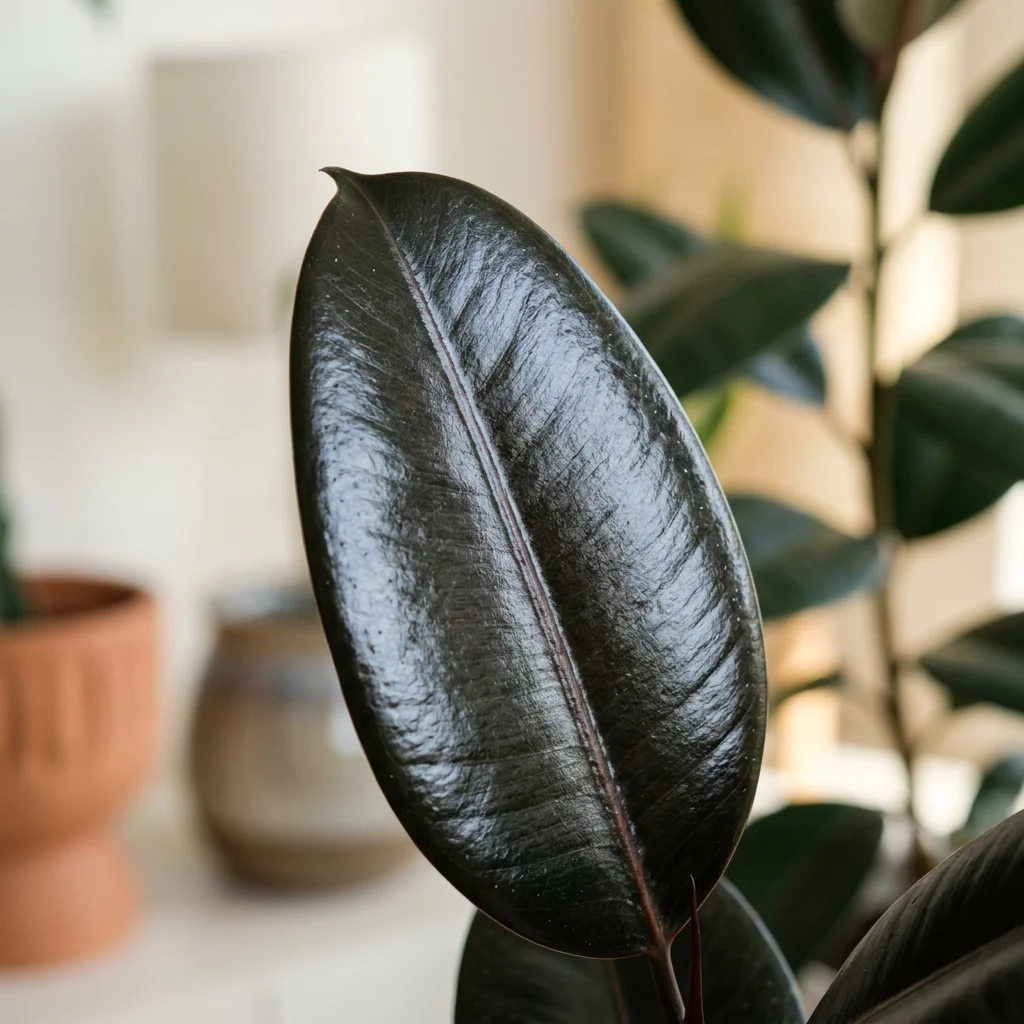
How to Identify Rubber Plant
Rubber Plant (Ficus elastica) is a remarkable ornamental species widely appreciated for its unique aesthetic and structural foliage. Recognizing its definitive visual traits is key to distinguishing it from other similar plants.
-
✔
Key Visual Features: Thick, leathery, oversized oval leaves with a brilliant mirror-like gloss and a distinct red protective sheath covering new growing tips.
-
✔
Color Variations: Deep burgundy-black (Burgundy), solid dark green (Decora), or striking cream and pink variegation (Tineke, Ruby).
-
✔
Common Confusions: Confused with Peperomia obtusifolia (Baby Rubber Plant, which is a small compact species, while Ficus elastica grows into a tree).
Complete Care & Cultivation Guide
Follow our detailed scientific care guide to keep your Rubber Plant thriving and gorgeous all year round.
Common Diseases & Treatment
Root Rot
Symptoms: Leaves yellow, wilt, and drop off; stems turn mushy and dark near the base; roots turn mushy and black.
Sooty Mold
Symptoms: A powdery, soot-like black layer covers the glossy leaf surfaces, usually following a pest infestation.
Frequently Asked Questions
Why are the leaves of my Rubber Plant turning yellow and falling off?
Yellowing and dropping leaves is almost always a sign of overwatering. Let the potting mix dry out completely before watering again.
How fast does a Rubber Plant grow indoors?
In bright indirect light, it is a fast grower, easily growing 1 to 2 feet per year, eventually reaching ceiling height.
Can I grow a Rubber Plant in low light?
Solid green varieties can tolerate medium light, but variegated types like 'Tineke' will lose their variegation and turn green.
Is the white sap of a Rubber Plant dangerous?
Yes, the milky latex sap is toxic to pets and irritating to human skin. Always wash hands immediately if you come into contact with it.