Split Leaf Philodendron Care & Identification Guide
Thaumatophyllum bipinnatifidum, formerly known as Philodendron selloum, is a massive, spectacular tropical plant famous for its deeply lobed, ruffled leaves. Growing from a sturdy, tree-like central trunk, it commands attention in modern spaces, offering a bold architectural silhouette and jungle-like grandeur.





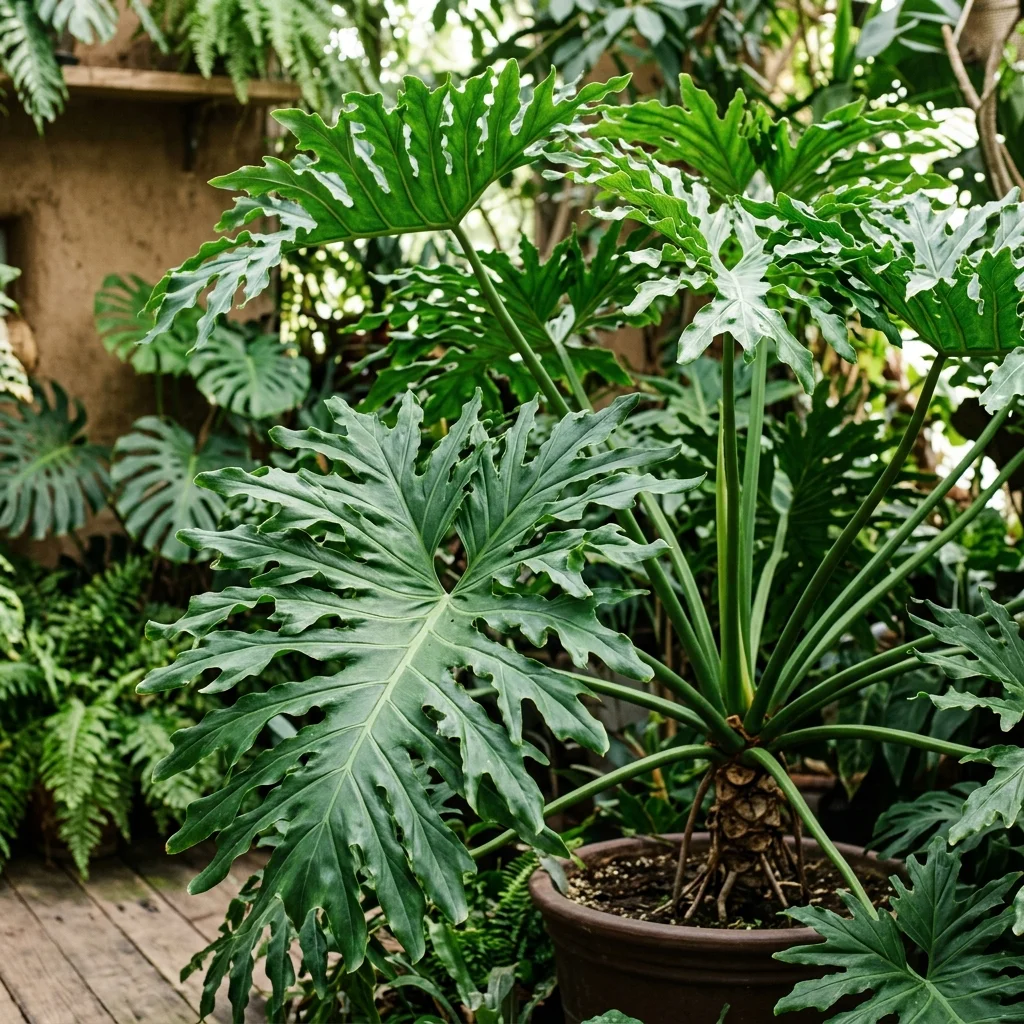
How to Identify Split Leaf Philodendron
Split Leaf Philodendron (Thaumatophyllum bipinnatifidum) is a remarkable ornamental species widely appreciated for its unique aesthetic and structural foliage. Recognizing its definitive visual traits is key to distinguishing it from other similar plants.
-
✔
Key Visual Features: Huge, deeply lobed, ruffled dark green leaves growing on long, thick petioles from a woody, tree-like central stem.
-
✔
Color Variations: Shiny, rich, deep emerald green leaves with prominent pale yellow veins.
-
✔
Common Confusions: Confused with Monstera deliciosa (which has leaf holes/fenestrations, whereas Selloum has deeply cut lobed margins but no enclosed holes).
Complete Care & Cultivation Guide
Follow our detailed scientific care guide to keep your Split Leaf Philodendron thriving and gorgeous all year round.
Common Diseases & Treatment
Bacterial Blight (Erwinia)
Symptoms: Wet, rapidly spreading dark spots on leaves that emit a rotting, fishy odor.
Root Rot (Fungal)
Symptoms: Leaves turn soft yellow and stems droop; roots turn black and mushy.
Frequently Asked Questions
Why is my Selloum growing long, leggy stems?
Leggy growth with long petioles is a clear sign of inadequate light. Move your plant to a brighter location with bright, indirect sunlight.
What is the difference between Selloum and Monstera?
Monstera deliciosa has fenestrations (enclosed holes) in its leaves, while Selloum has deeply lobed, ruffled edges but no enclosed holes.
Does Selloum grow a woody trunk?
Yes! As Selloum grows, lower leaves drop off, leaving distinctive circular eye-like scars on a sturdy, thick, woody tree-like trunk.
Is Thaumatophyllum bipinnatifidum toxic to pets?
Yes, it contains calcium oxalate crystals. It is toxic to pets, causing swelling of the mouth and throat if chewed; keep out of reach.