Silver Sword Philodendron Care & Identification Guide
Philodendron hastatum, commonly known as the Silver Sword Philodendron, is a striking climbing plant prized for its metallic, silver-blue foliage. With unique sword-shaped leaves and thick, vigorous stems, it climbs trellises or moss poles effortlessly, providing a sleek, modern, metallic aesthetic.





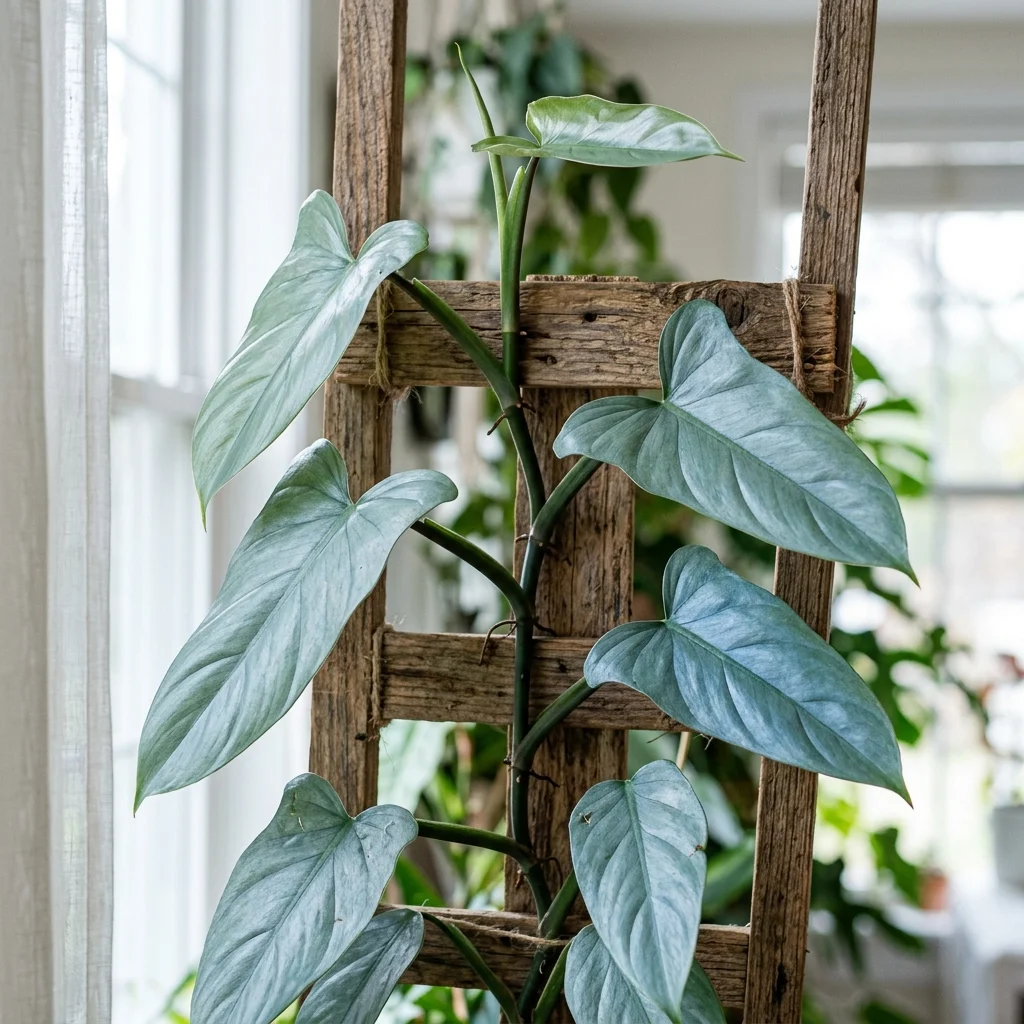
How to Identify Silver Sword Philodendron
Silver Sword Philodendron (Philodendron hastatum) is a remarkable ornamental species widely appreciated for its unique aesthetic and structural foliage. Recognizing its definitive visual traits is key to distinguishing it from other similar plants.
-
✔
Key Visual Features: Elongated, arrowhead or sword-shaped leaves with a metallic silver-blue to pale gray-green sheen.
-
✔
Color Variations: Bright metallic silver-blue when young; matures to a slightly deeper bluish-green leaf coloration.
-
✔
Common Confusions: Confused with Philodendron bipennifolium (Violin Philodendron) due to leaf shape, but distinguished by the distinct metallic silver sheen.
Complete Care & Cultivation Guide
Follow our detailed scientific care guide to keep your Silver Sword Philodendron thriving and gorgeous all year round.
Common Diseases & Treatment
Root Rot (Fungal)
Symptoms: Metallic leaves look limp and dull; base stems turn mushy and dark.
Leaf Spot (Fungal)
Symptoms: Dark spots with yellow borders form on the metallic silver-blue leaf surfaces.
Frequently Asked Questions
Why is my Silver Sword losing its silver color?
A dull green appearance is usually due to inadequate light. Move your Silver Sword to a brighter spot with plenty of indirect sunlight.
Does Philodendron hastatum climb?
Yes! It is a vigorous climber. Providing a moss pole or trellis is highly recommended to support its growth and mature leaf development.
How fast does Silver Sword Philodendron grow?
With bright indirect light and climbing support, it is a fast grower, easily climbing several feet in a single growing season.
Is Silver Sword Philodendron safe for pets?
No, it contains calcium oxalate crystals. It is toxic to pets, causing mouth irritation and digestive distress if chewed.