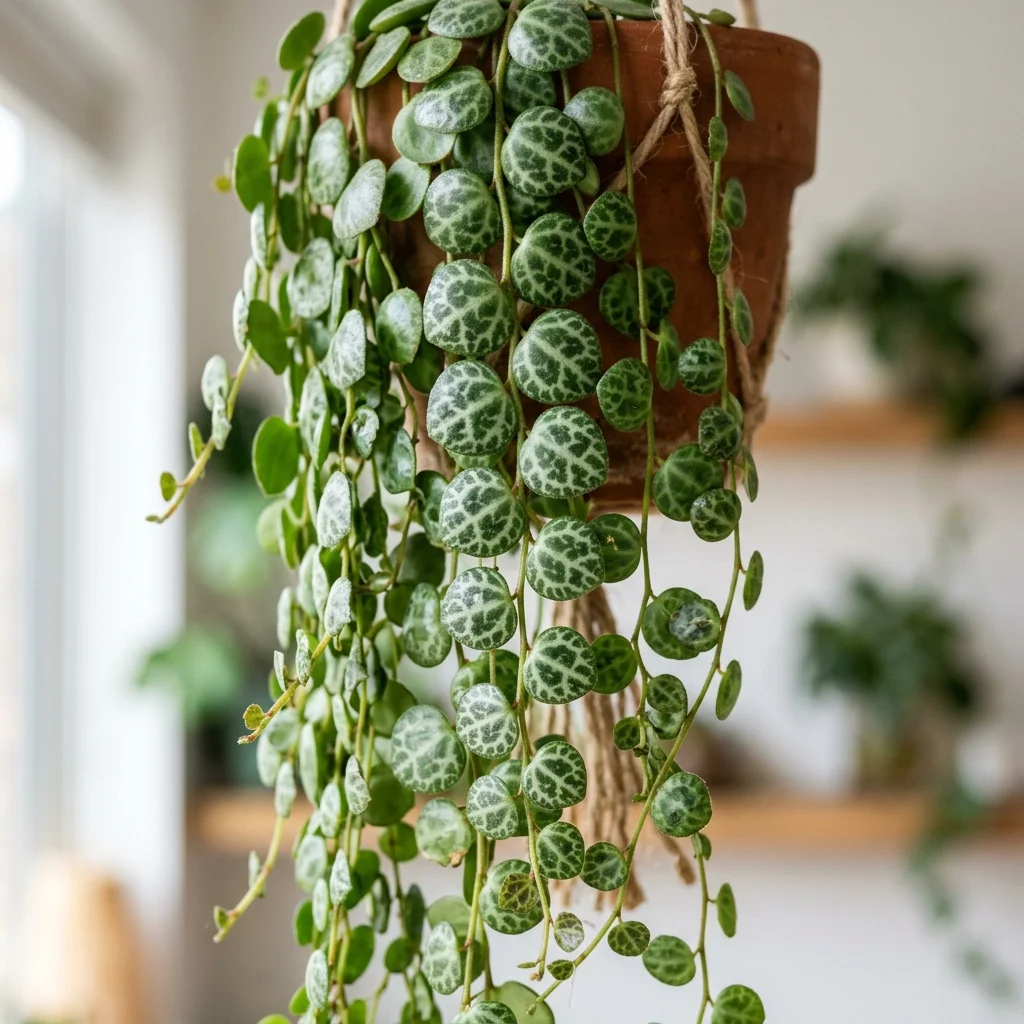
Peperomia prostrata

String of Turtles Care & Identification Guide

Peperomia prostrata, commonly known as String of Turtles, is a tiny, highly unique trailing succulent-like Peperomia. Adored for its delicate trailing vines packed with tiny, round leaves patterned with white-cream veins resembling turtle shells, it creates an incredibly charming, detailed hanging basket display.


Sunlight Icon
Sunlight Bright Indirect Light
Watering Icon
Watering Low to Moderate
Soil Mix Icon
Soil Mix Extremely Fast-draining
Temperature Icon
Temperature 18°C - 24°C
Toxicity Warning Icon
Toxicity Non-Toxic to Pets
Botanical macro photography of String of Turtles (Peperomia prostrata) - Plant AI care database

How to Identify String of Turtles

String of Turtles (Peperomia prostrata) is a remarkable ornamental species widely appreciated for its unique aesthetic and structural foliage. Recognizing its definitive visual traits is key to distinguishing it from other similar plants.

  • Key Visual Features: Tiny, round, succulent-like leaves patterned with intricate white-cream lines resembling turtle shells on delicate trailing stems.
  • Color Variations: Dark green to reddish leaves marbled with contrasting silver-cream veins; stems are extremely thin and reddish-brown.
  • Common Confusions: Confused with String of Hearts or String of Pearls, but distinguished by the distinct turtle-shell pattern on round leaves.
💡 Plant AI Tip: Not sure? Take a photo with Plant AI to identify your houseplants instantly.

Complete Care & Cultivation Guide

Follow our detailed scientific care guide to keep your String of Turtles thriving and gorgeous all year round.

Water when the top 3 inches of soil are dry. It is highly sensitive to root rot; let the tiny thick leaves feel slightly soft before watering.
Prune trailing stems in spring to maintain desired length and encourage bushier growth. Cut above a leaf; propagate cuttings.
Apply balanced liquid houseplant food diluted to half strength once every 2 months in spring and summer. Skip winter feeding.
Thrives in bright, consistent indirect light. In low light, the beautiful turtle-shell patterns will fade and growth will stall.
Extremely fast-draining, porous mix: 50% peat moss, 30% perlite, 10% orchid bark, and 10% vermiculite. pH 6.0-6.8.
Easily propagated by laying stem cuttings directly on top of moist potting soil; roots will emerge beautifully within 2 weeks.
Warm room temperatures (18°C-24°C). Avoid sudden cold temperature drops below 15°C.
Fares exceptionally well in hanging baskets or small shallow pots. Repot every 2 years into a pot 1 inch wider.
Inspect delicate stems regularly for mealybugs, and spider mites in dry air. Clean with a fine mist of neem oil spray.
Highly vulnerable to Pythium root rot if soil remains soggy or container lacks drainage holes.
Do not overwater! This plant is extremely delicate and stores water in its tiny round leaves. Let it dry out thoroughly between waterings.

Is your String of Turtles leaves turning yellow, dry or brown?

Keep your indoor garden vibrant. Take a photo with Plant AI to diagnose pests and leaf spot diseases instantly.

Diagnose My Plant

Common Diseases & Treatment

Root Rot

Symptoms: Tiny round leaves turn soft, yellow, and drop off; delicate trailing stems turn mushy and rot.

Action: Cut off healthy trailing vines to propagate, discard rotten roots, and repot in highly porous mix.

Fungal Leaf Spot

Symptoms: Brown spots form on the delicate patterned leaves under high humidity.

Action: Avoid overhead watering, improve airflow, and spray with organic copper fungicide.

Frequently Asked Questions

Why is my String of Turtles losing its turtle-shell pattern?

Inadequate light is the main cause. In low-light rooms, the new leaves will emerge solid light green without the patterns. Move to bright indirect light.

How do I propagate String of Turtles?

Cut a trailing stem, lay it flat on top of moist potting soil, gently press the nodes into the soil, keep it warm and humid; roots will sprout in 2 weeks.

Why are the leaves on my String of Turtles dropping?

Leaf drop is usually a sign of overwatering or cold drafts. Let the soil dry out completely and move away from drafty areas.

Is String of Turtles safe for cats?

Yes, Peperomia prostrata is completely non-toxic and safe for cats, dogs, and other household pets.

No more dying plants. Grow healthy greens today!

Get Started for Free