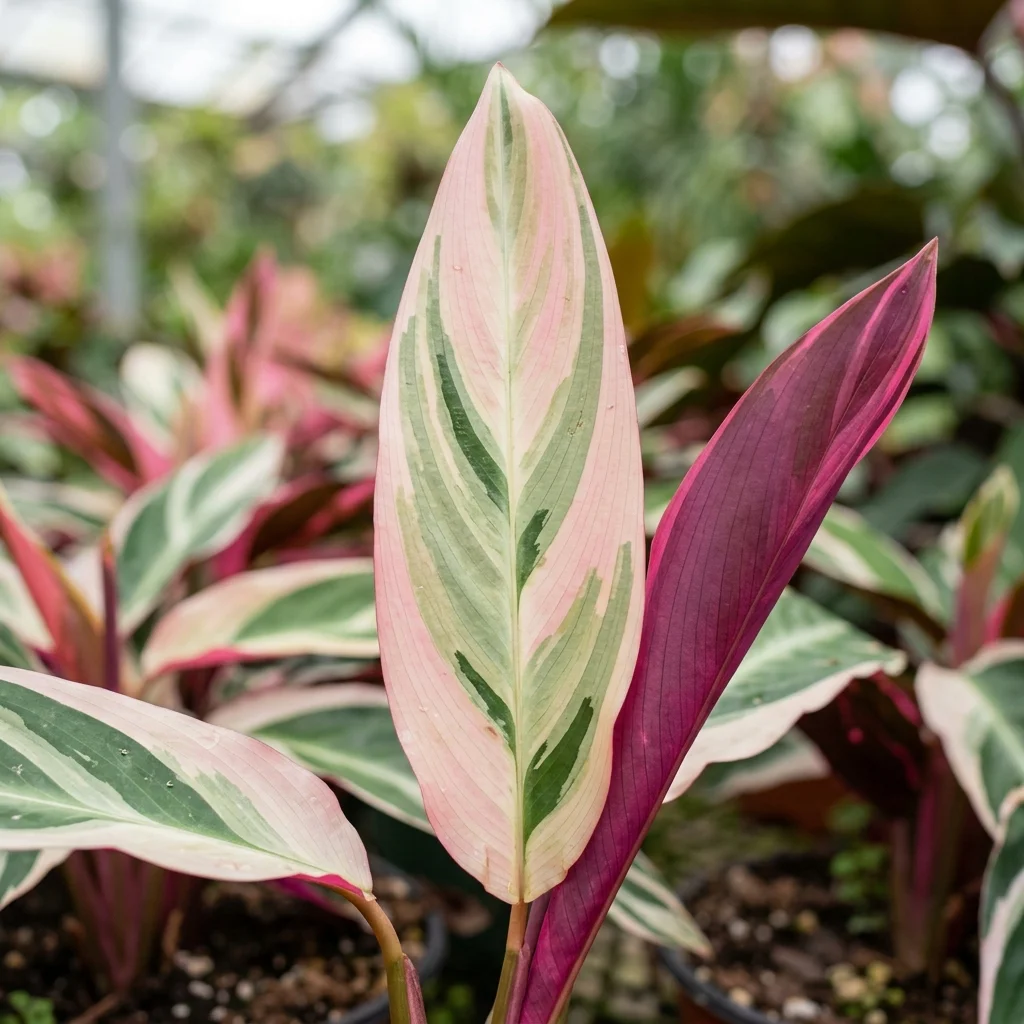
Stromanthe thalia 'Triostar'

Stromanthe Triostar Care & Identification Guide

Stromanthe thalia 'Triostar' is a mesmerizing visual symphony of the tropical understory. Prized for its lance-shaped leaves painted with dramatic splashes of cream, pastel green, and bubblegum pink, it features deep, glowing magenta undersides that fold upward at night, creating a premium living watercolor display.


Sunlight Icon
Sunlight Bright Indirect Light
Watering Icon
Watering Moderate to High
Soil Mix Icon
Soil Mix Well-aerated Peaty Mix
Temperature Icon
Temperature 18°C - 27°C
Toxicity Warning Icon
Toxicity Non-Toxic to Pets
Botanical macro photography of Stromanthe Triostar (Stromanthe thalia 'Triostar') - Plant AI care database

How to Identify Stromanthe Triostar

Stromanthe Triostar (Stromanthe thalia 'Triostar') is a remarkable ornamental species widely appreciated for its unique aesthetic and structural foliage. Recognizing its definitive visual traits is key to distinguishing it from other similar plants.

  • Key Visual Features: Elongated lanceolate leaves variegated with irregular blocks of creamy white, pink, and olive green; deep purple-magenta undersides.
  • Color Variations: High-contrast tricolor patterns of pink, white, and green on top; undersides are a striking solid crimson-magenta.
  • Common Confusions: Confused with Calathea ornata (symmetrical pink stripes, not random splashes) or Calathea roseopicta.
💡 Plant AI Tip: Not sure? Take a photo with Plant AI to identify your houseplants instantly.

Complete Care & Cultivation Guide

Follow our detailed scientific care guide to keep your Stromanthe Triostar thriving and gorgeous all year round.

Water when the top inch of soil feels dry. Sensitive to fluoride and chlorine in tap water; use filtered, distilled, or rainwater.
Cut away damaged or dried foliage at the stem base in spring. Trim dry margins with sanitized scissors following the leaf curve.
Apply half-strength liquid foliage fertilizer once every 4 weeks in spring and summer. Do not fertilize during winter dormant periods.
Requires bright, consistent, filtered indirect light. Brighter indirect light intensifies the pink and cream variegation without burning.
Chunky, moist but fast-draining mix: 40% coco coir, 30% perlite, 20% orchid bark, and 10% organic compost. pH 6.0-6.8.
Propagates by clump division in spring. Ensure each separated section has a strong rhizome cluster, multiple healthy roots, and leaves.
Warm tropical temperatures (18°C-27°C). Shield from cold drafts, radiators, and temperatures below 15°C.
Repot every spring to accommodate spreading rhizomes. Choose pots slightly wider than deep to allow natural horizontal growth.
Highly prone to spider mites under dry air conditions, occasionally thrips. Wipe leaves weekly and apply neem oil solution.
Susceptible to root rot if soil remains soggy, and rust or leaf spot if water stands on the variegated foliage.
Position the plant where the bright indirect light catches the undersides, allowing the deep magenta backing to glow and enrich the room.

Is your Stromanthe Triostar leaves turning yellow, dry or brown?

Keep your indoor garden vibrant. Take a photo with Plant AI to diagnose pests and leaf spot diseases instantly.

Diagnose My Plant

Common Diseases & Treatment

Foliage Spotting (Fungal)

Symptoms: Variegated white/pink parts develop brown, mushy decay spots that expand rapidly.

Action: Improve airflow, avoid overhead watering, prune highly infected leaves, and spray with sulfur-based fungicide.

Rhizome Rot

Symptoms: Base of the leaf stems turns dark, mushy, and collapses; leaves wilt despite wet soil.

Action: Repot immediately, prune rotten roots/stems, treat cuts with charcoal powder, and plant in fresh, airy media.

Frequently Asked Questions

Why is my Stromanthe Triostar losing its pink color?

A loss of pink and white variegation is usually due to too much shade. Move it to a brighter spot with high-intensity indirect light.

Why are the leaves of my Triostar curling up?

Leaves curl inward to reduce water loss, indicating underwatering, dry air, or root damage. Check soil moisture and boost humidity.

Does Stromanthe Triostar fold its leaves at night?

Yes! It exhibits nyctinasty. The leaves stand almost vertically upright at night, showing off their gorgeous magenta undersides.

Is Stromanthe Triostar toxic to cats?

No, Stromanthe Triostar is completely safe and non-toxic for cats, dogs, and other household pets.

No more dying plants. Grow healthy greens today!

Get Started for Free