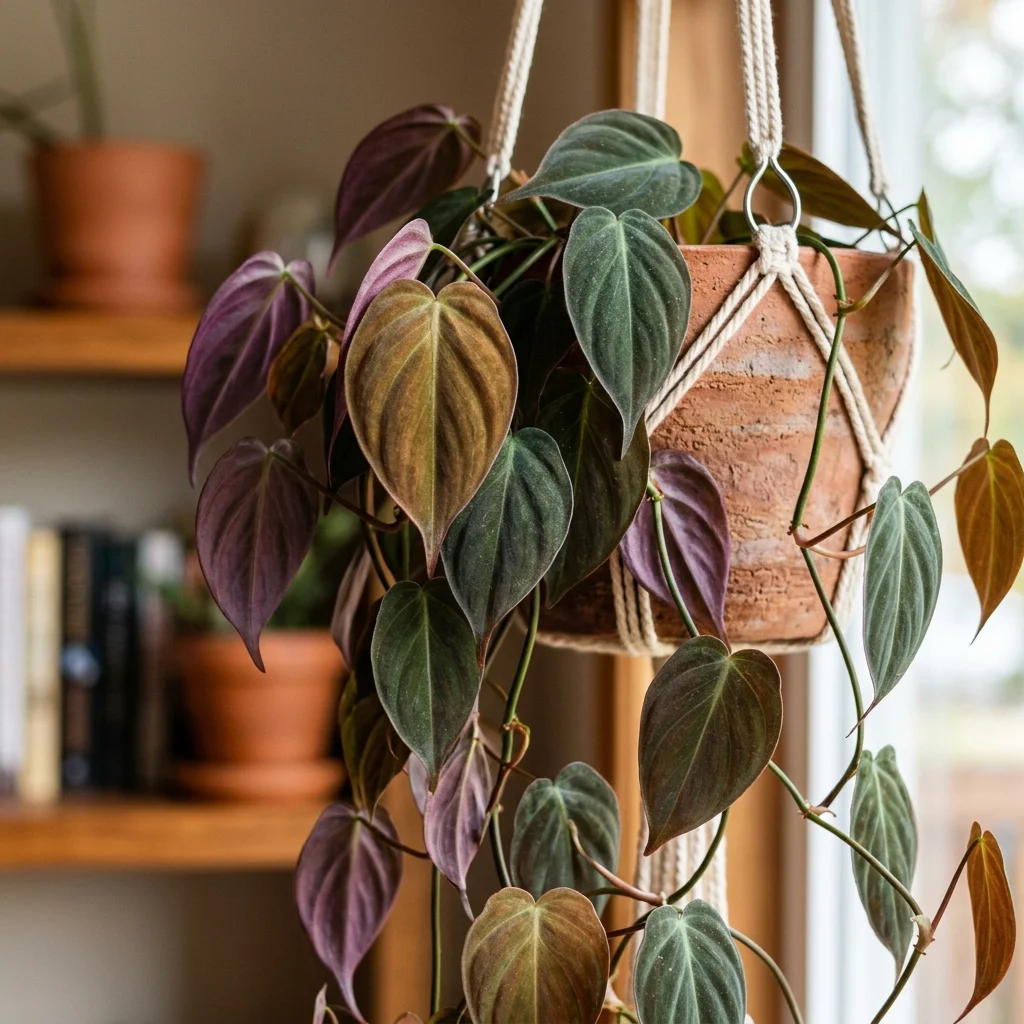
Philodendron hederaceum var. hederaceum

Velvet Leaf Philodendron Care & Identification Guide

Philodendron hederaceum var. hederaceum, commonly known as the Velvet Leaf Philodendron or 'Micans', is a jaw-dropping trailing cultivar famous for its iridescent, velvet-textured heart-shaped leaves. Shimmering with deep copper, purple, and rich emerald green tones, it makes a premium statement on shelves or hanging pots.


Sunlight Icon
Sunlight Bright Indirect to Medium
Watering Icon
Watering Moderate to Low
Soil Mix Icon
Soil Mix Well-draining Aroid Mix
Temperature Icon
Temperature 18°C - 24°C
Toxicity Warning Icon
Toxicity Toxic to Pets
Botanical macro photography of Velvet Leaf Philodendron (Philodendron hederaceum var. hederaceum) - Plant AI care database

How to Identify Velvet Leaf Philodendron

Velvet Leaf Philodendron (Philodendron hederaceum var. hederaceum) is a remarkable ornamental species widely appreciated for its unique aesthetic and structural foliage. Recognizing its definitive visual traits is key to distinguishing it from other similar plants.

  • Key Visual Features: Delicate, velvety, heart-shaped leaves that shimmer with iridescent bronze-copper, purple, and emerald green hues.
  • Color Variations: New foliage emerges a rich coppery-bronze with deep purple leaf undersides; matures to a shimmering dark velvet green.
  • Common Confusions: Confused with plain Heartleaf Philodendron (which is shiny and smooth, whereas Micans is velvety) or Philodendron melanochrysum.
💡 Plant AI Tip: Not sure? Take a photo with Plant AI to identify your houseplants instantly.

Complete Care & Cultivation Guide

Follow our detailed scientific care guide to keep your Velvet Leaf Philodendron thriving and gorgeous all year round.

Allow the top 2-3 inches of soil to dry out completely before watering thoroughly. It is quite drought-tolerant; avoid waterlogging.
Prune leggy trailing vines in spring to maintain desired fullness. Cut above a node; roots easily in water.
Apply balanced liquid houseplant food diluted to half strength once a month during spring and summer growing seasons.
Thrives in bright, consistent indirect light. Brighter indirect light brings out the richest bronze-copper and purple velvet hues.
Aerate, porous mix: 50% peat moss, 30% perlite, 10% orchid bark, and 10% worm castings. pH 5.5-6.5.
Effortlessly propagated from stem cuttings displaying nodes. Root in water or moist sphagnum moss; roots show in 7-10 days.
Prefers warm temperatures (18°C-24°C). Highly sensitive to cold drafts; protect from winter temperatures below 12°C.
Stunning in hanging baskets allowing the velvety, iridescent leaves to trail downwards, or on small moss poles.
Prone to mealybugs, thrips, and spider mites. Clean delicate velvet foliage regularly and apply insecticidal soap spray.
Susceptible to root rot if soil remains wet, and leaf spot if leaves remain wet under humid conditions.
To keep Micans looking lush and prevent leaves from shrinking in size, avoid putting it in dark corners; bright indirect light is key.

Is your Velvet Leaf Philodendron leaves turning yellow, dry or brown?

Keep your indoor garden vibrant. Take a photo with Plant AI to diagnose pests and leaf spot diseases instantly.

Diagnose My Plant

Common Diseases & Treatment

Root Rot (Overwatering)

Symptoms: Leaves turn soft yellow and fall; delicate trailing stems look limp and mushy.

Action: Cut off mushy stem ends, repot healthy portions in fresh dry soil, and reduce watering frequency.

Foliage Blight

Symptoms: Small brown water-soaked spots expand on the delicate velvet leaf surfaces.

Action: Prune infected vines, improve airflow, avoid misting leaves, and apply organic copper fungicide.

Frequently Asked Questions

Why are my Micans leaves turning red or copper?

It is normal for new leaves to emerge a rich coppery-bronze color. Bright indirect light also enhances the red/copper tones.

Does Velvet Leaf Philodendron climb?

Yes! While it trails beautifully, providing a moss pole encourages the aerial roots to attach, leading to larger, highly velvety mature leaves.

Why are the leaves on my Micans shrinking?

Smaller leaves are a sign of inadequate light or lack of support. Move the plant to a brighter spot or train it onto a moss pole.

Is Philodendron Micans safe for cats?

No, it contains calcium oxalate crystals. It is toxic to pets, causing oral irritation, swelling, and drooling if chewed.

No more dying plants. Grow healthy greens today!

Get Started for Free