Weeping Fig Care & Identification Guide
Ficus benjamina, the elegant Weeping Fig, is a timeless indoor tree favored for its graceful arching branches and dense canopy of delicate, glossy green leaves. Renowned for its air-purifying qualities, this versatile ornamental tree adds a sophisticated, mature woodland charm to bright living spaces.





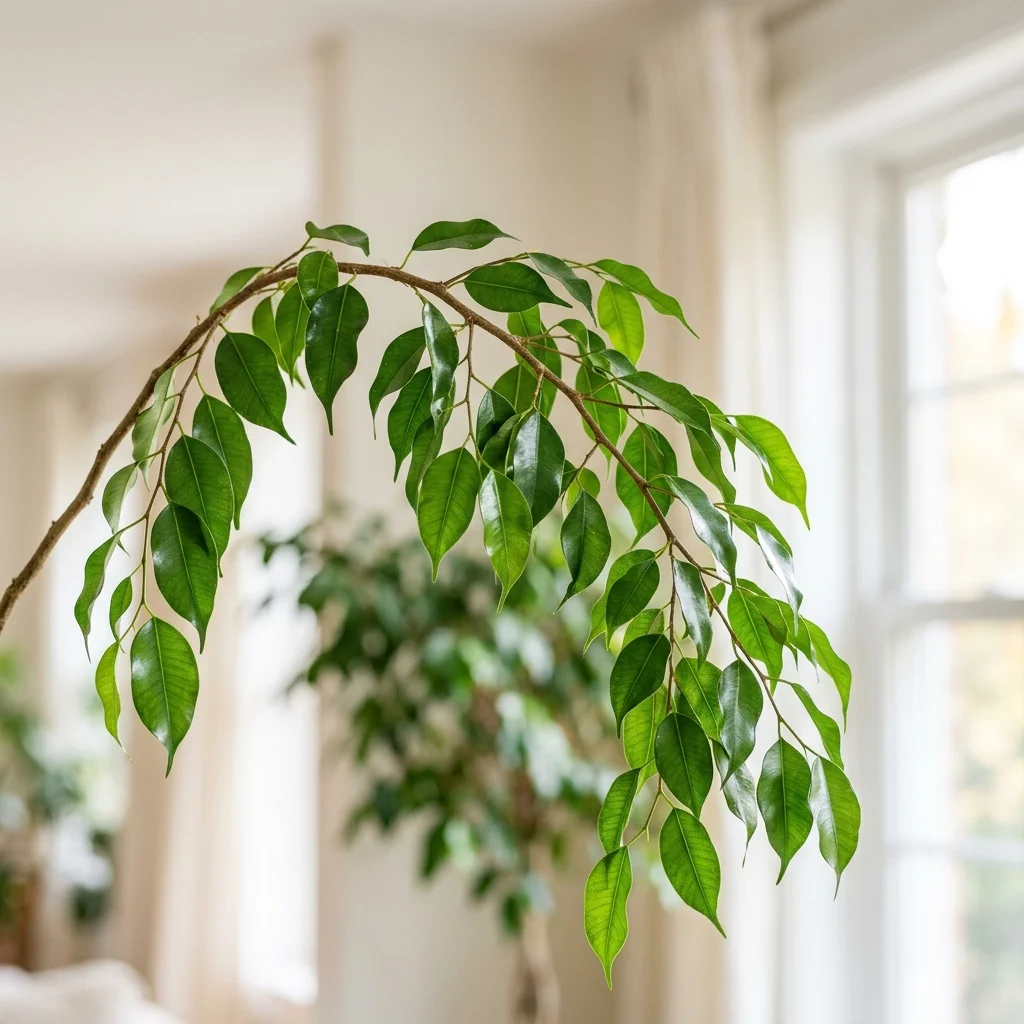
How to Identify Weeping Fig
Weeping Fig (Ficus benjamina) is a remarkable ornamental species widely appreciated for its unique aesthetic and structural foliage. Recognizing its definitive visual traits is key to distinguishing it from other similar plants.
-
✔
Key Visual Features: Slender, arching branches packed with small, pointed oval glossy leaves; trunk is often braided in ornamental specimens.
-
✔
Color Variations: Glossy deep green foliage; variegated cultivars feature elegant splashes of cream-white along leaf borders.
-
✔
Common Confusions: Confused with Ficus microcarpa (Moclame, which has thicker, rounder leaves and is much less prone to leaf drop).
Complete Care & Cultivation Guide
Follow our detailed scientific care guide to keep your Weeping Fig thriving and gorgeous all year round.
Common Diseases & Treatment
Phomopsis Blight
Symptoms: Branches die back, leaves turn brown and drop, and small sunken cankers appear on twigs.
Root Rot
Symptoms: Leaves turn yellow and drop off rapidly; roots turn black, soft, and emit a foul smell.
Frequently Asked Questions
Why is my Weeping Fig dropping all of its leaves?
Ficus benjamina is famous for dropping leaves in response to stress. Moving the plant, drafts, changes in light, or overwatering will trigger leaf drop.
Can I move my Weeping Fig outdoors for summer?
Yes, but move it gradually to avoid sunburning. Note that it will likely drop some leaves when moved out, and again when moved back in.
How do I care for a braided Weeping Fig trunk?
Keep the braid healthy by pruning away any new shoots that grow directly from the braided trunk, focusing growth on the upper canopy.
Is Weeping Fig safe for house pets?
No, like other Ficus species, it contains toxic milky sap and calcium oxalate crystals. It is toxic to dogs and cats.