Horsetail Rush Care & Identification Guide
Horsetail Rush, also known as Scouring Rush, is an extraordinary, highly prehistoric spore-bearing plant. It is prized for its deep-green, hollow jointed bamboo-like reed-thin sections with distinct, sharp black and white rings at every node. Serving as an exceptional architectural groundcover, it brings a sleek, graphic modern look to wet borders.





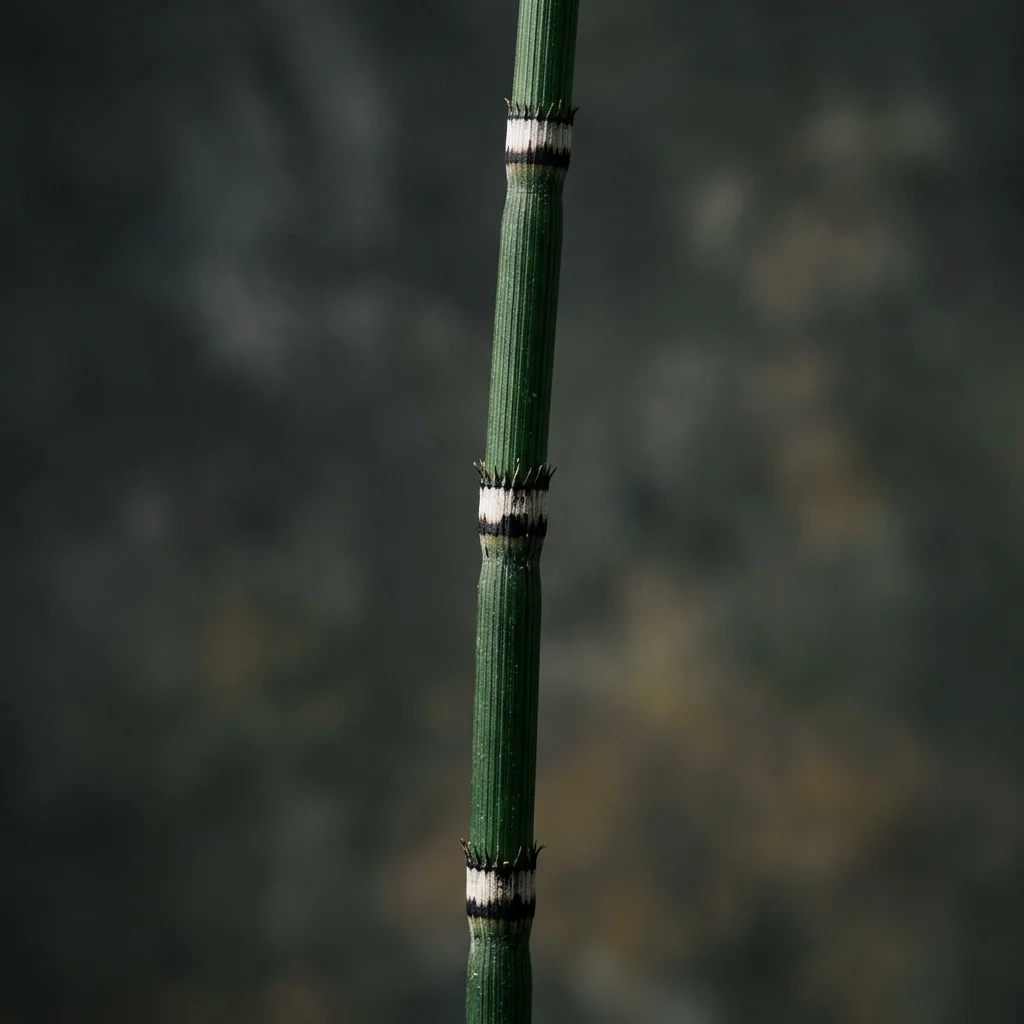
How to Identify Horsetail Rush
Horsetail Rush (Equisetum hyemale) is a remarkable botanical species widely appreciated for its unique aesthetic and structural appeal. Recognizing its definitive visual traits is key to distinguishing it from other similar plants.
-
✔
Key Visual Features: Key Visual Features: Stiff, solid triangular or round vertical stems rising in graceful clumps directly from strong underground rhizomes.
-
✔
Color Variations: Color Variations: Vivid emerald greens, chartreuse, rich bronze, or cream-striped blades depending on the potted cultivar.
-
✔
Common Confusions: Common Confusions: Often mistaken for true ornamental grasses, but easily distinguished in pots by their solid stems and three-ranked foliage arrangement.
Complete Care & Cultivation Guide
Follow our detailed scientific care guide to keep your Horsetail Rush thriving and gorgeous all year round.
Common Diseases & Treatment
Root Rot (Overwatering)
Symptoms: Leaves turn soft and yellow at the base, shrivel and drop prematurely, accompanied by a mushy root system and foul soil odor.
Foliage Rust
Symptoms: Small powdery orange or brown pustules appear on the linear leaves under humid, poorly ventilated indoor conditions.
Frequently Asked Questions
Q: Why is it called 'Scouring Rush'?
A: The plant actively absorbs silica from the soil, forming microscopic crystals in its cell walls. This makes the stems exceptionally rough, like sandpaper. Historically, campers and pioneers utilized bundles of these reeds to scour and clean metal pots, pans, and wooden bowls.
Q: How aggressively does Equisetum hyemale spread?
A: Extremely aggressively. Its underground rhizomes can run deep and wide, popping up through gravel, lawns, and flower beds, and it can escape drainage holes in pots. Never plant it directly in the ground without a heavy-duty, sealed root barrier.
Q: Does Horsetail Rush produce seeds?
A: No, it is a non-flowering primitive plant that reproduces via microscopic spores. In late spring, it develops a small, pinecone-like cone (strobilus) at the tip of each mature stem, which releases green spores into the wind and water.
Q: Is Horsetail Rush evergreen in winter?
A: Yes! Equisetum hyemale is fully evergreen, holding its stiff, vertical dark-green needles and distinct black rings throughout the winter snow, providing excellent year-round structure and texture to the landscape.