Japanese Forest Grass Care & Identification Guide
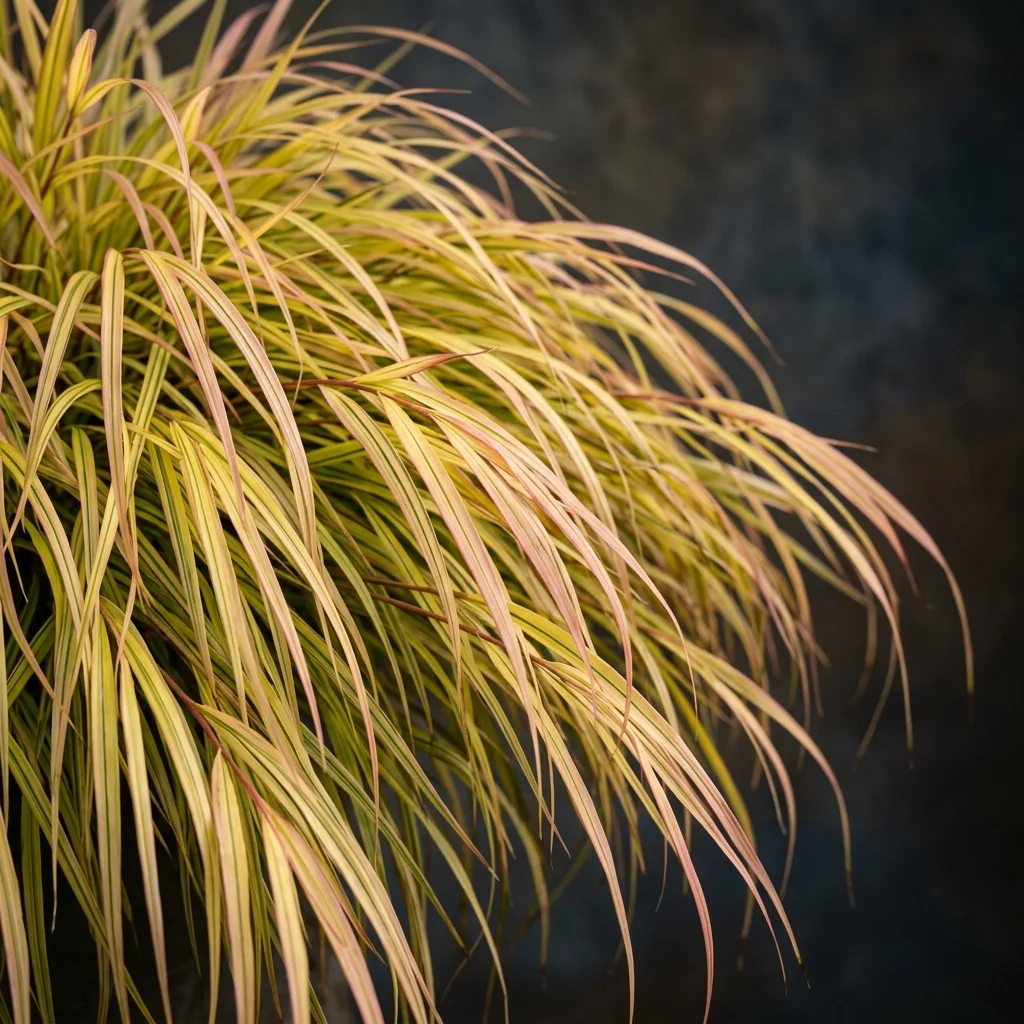
Japanese Forest Grass 'Aureola' is an award-winning, exceptionally elegant shade grass, prized for its cascading, waterfall-like mound of bright golden-yellow leaves with paper-thin dark green linear stripes, turning soft pinkish-red in autumn. It is the premier luxury accent for deeply shaded woodlands.





How to Identify Japanese Forest Grass
Japanese Forest Grass (Hakonechloa macra 'Aureola') is a remarkable botanical species widely appreciated for its unique aesthetic and structural appeal. Recognizing its definitive visual traits is key to distinguishing it from other similar plants.
-
✔
Key Visual Features: Key Visual Features: Dense arching clumps of narrow linear foliage, topped in summer by feathery, bottle-brush, or metallic flower panicles.
-
✔
Color Variations: Color Variations: Blue-grey blades, warm golden stripes, pink-flushed panicles, or waxy emerald foliage.
-
✔
Common Confusions: Common Confusions: Resembles wild lawn weeds when small, but recognized by their tight, neat clumping growth and showy tall flower spikes.
Complete Care & Cultivation Guide
Follow our detailed scientific care guide to keep your Japanese Forest Grass thriving and gorgeous all year round.
Common Diseases & Treatment
Root Rot (Overwatering)
Symptoms: Leaves turn soft and yellow at the base, shrivel and drop prematurely, accompanied by a mushy root system and foul soil odor.
Foliage Rust
Symptoms: Small powdery orange or brown pustules appear on the linear leaves under humid, poorly ventilated indoor conditions.
Frequently Asked Questions
Q: Why is my Japanese Forest Grass growing so slowly?
A: Hakonechloa macra is naturally a very slow-growing, long-lived perennial grass that focuses its initial energy on establishing a highly dense crown and fine root system. Be patient; it will reach its full, lush cascading shape within 3 seasons.
Q: Can I grow Hakone Grass in full sun?
A: No. The delicate yellow variegation is highly sensitive to intense sun. Full afternoon sun will quickly scorch the leaf tips, causing them to turn dry, papery-brown, and die. It requires partial to full shade.
Q: Does Japanese Forest Grass die back in winter?
A: Yes, Hakone Grass is a deciduous grass. The golden leaves will dry and turn a warm coppery-bronze in late autumn, eventually dying back to the ground in winter. Cut the dried stems clean to the soil level in late winter.
Q: Is Hakone Grass toxic to cats and dogs?
A: Not at all. Hakonechloa macra 'Aureola' is completely non-toxic and highly safe for all pets, making it a luxurious, worry-free choice for residential gardens.