Elderberry Herb Care & Identification Guide
Elderberry (Sambucus nigra) is a magnificent deciduous shrub celebrated for its flat-topped clusters of fragrant white flowers and dark purple, antioxidant-rich berries. Traditionally grown outdoors, it requires ample space, rich, well-draining soil, and consistent moisture to thrive. While too large for a typical windowsill, dwarf varieties can be cultivated in large patio containers to provide spectacular seasonal blooms and medicinal fruit harvests.





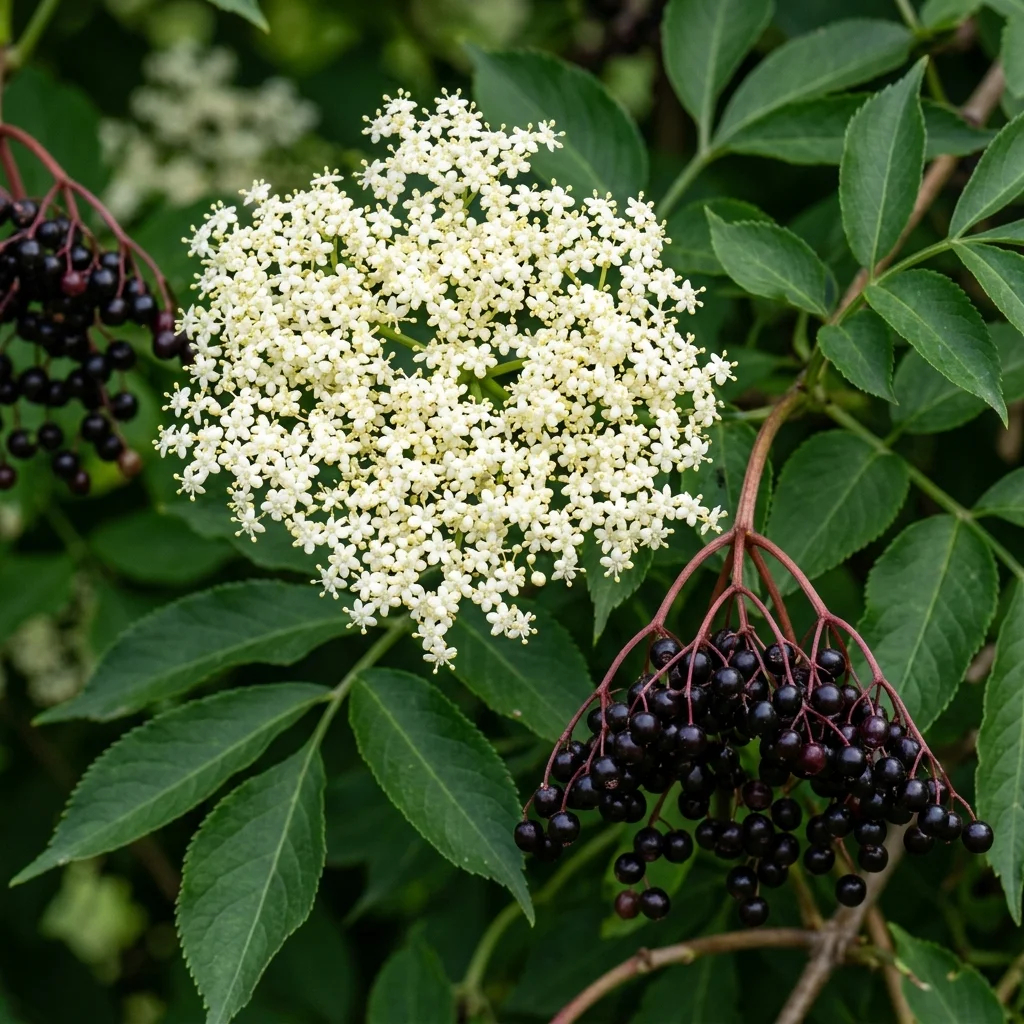
How to Identify Elderberry Herb
Elderberry Herb (Sambucus nigra) is a remarkable botanical species widely appreciated for its unique aesthetic and structural appeal. Recognizing its definitive visual traits is key to distinguishing it from other similar plants.
-
✔
Key Visual Features: Large compound leaves with 5-7 serrated leaflets, broad umbels of creamy white flowers in early summer, and drooping clusters of dark purple-black berries in autumn.
-
✔
Color Variations: Deep green foliage (some cultivars offer striking black-lace or golden leaves), white blossoms, and deep purple-black fruit.
-
✔
Common Confusions: Can be confused with water hemlock or pokeberry, but is distinguished by its woody stems, opposite compound leaves, and specific flower/berry structure.
Complete Care & Cultivation Guide
Follow our detailed scientific care guide to keep your Elderberry Herb thriving and gorgeous all year round.
Common Diseases & Treatment
Root Rot (Overwatering)
Symptoms: Leaves turn soft and yellow at the base, shrivel and drop prematurely, accompanied by a mushy root system and foul soil odor.
Foliage Rust
Symptoms: Small powdery orange or brown pustules appear on the linear leaves under humid, poorly ventilated indoor conditions.
Frequently Asked Questions
Q: How often should I water my potted Elderberry?
A: Elderberries are thirsty plants. Keep the soil consistently moist but not waterlogged. Water deeply when the top inch of soil feels dry, especially during fruit production.
Q: What is the best way to prune Elderberry?
A: Prune in late winter or early spring while dormant. Remove dead, diseased, or crossing branches, and thin out older canes to encourage vigorous new growth that will bear fruit.
Q: Can I grow Elderberry indoors?
A: Standard elderberries are too large for indoors and require cold winter dormancy. However, you can start cuttings indoors or grow dwarf varieties in large containers on a sunny patio or balcony.
Q: Are Elderberry leaves and stems safe for pets?
A: No. All green parts of the elderberry plant, including stems, leaves, and unripe berries, contain cyanogenic glycosides and are toxic to cats, dogs, and humans if ingested.