English Lavender Care & Identification Guide
English Lavender (Lavandula angustifolia) is a legendary therapeutic classic, highly appreciated for its soothing fragrance and beautiful violet blossoms that make exceptional herbal teas. Thriving in porous, alkaline soils under intense solar exposure, it accumulates rich essential oils over its growth cycle. It provides an indispensable calming touch and natural botanical aesthetics to sunny indoor rooms or outdoor garden borders.





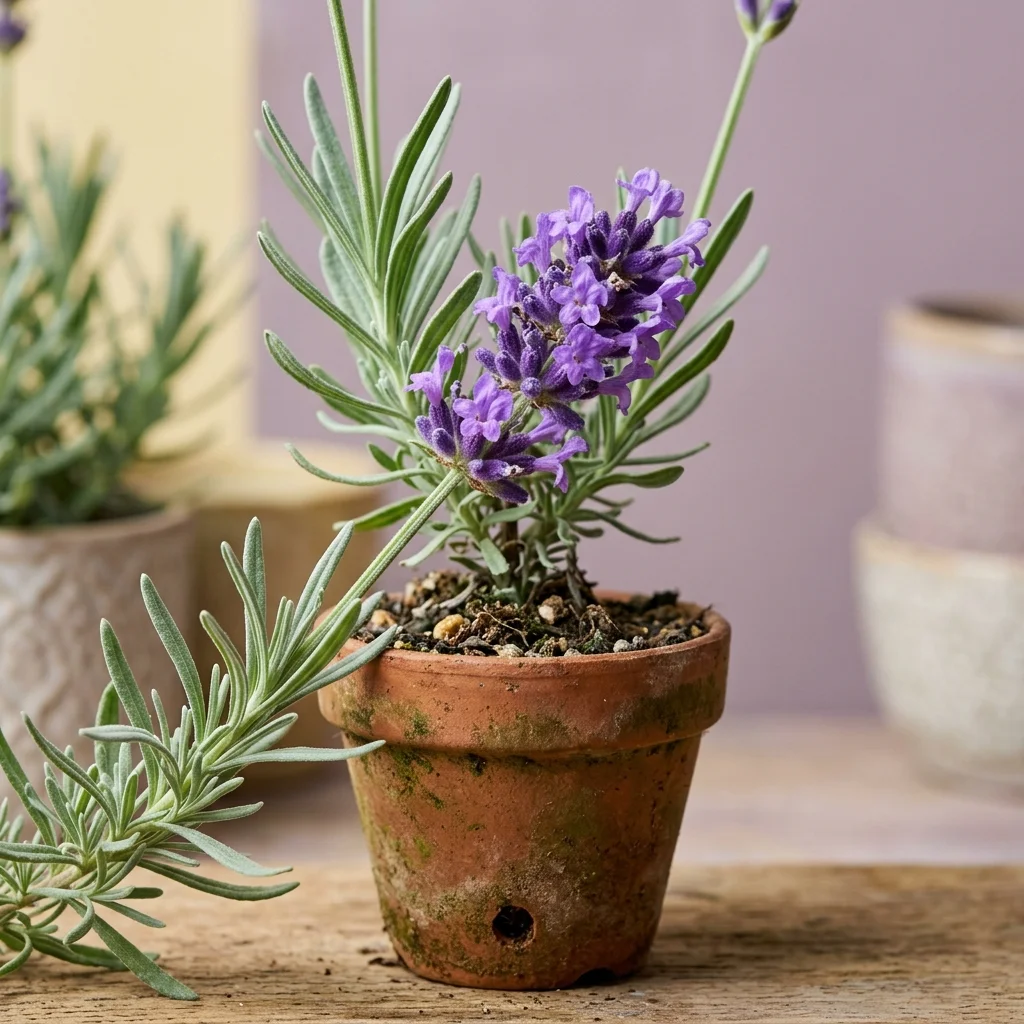
How to Identify English Lavender
English Lavender (Lavandula angustifolia) is a remarkable botanical species widely appreciated for its unique aesthetic and structural appeal. Recognizing its definitive visual traits is key to distinguishing it from other similar plants.
-
✔
Key Visual Features: Compact, bushy subshrubs with narrow, linear, grey-green leaves. Produces long, slender stems topped with tightly clustered spikes of fragrant tubular flowers.
-
✔
Color Variations: Classic silvery-grey foliage with vibrant violet, deep blue, or sometimes soft pink or white blooms, depending on the cultivar.
-
✔
Common Confusions: Often confused with French or Spanish lavender, but English lavender is distinguished by its sweeter, less camphor-like scent and lack of "rabbit ear" bracts on the flower heads.
Complete Care & Cultivation Guide
Follow our detailed scientific care guide to keep your English Lavender thriving and gorgeous all year round.
Common Diseases & Treatment
Root Rot (Overwatering)
Symptoms: Leaves turn soft and yellow at the base, shrivel and drop prematurely, accompanied by a mushy root system and foul soil odor.
Foliage Rust
Symptoms: Small powdery orange or brown pustules appear on the linear leaves under humid, poorly ventilated indoor conditions.
Frequently Asked Questions
Q: How often should I water my potted English Lavender?
A: Lavender is highly drought-tolerant. Water deeply only when the top 2-3 inches of soil are completely bone-dry. Ensure your pot has excellent drainage to prevent root rot.
Q: What is the best way to prune English Lavender?
A: Prune by one-third in late summer or early fall after flowering to maintain a compact shape. Avoid cutting into old, brown wood, as it may not regrow.
Q: Why is my English Lavender turning woody and leggy?
A: Legginess is usually caused by insufficient sunlight or a lack of annual pruning. Ensure it gets 6-8 hours of direct sun daily and prune annually to encourage fresh, bushy growth.
Q: Can I propagate English Lavender from stem cuttings?
A: Yes! Take 3-4 inch semi-hardwood cuttings in summer, strip the lower leaves, dip in rooting hormone, and plant in a sandy perlite mix until roots develop.