German Chamomile Care & Identification Guide
German Chamomile (Matricaria chamomilla) is a sweet-scented, daisy-like annual herb world-famous for its calming, apple-scented flowers used in herbal teas. Growing rapidly from seed, this delicate, wispy plant prefers cool weather and bright sunshine. Its prolific blooming nature makes it a joyous addition to cottage gardens, and harvesting the flowers promotes continuous, abundant blossoming throughout the summer.





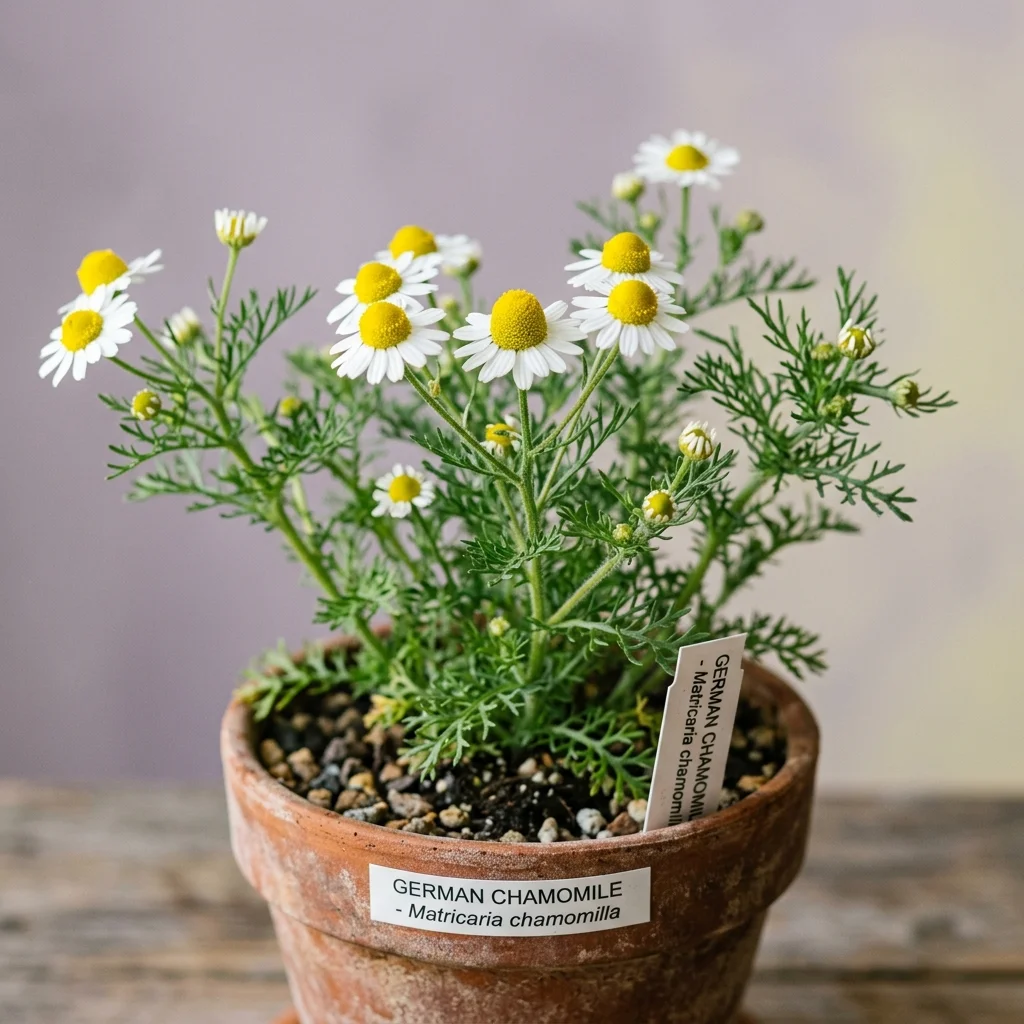
How to Identify German Chamomile
German Chamomile (Matricaria chamomilla) is a remarkable botanical species widely appreciated for its unique aesthetic and structural appeal. Recognizing its definitive visual traits is key to distinguishing it from other similar plants.
-
✔
Key Visual Features: Erect, highly branched stems with very fine, feathery, bipinnate leaves. Flowers are small daisies with a prominent, hollow, conical yellow center and white, reflexed petals.
-
✔
Color Variations: Bright apple-green foliage with classic white and yellow daisy-like blooms.
-
✔
Common Confusions: Often confused with Roman Chamomile (which is a low-growing perennial with solid flower receptacles) or feverfew (which has broader, lobed leaves).
Complete Care & Cultivation Guide
Follow our detailed scientific care guide to keep your German Chamomile thriving and gorgeous all year round.
Common Diseases & Treatment
Root Rot (Overwatering)
Symptoms: Leaves turn soft and yellow at the base, shrivel and drop prematurely, accompanied by a mushy root system and foul soil odor.
Foliage Rust
Symptoms: Small powdery orange or brown pustules appear on the linear leaves under humid, poorly ventilated indoor conditions.
Frequently Asked Questions
Q: How do I harvest German Chamomile for tea?
A: Snip or pinch off the flower heads when the white petals are fully open or just beginning to bend backward. Harvest in the morning after the dew has dried for peak essential oil content.
Q: Does German Chamomile come back every year?
A: It is an annual plant, meaning it dies after one season. However, it is a prolific self-seeder and will often reliably pop up in the same garden spot year after year.
Q: How often should I water Chamomile?
A: Keep the soil consistently moist while the seeds are germinating and the plants are young. Once established, water only during dry spells, allowing the top inch of soil to dry out.
Q: Why are my Chamomile plants falling over?
A: German Chamomile can grow tall and wispy. High winds, heavy rain, or a lack of direct sunlight (causing leggy growth) can cause the stems to flop. Plant them closely together for mutual support.