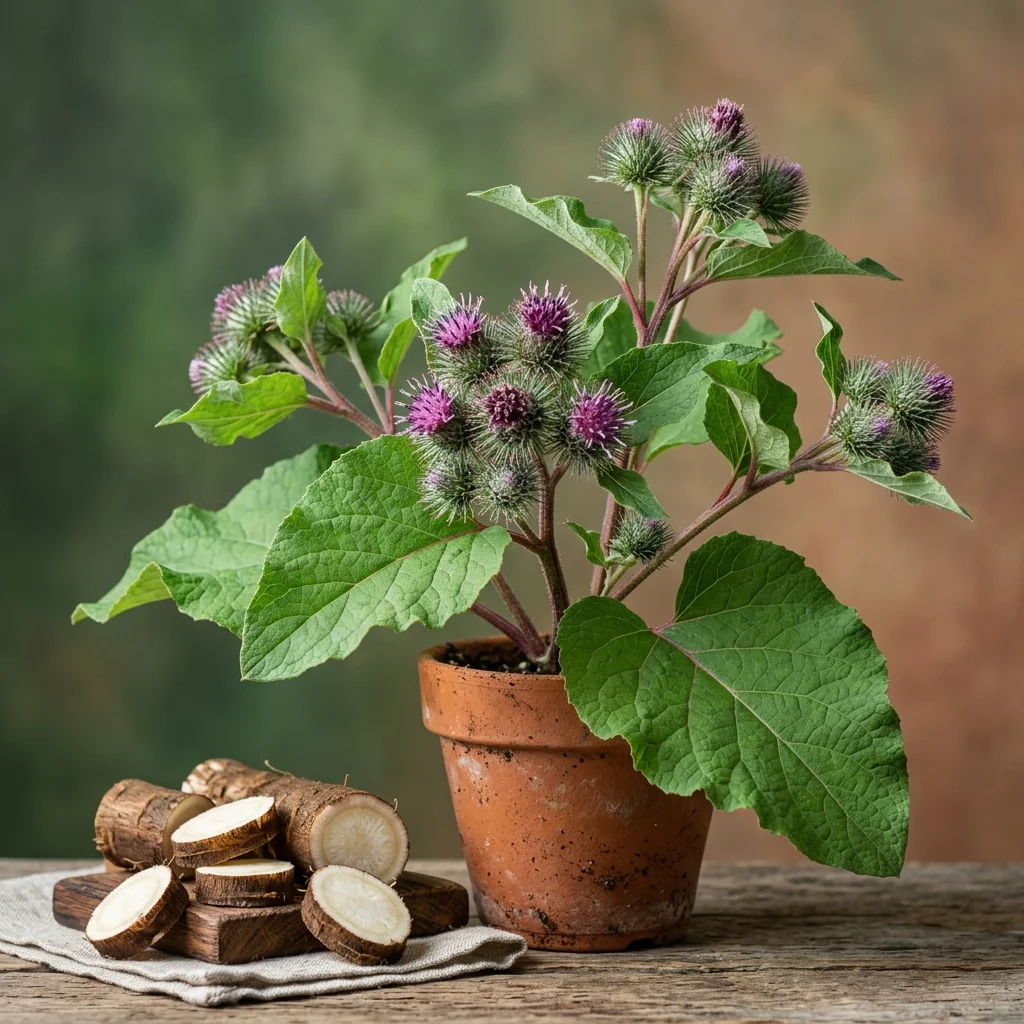
Arctium lappa

Great Burdock Care & Identification Guide

Great Burdock (Arctium lappa) is a robust, towering biennial herb best known for its massive, elephant-ear leaves, clinging prickly burrs, and deep, earthy taproot prized in both traditional medicine and Asian cuisine (known as Gobo). While often viewed as a wild weed, cultivating burdock in deep, loose garden soil yields incredibly nutritious, crisp roots. Its dramatic, large-scale foliage adds a striking, prehistoric architectural element to the back of a garden border.


Sunlight Icon
Sunlight Full Sun to Partial Shade
Watering Icon
Watering Low (extremely water-efficient)
Soil Mix Icon
Soil Mix Average loose sandy potting loam
Temperature Icon
Temperature 15°C - 25°C
Toxicity Warning Icon
Toxicity Non-toxic to pets (robust wild defenses)
Botanical macro photography of Great Burdock (Arctium lappa) - Plant AI care database

How to Identify Great Burdock

Great Burdock (Arctium lappa) is a remarkable botanical species widely appreciated for its unique aesthetic and structural appeal. Recognizing its definitive visual traits is key to distinguishing it from other similar plants.

  • Key Visual Features: Massive, broad, heart-shaped basal leaves that are woolly underneath. In its second year, it produces a tall stalk with purple, thistle-like flowers encased in round, hooked burrs.
  • Color Variations: Dull, dark green leaves with whitish undersides, and vibrant purple-pink tubular flowers.
  • Common Confusions: The first-year rosette is often confused with rhubarb (which has smooth, toxic leaves and red stems) or wild cocklebur.
💡 Plant AI Tip: Not sure? Take a photo with Plant AI to identify your houseplants instantly.

Complete Care & Cultivation Guide

Follow our detailed scientific care guide to keep your Great Burdock thriving and gorgeous all year round.

Extremely resilient and water-efficient once established. Water deeply only when the top 3 inches of soil feel completely dry. Potted wild herbs easily survive periods of dry neglect but suffer in stagnant, soggy containers.
Minimal grooming required. Cut back old, withered, or damaged foliage at the base to encourage fresh growth. Wipe broad linear leaves with a damp cloth to clear indoor dust and maintain waxy photosynthetic health.
Requires almost no fertilizer. These wild species are adapted to poor soils and grow vigorously without supplemental feeding. A thin layer of organic compost applied in spring is more than sufficient.
Thrives in full sun to partial shade, needing at least 5 hours of light daily. Highly adaptable, making them excellent choices for indoor window ledges with variable solar exposure.
Highly adaptable to poor soils, but prefers a loose, sandy loam. Use a potting mix of 50% average potting soil, 30% perlite, and 20% coarse sand, with a neutral pH of 6.0 to 7.5.
Propagate easily via seeds sown in spring or by dividing mature root crowns. These wild plants are exceptionally robust and adapt quickly to transplanting.
Extremely cold-hardy and winter-resilient. Leave potted foliage intact during winter to protect the crown, and ensure the soil does not freeze solid in small pots.
Choose sturdy clay pots with bottom drainage holes. Repot every 2 to 3 years when roots completely crowd the pot to provide fresh soil nutrients.
Highly pest-resistant due to natural wild defenses. May host aphids if stressed; a strong blast of water or insecticidal soap spray easily clears minor pests.
Strongly disease-resistant, but can suffer from rust or root rot in waterlogged potting mixes. Empty the drainage trays and place in well-ventilated rooms.
Potted wild herbs bring an organic, natural wildflower meadow aesthetic to your windowsill. Harvest the tender young spring leaves for high-nutrient salads or medicinal preparations.

Is your Great Burdock leaves turning yellow, dry or brown?

Keep your indoor garden vibrant. Take a photo with Plant AI to diagnose pests and leaf spot diseases instantly.

Diagnose My Plant

Common Diseases & Treatment

Root Rot (Overwatering)

Symptoms: Leaves turn soft and yellow at the base, shrivel and drop prematurely, accompanied by a mushy root system and foul soil odor.

Action: Drastically cut watering. Remove mushy leaves, wash away old soggy soil, prune rotten black roots, and repot in dry succulent mix with drainage holes.

Foliage Rust

Symptoms: Small powdery orange or brown pustules appear on the linear leaves under humid, poorly ventilated indoor conditions.

Action: Isolate the plant, prune infected leaves, and spray with a copper-based organic fungicide. Improve indoor ventilation.

Frequently Asked Questions

Q: How deep does the soil need to be to grow Burdock?

A: The edible taproot can grow 2 to 3 feet deep. You must plant it in extremely loose, deeply tilled, rock-free soil, or use raised beds, otherwise, the roots will fork and become impossible to dig up.

Q: When is the best time to harvest Burdock root?

A: Harvest the roots in the late autumn of its first year, or very early spring of its second year. Once the plant sends up a flower stalk in year two, the root becomes woody and inedible.

Q: Are the leaves of Great Burdock edible?

A: Yes, very young, tender spring leaves and peeled flower stalks are edible, but mature leaves are excessively bitter and fibrous. The primary culinary value lies in the root.

Q: How do I prevent Burdock from becoming an invasive weed?

A: Burdock spreads rapidly via its clinging burrs (seeds). To prevent it from spreading uncontrollably, cut off the purple flower heads in the second year before they form mature burrs.

No more dying plants. Grow healthy greens today!

Get Started for Free