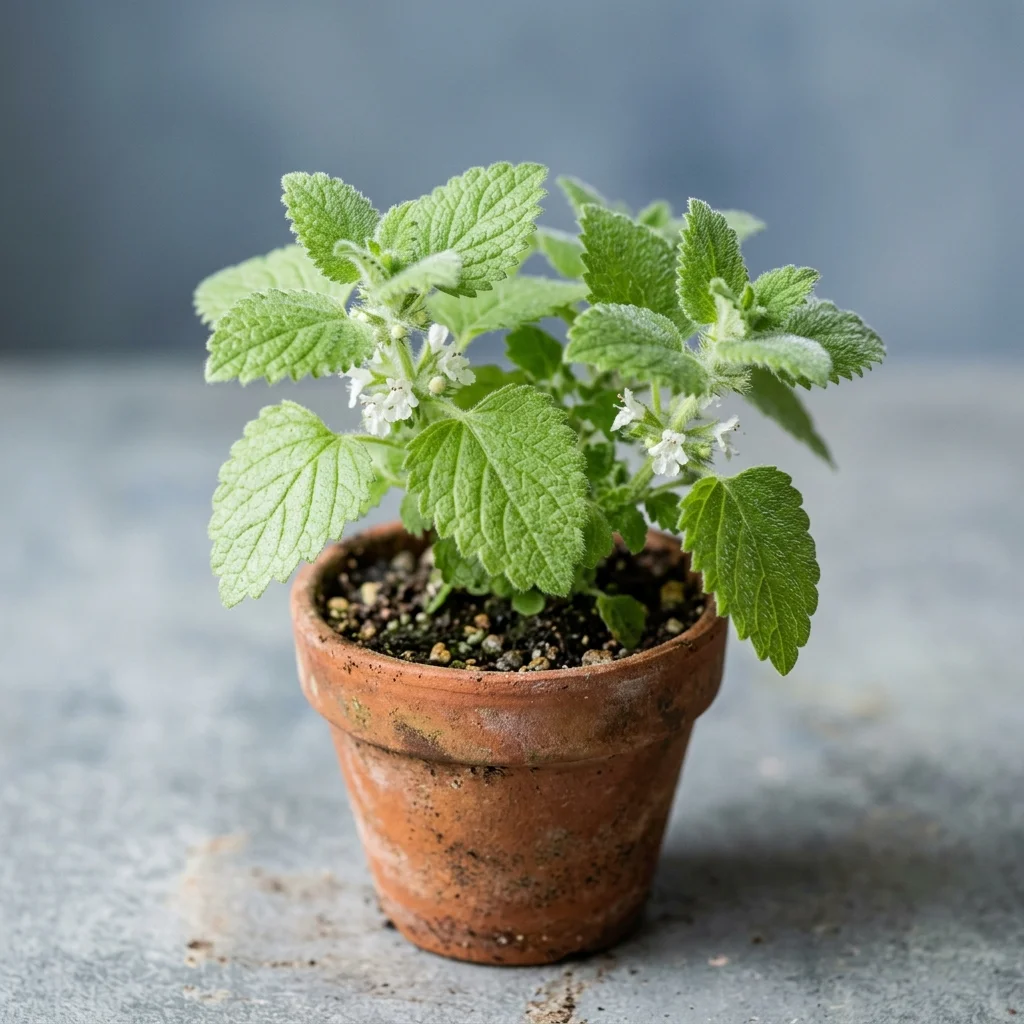
Melissa officinalis subsp. altissima

Hairy Lemon Balm Care & Identification Guide

Hairy Lemon Balm (Melissa officinalis subsp. altissima), a robust and intriguing subspecies of traditional lemon balm, is renowned for its vigorous growth and distinctively downy, textured foliage. Thriving in moist, partially shaded environments, this perennial herb releases a complex, musky-citrus aroma when its soft, hairy leaves are bruised. It serves as an excellent, fast-growing groundcover that attracts pollinators while offering a slightly more earthy, herbal twist on the classic lemon scent.


Sunlight Icon
Sunlight Bright Filtered to Direct Sun
Watering Icon
Watering Moderate (dry top 2 inches of soil)
Soil Mix Icon
Soil Mix Lightweight, sandy fast-draining potting mix
Temperature Icon
Temperature 15°C - 25°C
Toxicity Warning Icon
Toxicity Mildly toxic (essential oils can irritate pets)
Botanical macro photography of Hairy Lemon Balm (Melissa officinalis subsp. altissima) - Plant AI care database

How to Identify Hairy Lemon Balm

Hairy Lemon Balm (Melissa officinalis subsp. altissima) is a remarkable botanical species widely appreciated for its unique aesthetic and structural appeal. Recognizing its definitive visual traits is key to distinguishing it from other similar plants.

  • Key Visual Features: Vigorously spreading, square stems covered in prominent, soft white hairs. Leaves are broadly ovate, deeply wrinkled, toothed, and noticeably fuzzy to the touch.
  • Color Variations: Dull, pale to medium green leaves with a distinct frosted appearance due to the dense, fine white hairs, and small, pale yellowish-white flowers.
  • Common Confusions: Often mistaken for common lemon balm (which has smoother, glossier leaves) or various mints, but distinguished by its dense hairiness and unique musky-lemon aroma.
💡 Plant AI Tip: Not sure? Take a photo with Plant AI to identify your houseplants instantly.

Complete Care & Cultivation Guide

Follow our detailed scientific care guide to keep your Hairy Lemon Balm thriving and gorgeous all year round.

Water moderately. Allow the top 2 inches of the container soil to dry out completely before watering deeply. Potted aromatic herbs are sensitive to overwatering, which causes leaf yellowing and a loss of signature fragrance. Ensure excellent pot drainage.
Pinch growing stems regularly to promote a compact, bushy habit and prevent woody leggy growth. Gently wipe waxy leaves with a damp cloth once a month to remove household dust and clear the waxy leaf pores, maximizing aromatic release.
A very light feeder. Feed once in mid-spring and again in mid-summer with a half-strength organic balanced houseplant fertilizer. Excess nutrients compromise leaf scent concentration.
Thrives in bright, filtered to direct sunlight near a south or west-facing window, needing at least 5 to 6 hours of light daily. Insufficient light leads to pale, scentless foliage.
Requires a lightweight, loose, highly draining soil mix consisting of 40% peat moss, 30% perlite, and 30% coarse sand, with a pH of 6.0 to 7.0 to prevent soggy soil stagnation.
Propagate easily via softwood stem cuttings taken in spring or summer. Insert cuttings directly into a moist sand-perlite mix, keep in bright indirect light, and mist regularly until roots form in 2 to 3 weeks.
Thrives in warm indoor temperatures of 18°C to 27°C. Highly sensitive to frost and cold drafts; keep in rooms that stay above 12°C during winter and avoid placing near heating vents.
Choose medium-sized ceramic or terracotta pots with large drainage holes. Repot every 2 years in spring to provide fresh potting mix and prune circling roots.
Prone to whiteflies and mealybugs in stagnant air. Dab mealybugs off with alcohol-dipped swabs and spray with insecticidal soap every 7 days until clear.
Vulnerable to leaf spot and root rot in waterlogged pots. Ensure excellent drainage, provide good room ventilation, and avoid wetting the foliage.
Brush past or gently rub the leaves of these potted aromatics as you walk by to release their essential oils into the indoor air, acting as an organic, natural room deodorizer.

Is your Hairy Lemon Balm leaves turning yellow, dry or brown?

Keep your indoor garden vibrant. Take a photo with Plant AI to diagnose pests and leaf spot diseases instantly.

Diagnose My Plant

Common Diseases & Treatment

Root Rot (Overwatering)

Symptoms: Leaves turn soft and yellow at the base, shrivel and drop prematurely, accompanied by a mushy root system and foul soil odor.

Action: Drastically cut watering. Remove mushy leaves, wash away old soggy soil, prune rotten black roots, and repot in dry succulent mix with drainage holes.

Foliage Rust

Symptoms: Small powdery orange or brown pustules appear on the linear leaves under humid, poorly ventilated indoor conditions.

Action: Isolate the plant, prune infected leaves, and spray with a copper-based organic fungicide. Improve indoor ventilation.

Frequently Asked Questions

Q: How aggressively does Hairy Lemon Balm spread?

A: Like most members of the mint family, it spreads vigorously via underground runners and prolific self-seeding. Plant it in a bottomless sunken pot or a dedicated container to control its spread.

Q: Does Hairy Lemon Balm prefer sun or shade?

A: It thrives in partial shade. While it can tolerate full sun in cooler climates, the soft, hairy leaves will scorch and yellow under intense, hot afternoon sunlight.

Q: How often should I water my potted Hairy Lemon Balm?

A: It prefers consistently moist, rich soil. Water whenever the top inch of soil feels dry, but ensure the pot has adequate drainage to prevent root rot.

Q: Can I use Hairy Lemon Balm leaves for tea?

A: Yes, the leaves can be steeped for a soothing herbal tea. The flavor is a complex blend of mild citrus and earthy, musky herbal notes, slightly different from standard lemon balm.

No more dying plants. Grow healthy greens today!

Get Started for Free