Horseradish Care & Identification Guide
Horseradish (Armoracia rusticana) is an incredibly rugged, cold-hardy perennial herb famous for its large, coarse leaves and its deep, fiercely pungent, spicy white taproot. A classic staple in culinary condiments, it thrives in deep, rich, well-draining soils where its massive root system can expand unimpeded. While its impressive, dock-like foliage provides bold texture to the garden, it is an aggressive grower that requires dedicated space and careful management to prevent it from overtaking borders.





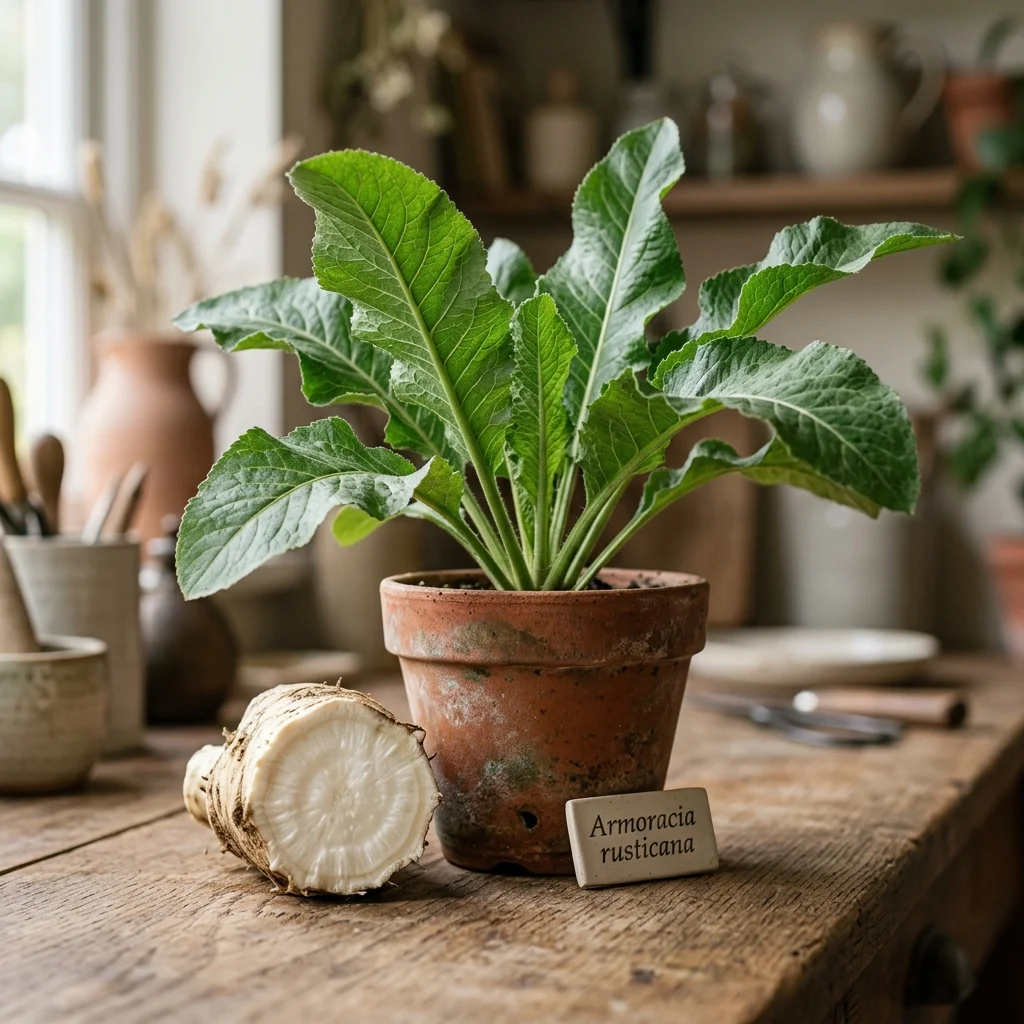
How to Identify Horseradish
Horseradish (Armoracia rusticana) is a remarkable botanical species widely appreciated for its unique aesthetic and structural appeal. Recognizing its definitive visual traits is key to distinguishing it from other similar plants.
-
✔
Key Visual Features: Large, coarse, elongated, crinkled basal leaves (often reaching 2-3 feet tall) growing from a central crown. In summer, it produces tall spikes of small, cross-shaped white flowers.
-
✔
Color Variations: Bright, vibrant green, slightly glossy leaves with tall, sturdy white flower stalks. The prized underground taproot has a rough tan exterior and pure white flesh.
-
✔
Common Confusions: The large leaves are frequently mistaken for curly dock or sorrel, but the intense, tear-inducing, mustard-like smell of a crushed leaf or scraped root instantly identifies horseradish.
Complete Care & Cultivation Guide
Follow our detailed scientific care guide to keep your Horseradish thriving and gorgeous all year round.
Common Diseases & Treatment
Root Rot (Overwatering)
Symptoms: Leaves turn soft and yellow at the base, shrivel and drop prematurely, accompanied by a mushy root system and foul soil odor.
Powdery Mildew
Symptoms: A dusty white or gray powdery coating spreads across the broad leaves, causing distorted growth in stagnant rooms.
Frequently Asked Questions
Q: When is the best time to harvest Horseradish roots?
A: Harvest the roots in late autumn, after the foliage has been killed back by a hard frost. The cold temperatures help concentrate the intensely spicy, pungent flavor compounds in the root.
Q: Will Horseradish take over my garden?
A: Yes, it is highly aggressive. Any tiny piece of root left in the soil will sprout a new plant. It is best grown in a deeply buried, bottomless container or a very isolated, dedicated garden bed.
Q: How deep does the soil need to be for Horseradish?
A: The soil should be deeply tilled, loose, and rock-free to a depth of at least 18-24 inches to allow the thick taproot to grow straight down without forking.
Q: Can I grow Horseradish in a pot?
A: You can, but it requires an exceptionally large and deep container (at least 15-20 gallons) to accommodate the massive root growth and yield a worthwhile harvest.