Hyssop Care & Identification Guide
Hyssop (Hyssopus officinalis) is a stunning, aromatic, semi-evergreen subshrub with a rich heritage in ancient apothecary gardens and traditional cleansing rituals. Native to the arid Mediterranean, it thrives in dry, rocky, well-draining soils and intense sunlight. With its vivid spikes of deep blue flowers that attract countless bees and butterflies, and its strongly camphor-scented, minty-licorice foliage, it is an essential, highly ornamental addition to any drought-tolerant herb garden or sunny border.




How to Identify Hyssop
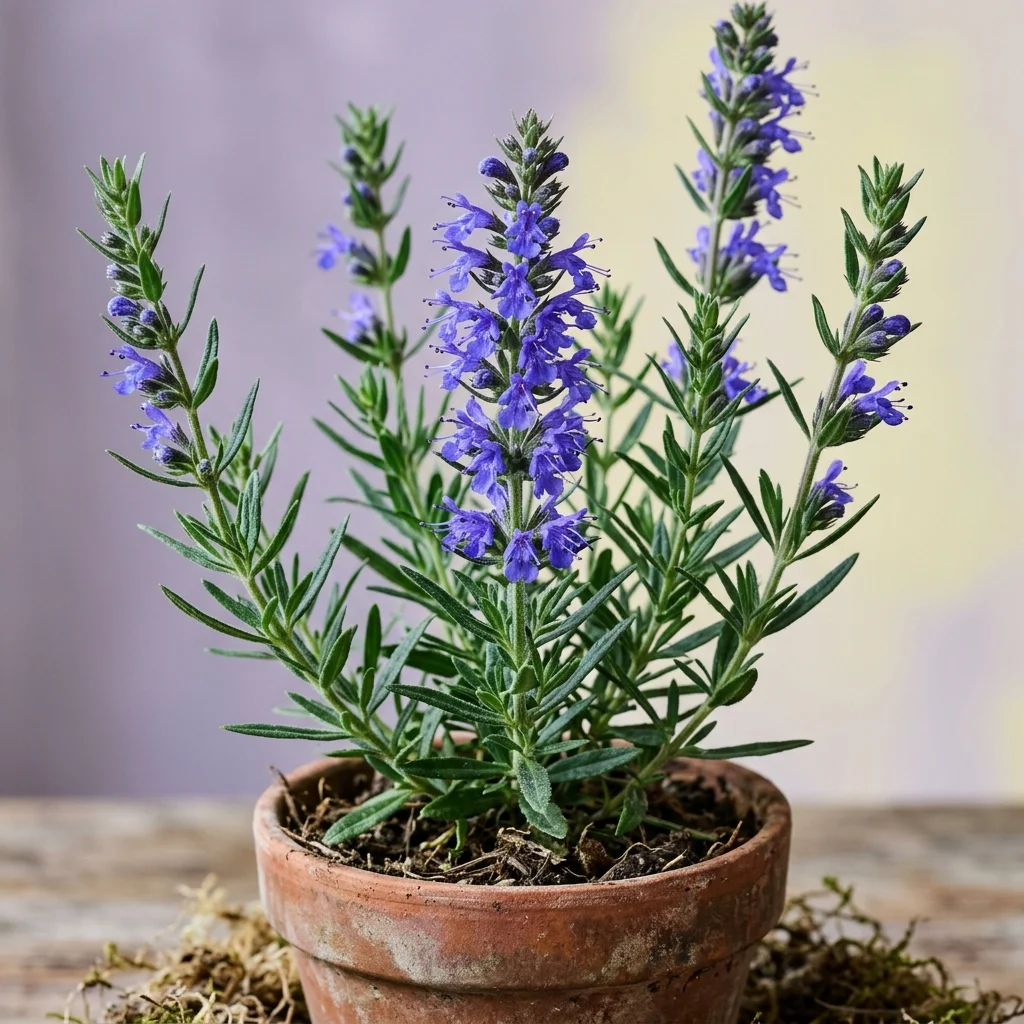
Hyssop (Hyssopus officinalis) is a remarkable botanical species widely appreciated for its unique aesthetic and structural appeal. Recognizing its definitive visual traits is key to distinguishing it from other similar plants.
-
✔
Key Visual Features: Bushy, upright, slightly woody stems bearing narrow, pointed, dark green linear leaves. Produces dense, vertical spikes of vibrant, two-lipped, tubular flowers.
-
✔
Color Variations: Deep green foliage with striking purplish-blue flowers. Rare cultivars may produce pink or white blooms.
-
✔
Common Confusions: Often confused with lavender, rosemary, or tarragon, but hyssop has softer, greener leaves than lavender and a highly distinct, pungent, slightly medicinal mint-licorice aroma.
Complete Care & Cultivation Guide
Follow our detailed scientific care guide to keep your Hyssop thriving and gorgeous all year round.
Common Diseases & Treatment
Root Rot (Overwatering)
Symptoms: Leaves turn soft and yellow at the base, shrivel and drop prematurely, accompanied by a mushy root system and foul soil odor.
Foliage Rust
Symptoms: Small powdery orange or brown pustules appear on the linear leaves under humid, poorly ventilated indoor conditions.
Frequently Asked Questions
Q: How often should I water my Hyssop plant?
A: Hyssop is incredibly drought-tolerant once established. Water deeply but infrequently, allowing the top several inches of soil to dry out completely. It despises soggy, wet roots.
Q: What is the best way to prune Hyssop?
A: Prune the plant back aggressively by about half in early spring to encourage dense, bushy new growth and prevent the woody base from becoming hollow and leggy.
Q: Can I use Hyssop in cooking?
A: Yes, but sparingly. The leaves have a very strong, bitter, minty-camphor flavor. A few fresh leaves can be chopped into salads or hearty soups, but it easily overpowers dishes.
Q: Does Hyssop attract pollinators?
A: Absolutely. Hyssop is widely considered one of the absolute best nectar plants for attracting honeybees, bumblebees, and butterflies to the garden.