Lemongrass Care & Identification Guide
Lemongrass (Cymbopogon citratus) is a striking, fast-growing tropical grass that provides an essential, complex, and intensely fragrant citrus-floral flavor to Southeast Asian cuisine. Native to warm, humid environments, it forms dense, majestic clumps of arching, razor-sharp blades. Thriving in rich, moist soil and baking sun, it is incredibly easy to grow in large outdoor patio pots during the summer, providing an abundant harvest of thick, aromatic stalks for cooking and teas.





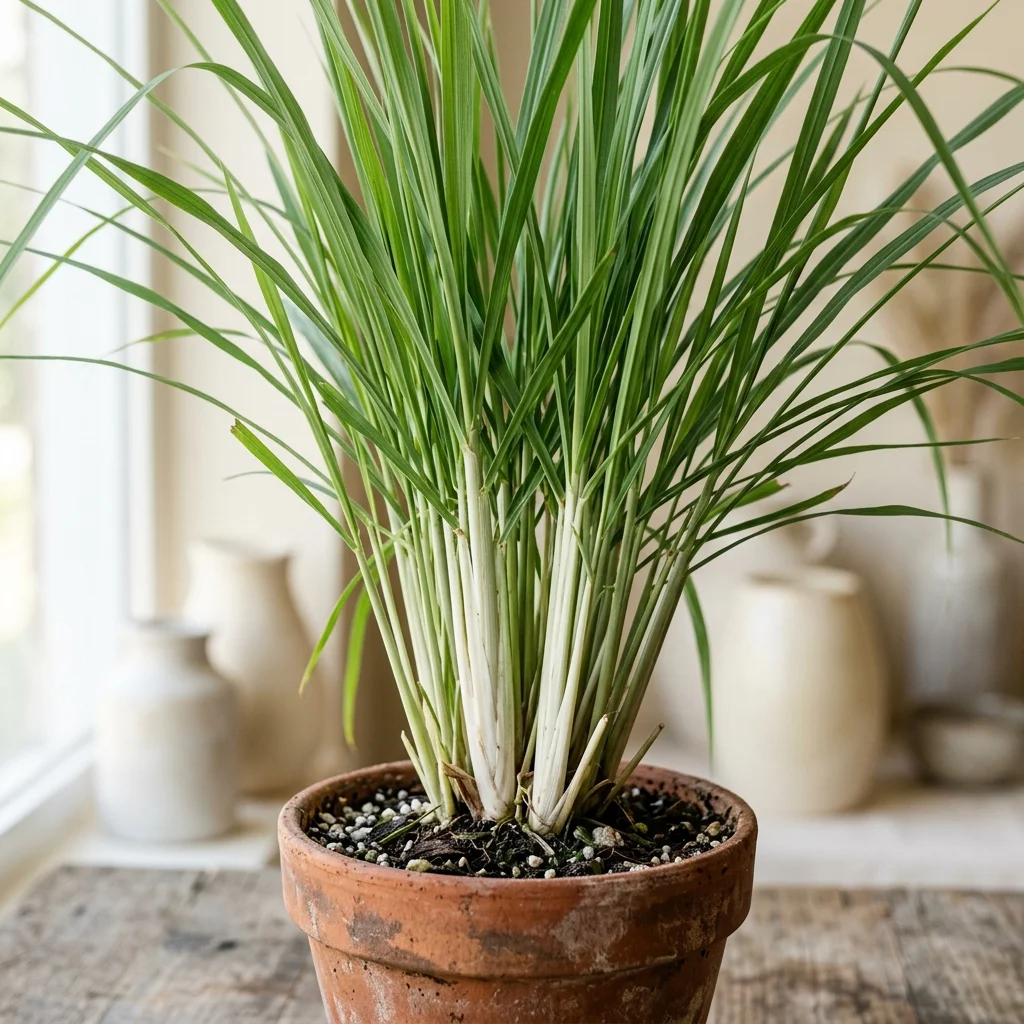
How to Identify Lemongrass
Lemongrass (Cymbopogon citratus) is a remarkable botanical species widely appreciated for its unique aesthetic and structural appeal. Recognizing its definitive visual traits is key to distinguishing it from other similar plants.
-
✔
Key Visual Features: Dense clumps of tall, arching, stiff, blue-green grass blades with extremely sharp edges. The base of the stems (the edible part) is thick, swollen, and tightly layered, resembling a scallion.
-
✔
Color Variations: Pale greenish-white, swollen bulbous bases with bright, glaucous blue-green, arching foliage.
-
✔
Common Confusions: Vaguely resembles ornamental grasses like fountain grass, or thick chives, but is unmistakable once the base is bruised, releasing its potent, sharp lemon-ginger aroma.
Complete Care & Cultivation Guide
Follow our detailed scientific care guide to keep your Lemongrass thriving and gorgeous all year round.
Common Diseases & Treatment
Root Rot (Overwatering)
Symptoms: Leaves turn soft and yellow at the base, shrivel and drop prematurely, accompanied by a mushy root system and foul soil odor.
Foliage Rust
Symptoms: Small powdery orange or brown pustules appear on the linear leaves under humid, poorly ventilated indoor conditions.
Frequently Asked Questions
Q: How do I harvest Lemongrass?
A: Grab a thick stalk near the base and pull it firmly downward and sideways with a twisting motion to snap it off at the root. Peel away the tough outer layers to reveal the tender, fragrant white core.
Q: Can Lemongrass survive the winter outdoors?
A: No, it is a tropical plant and will die if exposed to freezing temperatures. In cold climates, dig up a clump, pot it, and bring it indoors to a bright, warm window for the winter.
Q: Why are the tips of my Lemongrass turning brown?
A: Brown, dry tips are typically a sign of underwatering or incredibly dry indoor air. Lemongrass is a thirsty plant that prefers consistently moist soil and high humidity.
Q: How do I propagate Lemongrass?
A: You can easily propagate it from store-bought stalks! Place a fresh stalk (with the basal root intact) in a glass of water on a sunny windowsill until roots develop, then plant it in rich soil.