Marshmallow Root Care & Identification Guide
Marshmallow Root (Althaea officinalis) is a tall, exquisitely soft, and deeply soothing perennial herb famed for its mucilage-rich roots, which were the original ingredient in the beloved fluffy confection. Native to damp meadows and salt marshes, it thrives in consistently wet, boggy soils and full sun. Its velvety, grayish-green leaves and delicate, pale pink hibiscus-like flowers make it a stunning, highly tactile ornamental that provides profound traditional herbal benefits.





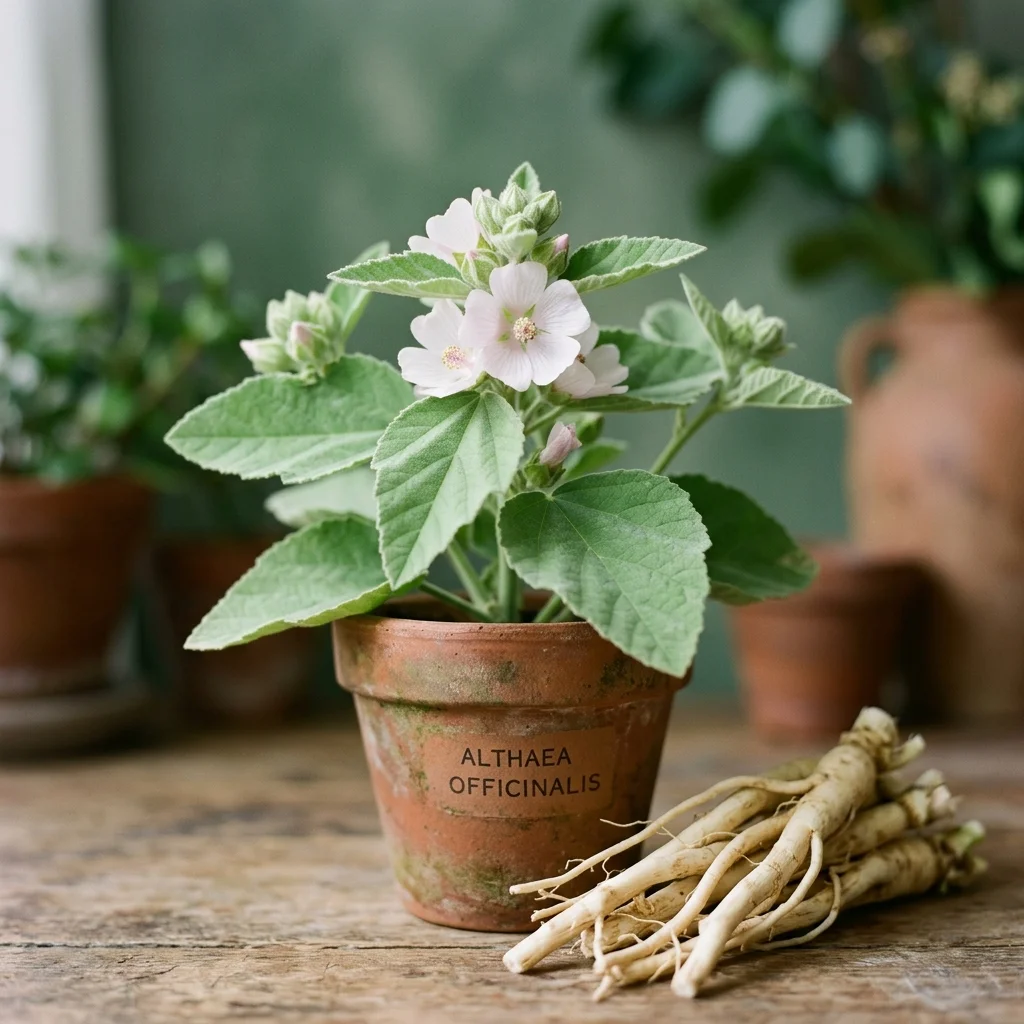
How to Identify Marshmallow Root
Marshmallow Root (Althaea officinalis) is a remarkable botanical species widely appreciated for its unique aesthetic and structural appeal. Recognizing its definitive visual traits is key to distinguishing it from other similar plants.
-
✔
Key Visual Features: Tall, sturdy stems covered in incredibly soft, velvety, lobed leaves. Produces beautiful, five-petaled, pale pink or white flowers with distinctive purple or dark pink stamens clustered in the leaf axils.
-
✔
Color Variations: Dusty, pale grayish-green foliage due to a dense covering of fine, velvety hairs, with pale pink, almost white blossoms.
-
✔
Common Confusions: Often confused with hollyhocks or common mallow (Malva neglecta), but marshmallow is taller, much softer/velvety to the touch, and strongly prefers wet, marshy soil environments.
Complete Care & Cultivation Guide
Follow our detailed scientific care guide to keep your Marshmallow Root thriving and gorgeous all year round.
Common Diseases & Treatment
Root Rot (Overwatering)
Symptoms: Leaves turn soft and yellow at the base, shrivel and drop prematurely, accompanied by a mushy root system and foul soil odor.
Foliage Rust
Symptoms: Small powdery orange or brown pustules appear on the linear leaves under humid, poorly ventilated indoor conditions.
Frequently Asked Questions
Q: Can I grow Marshmallow Root in dry soil?
A: No, it naturally thrives in swamps and marshes. It strictly requires rich, heavy, moisture-retentive soil that never dries out. It is an excellent choice for a rain garden or pond edge.
Q: When do I harvest Marshmallow roots?
A: Harvest the roots in the late autumn of the plant's second or third year, after the upper foliage has died back. This is when the mucilage (the soothing, gel-like substance) is most concentrated.
Q: Are the leaves and flowers of Marshmallow edible?
A: Yes! The tender young leaves and beautiful pale pink flowers are entirely edible. They can be added to salads or steeped into a soothing tea, though they have a somewhat slippery texture.
Q: Does Marshmallow Root spread aggressively?
A: It does not spread via aggressive rhizomes, but it can self-seed prolifically in wet soils. Deadhead the flowers before they go to seed to keep it contained in your garden.