Meadowsweet Care & Identification Guide
Meadowsweet (Filipendula ulmaria) is a graceful, moisture-loving perennial herb historically revered by the Druids and famous for containing salicylic acid, the natural precursor to aspirin. Native to damp woodlands and wet meadows, it forms lush clumps of dark, textured foliage topped with airy, frothy, incredibly fragrant plumes of creamy-white summer flowers. Thriving in boggy, poorly drained soils, it is a magnificent, sweet-smelling architectural addition to water gardens or damp, shaded borders.





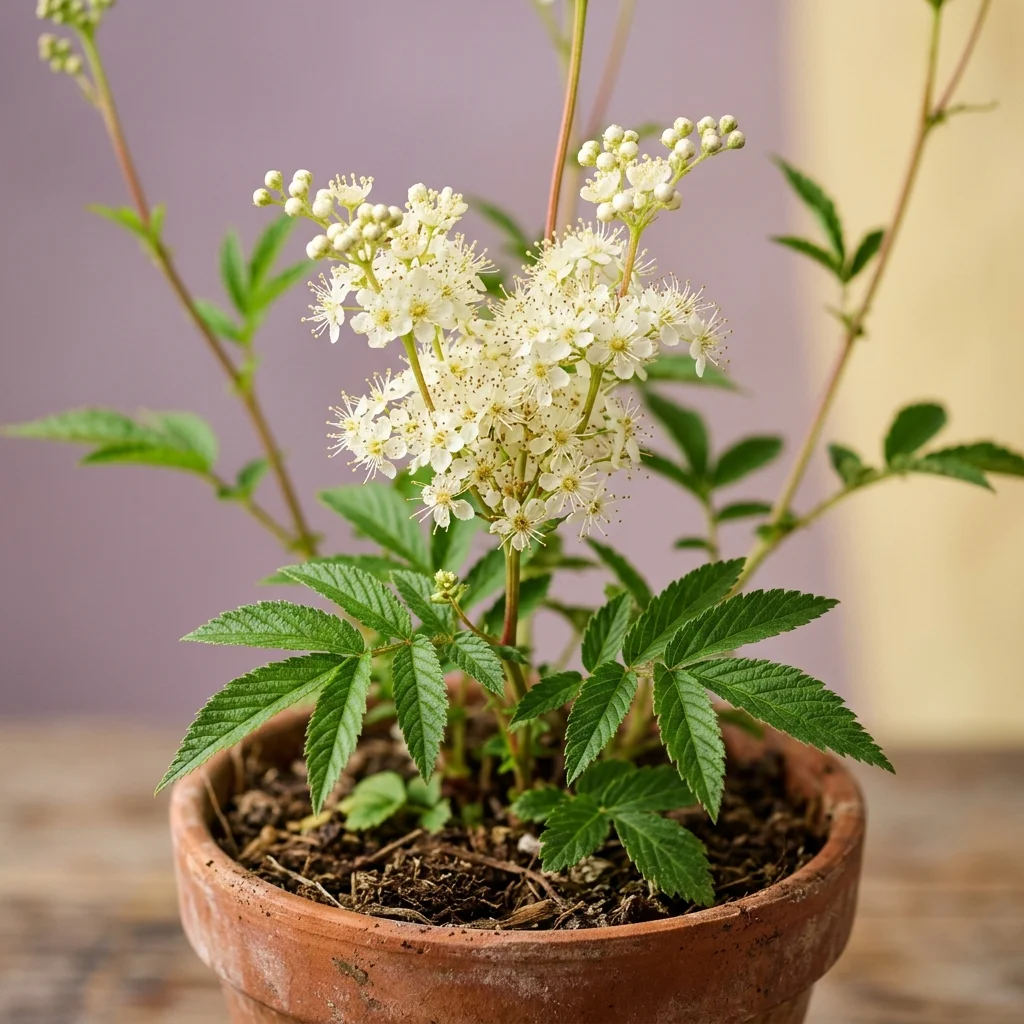
How to Identify Meadowsweet
Meadowsweet (Filipendula ulmaria) is a remarkable botanical species widely appreciated for its unique aesthetic and structural appeal. Recognizing its definitive visual traits is key to distinguishing it from other similar plants.
-
✔
Key Visual Features: Tall, reddish, grooved stems bearing large, pinnate, dark green leaves with silvery undersides and deeply toothed margins. Topped by dense, fluffy, irregular panicles of tiny, intensely sweet-scented, creamy-white flowers.
-
✔
Color Variations: Dark, rich green foliage with stark silvery-white undersides, topped with frothy, creamy-white or pale almond-colored floral plumes.
-
✔
Common Confusions: Can be confused with astilbe or goatsbeard due to the frothy flowers, but meadowsweet is distinguished by its distinct, strong, sweet almond/wintergreen aroma when crushed.
Complete Care & Cultivation Guide
Follow our detailed scientific care guide to keep your Meadowsweet thriving and gorgeous all year round.
Common Diseases & Treatment
Root Rot (Overwatering)
Symptoms: Leaves turn soft and yellow at the base, shrivel and drop prematurely, accompanied by a mushy root system and foul soil odor.
Foliage Rust
Symptoms: Small powdery orange or brown pustules appear on the linear leaves under humid, poorly ventilated indoor conditions.
Frequently Asked Questions
Q: Does Meadowsweet require full sun?
A: It prefers partial shade, especially in hotter climates. It can tolerate full sun only if the soil is kept exceptionally wet and boggy at all times, mimicking its natural wetland habitat.
Q: Why are the leaves on my Meadowsweet turning brown and crispy?
A: Brown, crispy edges are a definitive sign that the plant is severely underwatered or the ambient humidity is too low. Meadowsweet absolutely despises dry soil; keep it constantly moist.
Q: What does Meadowsweet smell like?
A: The flowers emit an incredibly sweet, heavy, almost intoxicating fragrance that smells like honey and almonds. The crushed leaves and stems smell sharply of wintergreen or sweet birch.
Q: How do you propagate Meadowsweet?
A: It is best propagated by digging up and dividing the large root clumps in early spring or late autumn. It also self-seeds readily in consistently moist garden soil.