Milk Thistle Care & Identification Guide
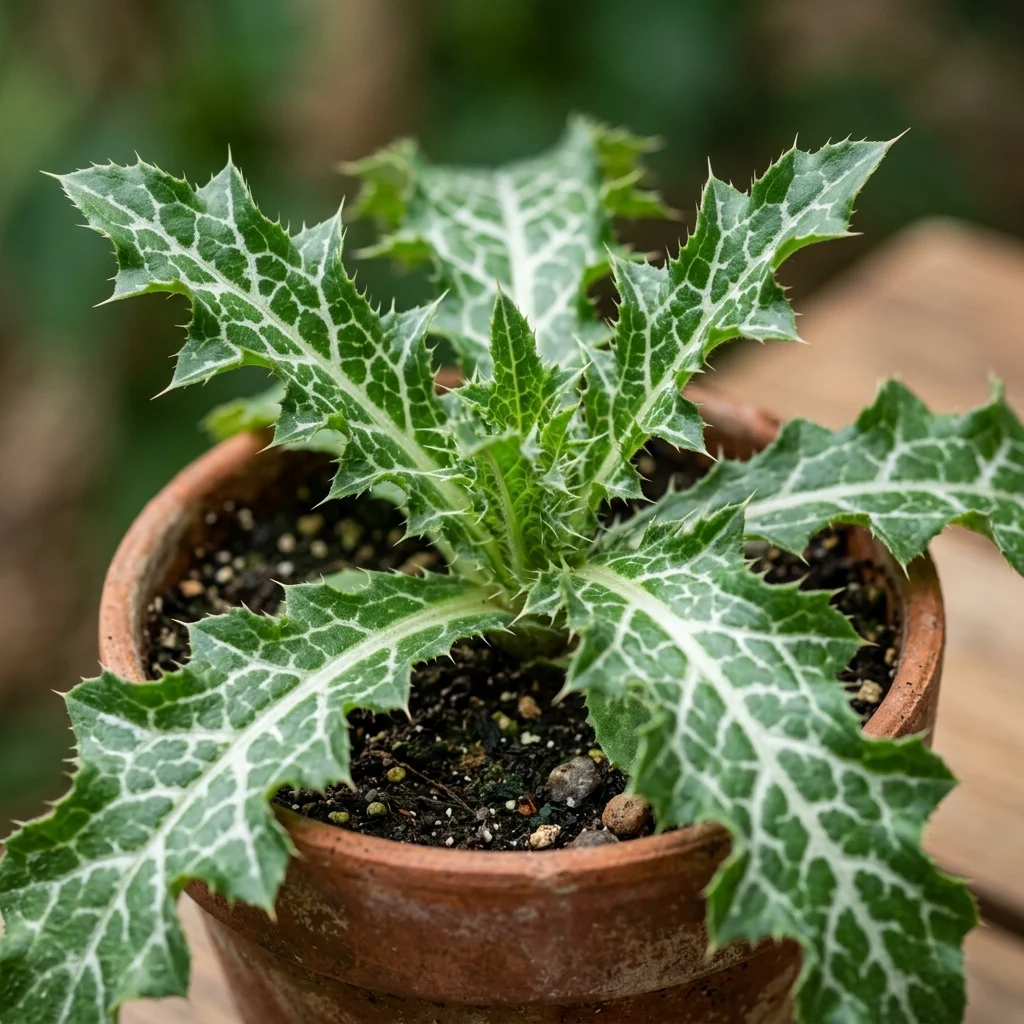
Milk Thistle (Silybum marianum) is an imposing, strikingly architectural biennial herb universally acclaimed in herbalism for silymarin, a powerful compound extracted from its seeds to support liver health. Native to rocky Mediterranean soils, it is highly resilient and drought-tolerant. Its massive, glossy green leaves—spectacularly marbled with stark white veins—and its fierce, spiny, bright purple flower heads make it a dramatic, sculptural, albeit prickly, centerpiece in an ornamental herb garden.





How to Identify Milk Thistle
Milk Thistle (Silybum marianum) is a remarkable botanical species widely appreciated for its unique aesthetic and structural appeal. Recognizing its definitive visual traits is key to distinguishing it from other similar plants.
-
✔
Key Visual Features: Massive, glossy, deeply lobed basal leaves distinguished by prominent, milky-white marbling along the veins, armed with sharp yellow spines. Produces large, singular, bright magenta-purple thistle flower heads.
-
✔
Color Variations: High-contrast, shiny dark green leaves marbled with stark, creamy-white veins, topped by vibrant magenta or violet flower heads.
-
✔
Common Confusions: Often confused with bull thistle or other noxious weeds, but milk thistle is immediately and uniquely identifiable by the stark, milky-white marbling traversing its glossy green leaves.
Complete Care & Cultivation Guide
Follow our detailed scientific care guide to keep your Milk Thistle thriving and gorgeous all year round.
Common Diseases & Treatment
Root Rot (Overwatering)
Symptoms: Leaves turn soft and yellow at the base, shrivel and drop prematurely, accompanied by a mushy root system and foul soil odor.
Foliage Rust
Symptoms: Small powdery orange or brown pustules appear on the linear leaves under humid, poorly ventilated indoor conditions.
Frequently Asked Questions
Q: Is Milk Thistle an invasive weed?
A: Yes, in many regions it is considered a noxious, invasive weed because it self-seeds prolifically and is highly adaptable. You must aggressively deadhead the purple flowers before they produce fluffy seed heads.
Q: How do I harvest the seeds for herbal use?
A: Harvesting is painful! Wear thick leather gloves. Cut the flower heads off right as they begin to dry and show white fluff. Dry them in a paper bag, then thresh them to release the hard, black seeds.
Q: What kind of soil does Milk Thistle need?
A: It is incredibly adaptable and thrives in almost any soil condition, from rich garden loam to poor, dry, rocky wasteland, provided it receives full, direct sunlight.
Q: Are the leaves of Milk Thistle edible?
A: Yes, historically the young leaves were eaten as a vegetable, but you must meticulously trim away all the sharp spines with scissors first. The flavor is mild, similar to spinach or chard.