Motherwort Care & Identification Guide
Motherwort (Leonurus cardiaca) is a robust, statuesque perennial herb deeply rooted in traditional midwifery and apothecary history as a calming tonic. A hardy member of the mint family, it thrives in a wide range of soils and light conditions, from full sun to dappled woodland shade. Its deeply lobed, spiky green leaves and tall, rigid stems covered in whorls of tiny pink flowers provide an architectural, almost formidable presence in the medicinal herb garden, while attracting countless bees.





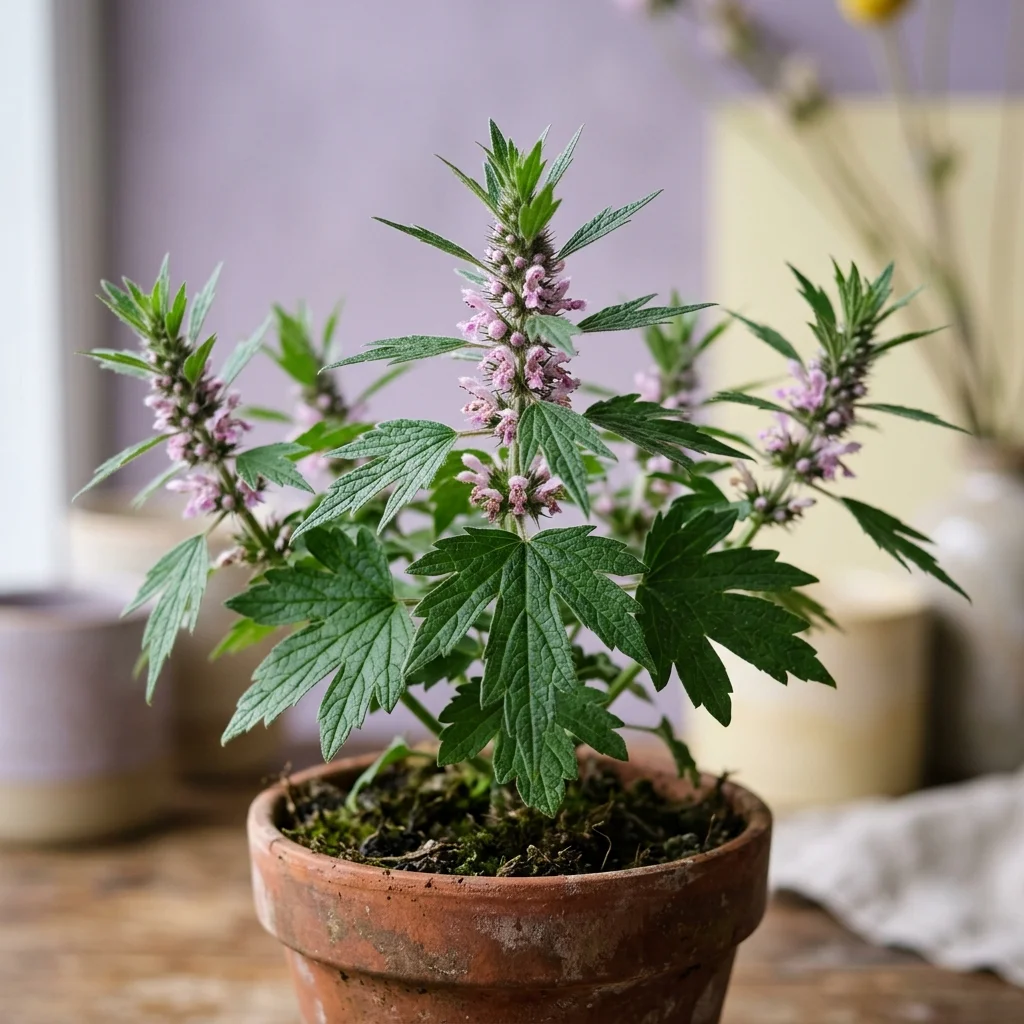
How to Identify Motherwort
Motherwort (Leonurus cardiaca) is a remarkable botanical species widely appreciated for its unique aesthetic and structural appeal. Recognizing its definitive visual traits is key to distinguishing it from other similar plants.
-
✔
Key Visual Features: Tall, square, highly ridged stems bearing deeply lobed, palmate, sharply toothed leaves. The upper stems are densely packed with whorls of small, fuzzy, pale pink or lilac flowers that sit above stiff, prickly calyxes.
-
✔
Color Variations: Dark green foliage with prominent veins and very pale pink, almost white, hairy tubular flowers.
-
✔
Common Confusions: Often confused with mugwort (which has silvery undersides and no square stems) or stinging nettle, but motherwort's rigid square stems, deeply cut leaves, and prickly flower whorls are distinct.
Complete Care & Cultivation Guide
Follow our detailed scientific care guide to keep your Motherwort thriving and gorgeous all year round.
Common Diseases & Treatment
Root Rot (Overwatering)
Symptoms: Leaves turn soft and yellow at the base, shrivel and drop prematurely, accompanied by a mushy root system and foul soil odor.
Foliage Rust
Symptoms: Small powdery orange or brown pustules appear on the linear leaves under humid, poorly ventilated indoor conditions.
Frequently Asked Questions
Q: Is Motherwort invasive?
A: It is not aggressively rhizomatic like mint, but it is an incredibly prolific self-seeder. If left unchecked, the seeds will sprout everywhere. To control it, meticulously deadhead the tall flower stalks before they drop seeds.
Q: Does Motherwort have thorns?
A: No, but the calyxes (the base of the flower clusters) become extremely stiff and prickly as the seeds dry in late summer, making the stems quite sharp and painful to handle without gloves.
Q: Can I grow Motherwort in full shade?
A: It will tolerate partial or dappled shade beautifully, but full, dense shade will cause the plant to become weak, leggy, and highly prone to powdery mildew.
Q: How do you harvest Motherwort for tea?
A: Harvest the upper aerial parts (the leaves and flowering tops) just as the plant begins to bloom in early summer. Hang them to dry. The flavor is intensely bitter.