Mullein Care & Identification Guide
Mullein (Verbascum thapsus) is a towering, biennial botanical giant instantly recognizable by its massive rosette of incredibly soft, silvery-felted leaves and an imposing central flower stalk that can reach 6 to 8 feet tall. Thriving in poor, dry, rocky wasteland and baking sun, it is the ultimate drought-tolerant survivor. Long valued in traditional herbalism for respiratory support, its fuzzy basal leaves and bright yellow summer flowers make a dramatic, architectural statement in dryland or xeriscape gardens.





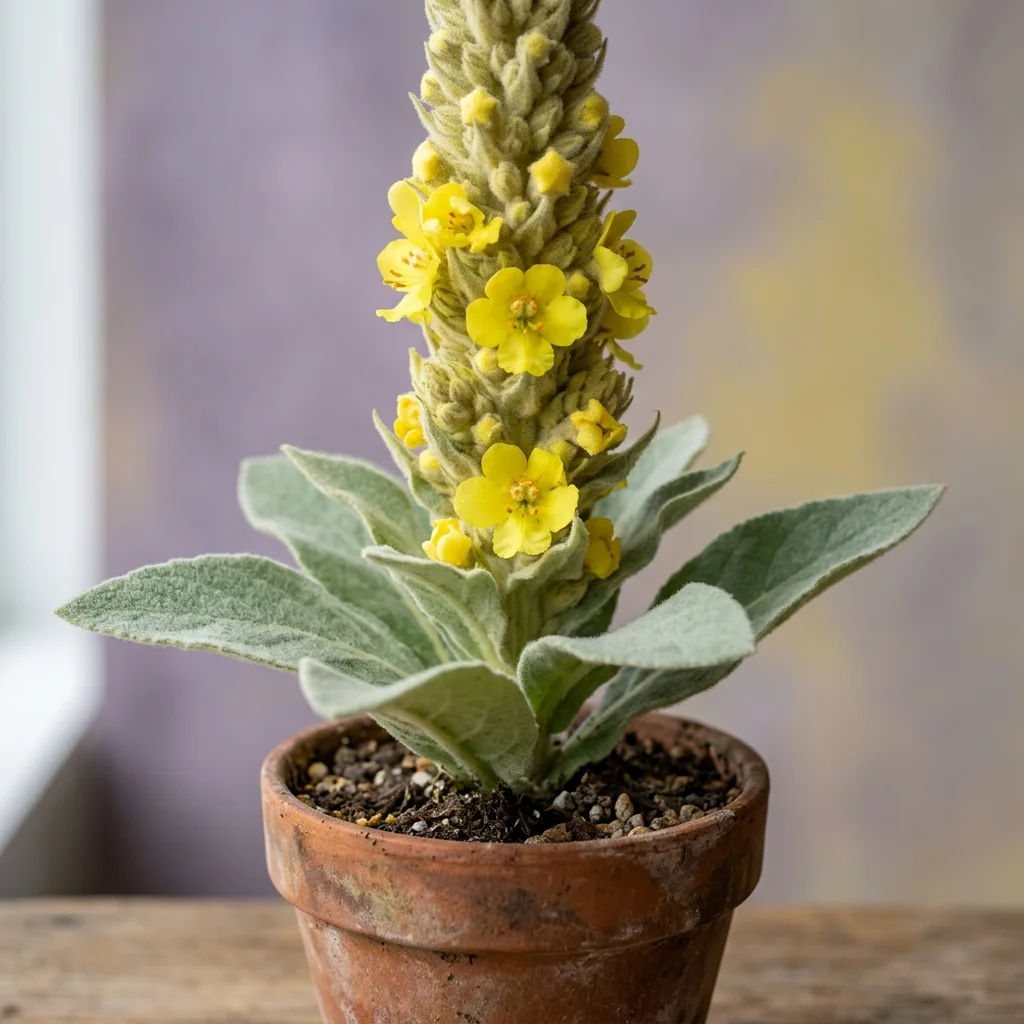
How to Identify Mullein
Mullein (Verbascum thapsus) is a remarkable botanical species widely appreciated for its unique aesthetic and structural appeal. Recognizing its definitive visual traits is key to distinguishing it from other similar plants.
-
✔
Key Visual Features: A massive first-year basal rosette of huge, pale grayish-green, incredibly soft and fuzzy oval leaves. In the second year, it shoots up a single, towering, thick spike covered in small, five-petaled yellow flowers.
-
✔
Color Variations: Distinctive silvery, pale grayish-green felted foliage topped with bright, lemon-yellow blooms.
-
✔
Common Confusions: The soft, fuzzy leaves of the first-year rosette are occasionally confused with lamb's ear (Stachys byzantina), but mullein grows much larger and less spreading.
Complete Care & Cultivation Guide
Follow our detailed scientific care guide to keep your Mullein thriving and gorgeous all year round.
Common Diseases & Treatment
Root Rot (Overwatering)
Symptoms: Leaves turn soft and yellow at the base, shrivel and drop prematurely, accompanied by a mushy root system and foul soil odor.
Foliage Rust
Symptoms: Small powdery orange or brown pustules appear on the linear leaves under humid, poorly ventilated indoor conditions.
Frequently Asked Questions
Q: Does Mullein die after it flowers?
A: Yes, it is a strict biennial. It spends its first year growing a low rosette of leaves, and its second year producing a massive flower stalk. After setting seed, the entire plant dies.
Q: What kind of soil does Mullein need?
A: Mullein actively prefers terrible soil. It thrives in poor, rocky, gravelly, and dry conditions. If planted in rich, heavy, fertile garden loam, the roots will often rot and the plant will collapse.
Q: How do I harvest Mullein for herbal use?
A: You can harvest the large, fuzzy leaves during the first year, or carefully pluck the yellow flowers as they open along the stalk in the second year. Ensure they are dried thoroughly to prevent mold.
Q: Is Mullein a weed?
A: In many areas, it is considered a naturalized weed because it colonizes disturbed soils rapidly via thousands of tiny seeds. However, it is highly valued by herbalists and permaculture designers.