Pineapple Sage Care & Identification Guide
Pineapple Sage (Salvia elegans) is a spectacular, fast-growing perennial subshrub that bridges the gap between culinary delight and ornamental majesty. Renowned for foliage that smells exactly like fresh, sweet pineapple when crushed, it is a sensory masterpiece. In late summer and autumn, it bursts into brilliant spikes of tubular, fire-engine red flowers that are an absolute magnet for hummingbirds and butterflies. Thriving in warm sun and rich soil, it provides a dramatic, tropical flair to the late-season garden.





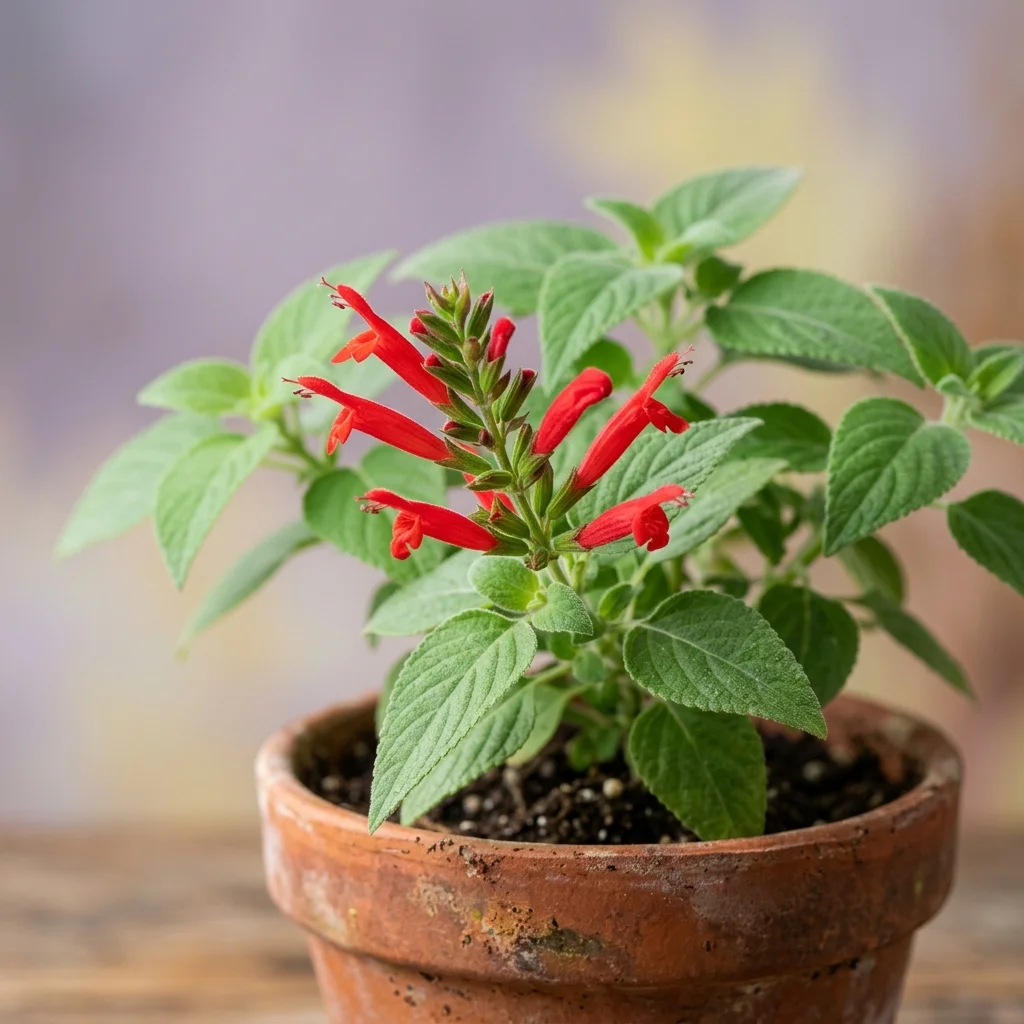
How to Identify Pineapple Sage
Pineapple Sage (Salvia elegans) is a remarkable botanical species widely appreciated for its unique aesthetic and structural appeal. Recognizing its definitive visual traits is key to distinguishing it from other similar plants.
-
✔
Key Visual Features: Tall, branching, slightly woody square stems bearing opposite, ovate, pale yellowish-green, slightly fuzzy leaves. Produces long, elegant spikes of vivid, tubular scarlet-red flowers.
-
✔
Color Variations: Pale, almost chartreuse-green foliage that beautifully contrasts with intensely bright, cardinal-red blossoms.
-
✔
Common Confusions: The foliage looks similar to common garden sage or other salvias, but the vibrant red, tubular flowers and the incredibly distinct, sweet pineapple scent of the bruised leaves are unmistakable.
Complete Care & Cultivation Guide
Follow our detailed scientific care guide to keep your Pineapple Sage thriving and gorgeous all year round.
Common Diseases & Treatment
Root Rot (Overwatering)
Symptoms: Leaves turn soft and yellow at the base, shrivel and drop prematurely, accompanied by a mushy root system and foul soil odor.
Foliage Rust
Symptoms: Small powdery orange or brown pustules appear on the linear leaves under humid, poorly ventilated indoor conditions.
Frequently Asked Questions
Q: Does Pineapple Sage survive the winter?
A: It is a tender perennial (hardy only to Zone 8). In colder climates, it will die back at the first hard frost. You must either grow it in a pot and bring it indoors, or treat it as an annual.
Q: Why isn't my Pineapple Sage blooming?
A: Pineapple sage is a "short-day" plant, meaning it triggers blooming when the days get shorter in late summer and autumn. If planted near bright streetlights, the artificial light can disrupt its blooming cycle.
Q: How big does Pineapple Sage get?
A: It is a vigorous grower and can easily reach 3 to 5 feet tall and wide in a single summer season if planted in rich soil with adequate moisture.
Q: Are the red flowers edible?
A: Yes! Both the pineapple-scented leaves and the sweet, nectar-filled red flowers are edible. The bright red petals make a stunning, sweet garnish for fruit salads and tropical drinks.