Red Clover Care & Identification Guide
Red Clover (Trifolium pratense) is a humble yet incredibly powerful, short-lived perennial herb historically valued as a deep soil-builder, livestock forage, and a staple in traditional wellness teas. Famed for its sweet, nectar-rich, spherical pinkish-purple blossoms, it acts as a critical nitrogen-fixer in the garden, improving poor soils naturally. Thriving in cool, moist meadows, it is a magnificent, low-maintenance cover crop that brings a rustic, wild beauty and endless bumblebees to the landscape.





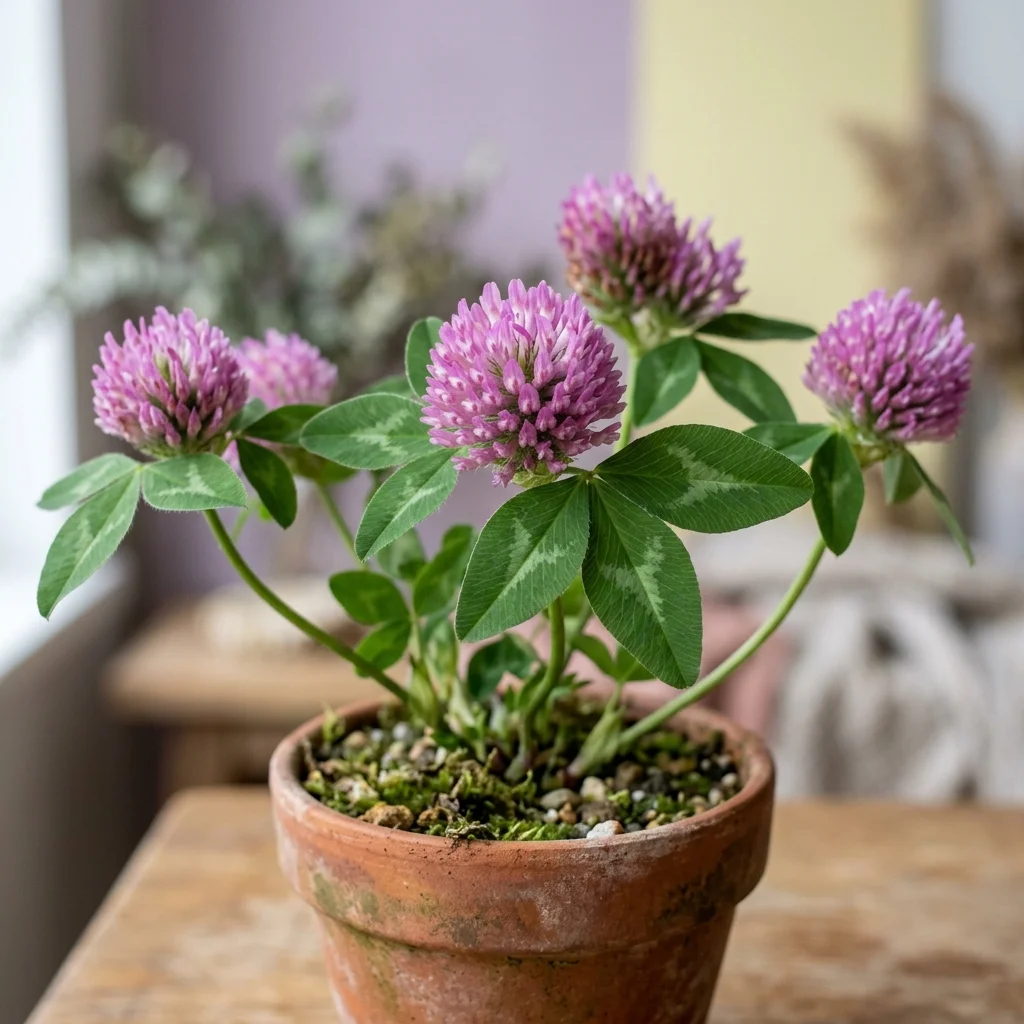
How to Identify Red Clover
Red Clover (Trifolium pratense) is a remarkable botanical species widely appreciated for its unique aesthetic and structural appeal. Recognizing its definitive visual traits is key to distinguishing it from other similar plants.
-
✔
Key Visual Features: Low-growing, sprawling stems bearing trifoliate (three-parted) leaves. Each oval green leaflet typically features a distinctive, pale white or light green V-shaped chevron marking. Produces dense, spherical, fuzzy flower heads composed of tiny, tubular pinkish-purple florets.
-
✔
Color Variations: Bright green foliage with distinct white watermarks, topped with vivid magenta, pink, or purplish-red globular blooms.
-
✔
Common Confusions: Can be confused with white clover (which has smaller, purely white flowers and creeps closer to the ground) or alfalfa, but red clover's large, pinkish-purple globes are highly distinct.
Complete Care & Cultivation Guide
Follow our detailed scientific care guide to keep your Red Clover thriving and gorgeous all year round.
Common Diseases & Treatment
Root Rot (Overwatering)
Symptoms: Leaves turn soft and yellow at the base, shrivel and drop prematurely, accompanied by a mushy root system and foul soil odor.
Foliage Rust
Symptoms: Small powdery orange or brown pustules appear on the linear leaves under humid, poorly ventilated indoor conditions.
Frequently Asked Questions
Q: Is Red Clover good for my garden soil?
A: Yes, it is one of the best "green manures" available. As a legume, it fixes atmospheric nitrogen into the soil through its roots. Tilling it into the soil before it seeds dramatically improves soil fertility.
Q: How do I harvest Red Clover for tea?
A: Pluck the fully open, bright pink flower heads in the morning after the dew has dried. Ensure you dry them quickly and thoroughly in a dark, well-ventilated space, as they are prone to browning and molding.
Q: Will Red Clover take over my lawn?
A: It can spread quickly via seed if not managed, but it does not have aggressive creeping runners like white clover. It is easily controlled by mowing or pulling before the flowers set seed.
Q: Why is there a white V-shape on the leaves?
A: The pale chevron or "watermark" is a natural genetic trait characteristic of many Trifolium species, helping easily identify it even when the plant is not in bloom.