Skullcap Care & Identification Guide
Skullcap (Scutellaria lateriflora), also known as mad dog skullcap, is a deeply revered, moisture-loving perennial herb famous in Western herbalism as a profoundly calming, nervous system tonic. Native to damp woods, marshes, and riverbanks in North America, it thrives in rich, consistently wet soil and partial shade. Its delicate, helmet-shaped blue flowers and unassuming woodland nature belie its powerful reputation for easing stress, anxiety, and tension in traditional apothecaries.





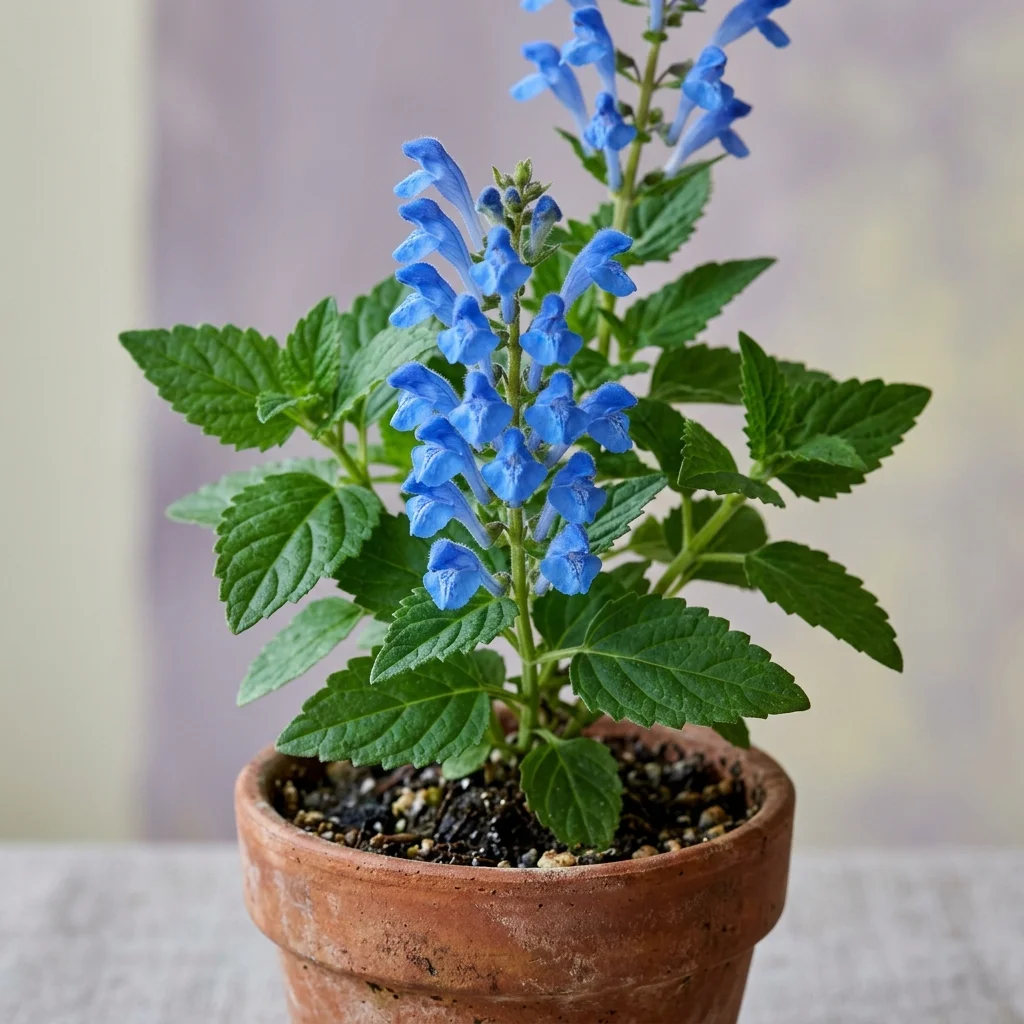
How to Identify Skullcap
Skullcap (Scutellaria lateriflora) is a remarkable botanical species widely appreciated for its unique aesthetic and structural appeal. Recognizing its definitive visual traits is key to distinguishing it from other similar plants.
-
✔
Key Visual Features: Square, smooth stems branching readily, bearing opposite, ovate, toothed leaves with visible veins. Produces one-sided racemes of small, tubular, two-lipped, pale blue or violet flowers featuring a distinct "hood" or "helmet" on the upper calyx.
-
✔
Color Variations: Bright to medium green foliage with delicate pale blue, violet, or rarely white hooded blossoms.
-
✔
Common Confusions: Can be confused with other members of the mint family or marsh lobelia, but the highly distinct "dish" or "helmet" shape on the top of the flower calyx (resembling a skullcap) is unique to Scutellaria.
Complete Care & Cultivation Guide
Follow our detailed scientific care guide to keep your Skullcap thriving and gorgeous all year round.
Common Diseases & Treatment
Root Rot (Overwatering)
Symptoms: Leaves turn soft and yellow at the base, shrivel and drop prematurely, accompanied by a mushy root system and foul soil odor.
Foliage Rust
Symptoms: Small powdery orange or brown pustules appear on the linear leaves under humid, poorly ventilated indoor conditions.
Frequently Asked Questions
Q: Can I grow Skullcap in a standard, dry garden bed?
A: No, it is a wetland plant. It strictly requires rich, consistently moist, or even boggy soil. If planted in dry soil, it will quickly wilt, stunt, and die.
Q: Does Skullcap spread aggressively?
A: It spreads via creeping rhizomes, but it is generally less aggressive and more well-behaved than true mints. It can be easily controlled in a damp garden border or grown in a large, un-drained container.
Q: What part of the Skullcap plant is used for tea?
A: The aerial parts (leaves, stems, and delicate blue flowers) are harvested while the plant is in full bloom during the summer. They are dried in the shade to preserve their green color and delicate medicinal properties.
Q: Does Skullcap need full sun?
A: It performs best in partial, dappled woodland shade. It can tolerate full sun only if the soil is kept exceptionally wet and swamp-like at all times.