Soapwort Care & Identification Guide
Soapwort (Saponaria officinalis), often known as "Bouncing Bet," is a robust, rhizomatic perennial herb famous for containing high levels of saponins—natural compounds that produce a gentle, cleansing lather when crushed in water. Historically planted near textile mills to wash delicate wools, it features sprawling, sturdy stems and clusters of incredibly fragrant, pale pink, phlox-like flowers. Thriving in poor, well-draining soils, it is a vigorous, sweet-smelling survivor that brightens rough, dry garden edges.





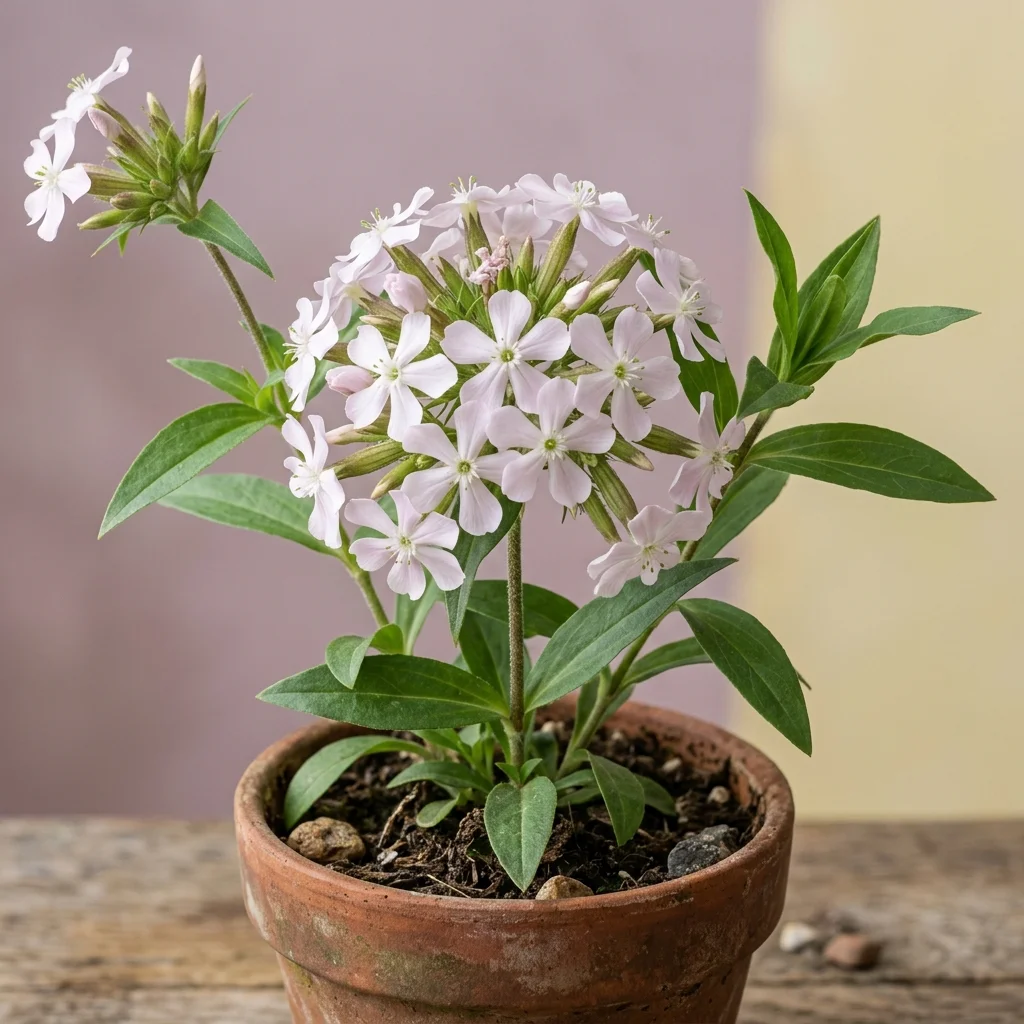
How to Identify Soapwort
Soapwort (Saponaria officinalis) is a remarkable botanical species widely appreciated for its unique aesthetic and structural appeal. Recognizing its definitive visual traits is key to distinguishing it from other similar plants.
-
✔
Key Visual Features: Stout, upright, smooth, jointed stems bearing opposite, strongly veined, lance-shaped leaves. Produces dense terminal clusters of fragrant, five-petaled, pale pink or white tubular flowers.
-
✔
Color Variations: Smooth, medium green leaves with blossoms ranging from pure white to pale, rosy pink.
-
✔
Common Confusions: Often confused with tall phlox (Phlox paniculata) or bouncing bet's close relative, sweet william. However, soapwort's distinctively smooth, jointed stems and the soapy lather produced by its crushed leaves set it apart.
Complete Care & Cultivation Guide
Follow our detailed scientific care guide to keep your Soapwort thriving and gorgeous all year round.
Common Diseases & Treatment
Root Rot (Overwatering)
Symptoms: Leaves turn soft and yellow at the base, shrivel and drop prematurely, accompanied by a mushy root system and foul soil odor.
Foliage Rust
Symptoms: Small powdery orange or brown pustules appear on the linear leaves under humid, poorly ventilated indoor conditions.
Frequently Asked Questions
Q: How do I make soap from Soapwort?
A: Roughly chop or crush a handful of fresh leaves and thick roots, place them in a jar of warm water, and shake vigorously. The water will become highly sudsy and can be used as a gentle, natural cleanser for delicate fabrics.
Q: Is Soapwort safe to eat?
A: No, it is toxic if ingested. The high concentration of saponins that make it an excellent soap also make it highly irritating to the digestive tract, causing severe nausea and vomiting.
Q: Will Soapwort take over my garden?
A: Yes, it is notoriously aggressive, spreading rapidly via deep, thick underground rhizomes to form massive colonies. It is best planted in contained, isolated areas, large sunken pots, or poor, dry soils where its spread is naturally restricted.
Q: What kind of sunlight does Soapwort need?
A: It thrives in full, direct sun but will tolerate light, partial shade. In deep shade, it will become leggy, flop over, and fail to produce its fragrant pink flowers.