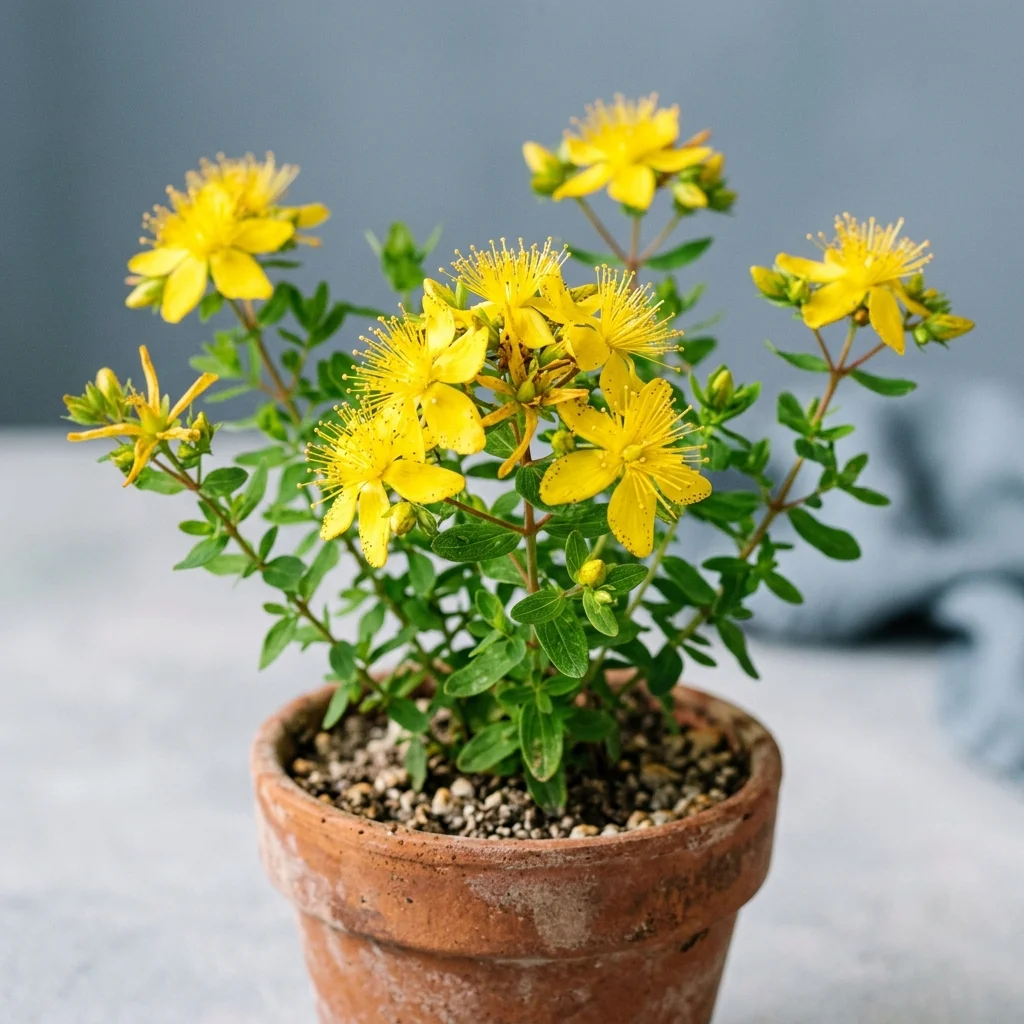
Hypericum perforatum

St. John's Wort Care & Identification Guide

St. John's Wort (Hypericum perforatum) is a radiant, fiercely resilient perennial herb renowned globally for its mood-supporting medicinal properties and brilliant, starry yellow blossoms. Native to sunny, dry, disturbed soils across Europe, it is deeply steeped in folklore, historically harvested on Midsummer's Eve. Thriving in poor, well-draining earth and baking sun, it forms a bushy, upright subshrub that provides striking summer color while demanding almost zero maintenance.


Sunlight Icon
Sunlight Bright Direct Sun
Watering Icon
Watering Low (highly drought-hardy once established)
Soil Mix Icon
Soil Mix Sandy, alkaline-to-neutral potting mix
Temperature Icon
Temperature 15°C - 25°C
Toxicity Warning Icon
Toxicity Variety-dependent (monitor safety, keep out of reach)
Botanical macro photography of St. John's Wort (Hypericum perforatum) - Plant AI care database

How to Identify St. John's Wort

St. John's Wort (Hypericum perforatum) is a remarkable botanical species widely appreciated for its unique aesthetic and structural appeal. Recognizing its definitive visual traits is key to distinguishing it from other similar plants.

  • Key Visual Features: Upright, branching, slightly woody stems with opposite, small, oblong, pale green leaves. When held to the light, the leaves reveal tiny, translucent dots (perforations). Produces stunning, five-petaled, bright yellow, star-shaped flowers with prominent, bushy clusters of stamens.
  • Color Variations: Pale yellowish-green leaves with vivid, brilliant golden-yellow flowers. When crushed, the yellow flower buds release a stark, blood-red sap.
  • Common Confusions: Often confused with ornamental, large-flowered Hypericum shrubs (which lack the medicinal properties and the translucent leaf dots) or common buttercups. The red sap of the crushed buds is a definitive identifier.
💡 Plant AI Tip: Not sure? Take a photo with Plant AI to identify your houseplants instantly.

Complete Care & Cultivation Guide

Follow our detailed scientific care guide to keep your St. John's Wort thriving and gorgeous all year round.

Potted medicinal and tea herbs require careful moisture monitoring. Water deeply only when the top 2 inches of container soil are bone-dry. Lavender and chamomile are highly drought-hardy in pots, while lemon balm prefers a steady, moderate soil moisture. Avoid overwatering to prevent root rot.
Prune regularly to harvest medicinal flower heads and leaves. Deadhead spent blooms immediately to encourage continuous flowering throughout the summer. Gently wipe linear or waxy leaves with a damp cloth to clear indoor dust and maximize photosynthetic efficiency. Shape woody subshrubs like lavender in spring.
Feed minimally. Heavy fertilization diminishes the therapeutic potency and aromatic concentrations of the leaves and blossoms. Apply a diluted organic liquid compost tea once in early spring to support new seasonal growth without compromising oil purity.
Requires bright, direct sunlight to accumulate medicinal essential oils and active ingredients. Provide a minimum of 6 hours of full direct sun daily on a bright windowsill or sunroom. In lower light, these herbs grow leggy and fail to produce showy blossoms.
Thrives in highly porous, sandy, alkaline-to-neutral potting mix (pH 6.5 to 7.5). A perfect recipe is 40% organic soil loam, 40% coarse builder's sand, and 20% perlite. Excellent soil aeration is critical to protect the sensitive root systems.
facilement propagate via seeds or semi-hardwood stem cuttings. For lavender and rosemary-relatives, take a 5-inch cutting in summer, dip the base in organic rooting powder, insert upright in a sand-perlite mix, and keep warm under a humidity dome.
Prefers warm home temperatures between 16°C and 25°C. Most varieties are cold-hardy but sensitive to extreme drafts in pots. Wrap potted roots in burlap if keeping on freezing outdoor balconies during winter freezes.
Grow in spacious, breathable clay pots with multiple drainage holes to prevent soggy root zones. Repot every 2 years in early spring to prevent the strong root systems from becoming root-bound and stunting growth.
Susceptible to spider mites and whiteflies in dry, stagnant indoor rooms. Syringe the foliage with warm water and treat with mild neem oil spray, ensuring it is done at dusk to prevent foliage scorch.
Prone to powdery mildew and damping-off under humid conditions. Ensure good indoor air circulation, space pots widely, and prune dense foliage centers to keep the base dry and airy.
Harvest leaves and flowers for tea early in the morning just after overnight dew evaporates. This is when the concentration of volatile aromatic compounds and essential therapeutic oils reaches its peak.

Is your St. John's Wort leaves turning yellow, dry or brown?

Keep your indoor garden vibrant. Take a photo with Plant AI to diagnose pests and leaf spot diseases instantly.

Diagnose My Plant

Common Diseases & Treatment

Root Rot (Overwatering)

Symptoms: Leaves turn soft and yellow at the base, shrivel and drop prematurely, accompanied by a mushy root system and foul soil odor.

Action: Drastically cut watering. Remove mushy leaves, wash away old soggy soil, prune rotten black roots, and repot in dry succulent mix with drainage holes.

Foliage Rust

Symptoms: Small powdery orange or brown pustules appear on the linear leaves under humid, poorly ventilated indoor conditions.

Action: Isolate the plant, prune infected leaves, and spray with a copper-based organic fungicide. Improve indoor ventilation.

Frequently Asked Questions

Q: Why do the leaves of St. John's Wort look like they have holes in them?

A: The species name "perforatum" refers to these tiny, translucent dots visible when the leaf is held up to the sun. They are not actually holes, but specialized, translucent glands containing the plant's potent essential oils.

Q: What kind of soil does St. John's Wort need?

A: It thrives in poor, rocky, sandy, or gravelly soils that drain rapidly. If planted in rich, heavy, fertile, or wet clay soil, it will suffer from root rot and eventually die.

Q: Is St. John's Wort considered an invasive weed?

A: Yes, in many agricultural regions and pastures (especially in the American West and Australia), it is classified as a noxious weed. It spreads rapidly via seeds and creeping rhizomes and is toxic to grazing livestock.

Q: How do you harvest it for medicinal use?

A: The top few inches of the plant (the leaves and the bright yellow flower buds) are harvested in mid-summer, ideally just as the flowers begin to open. The buds should release a deep red, staining oil when crushed.

No more dying plants. Grow healthy greens today!

Get Started for Free