Sweet Basil Care & Identification Guide
Sweet Basil (Ocimum basilicum) is the undisputed star of the summer culinary garden, renowned globally for its lush, aromatic, clove-scented foliage that is the absolute soul of Italian pesto. A tender, fast-growing annual, it craves intense heat, blazing sun, and consistently moist, rich soil. Its massive, cupped green leaves offer an intoxicating, spicy-sweet fragrance that defines summer cooking, making it an indispensable, albeit short-lived, companion to garden tomatoes.





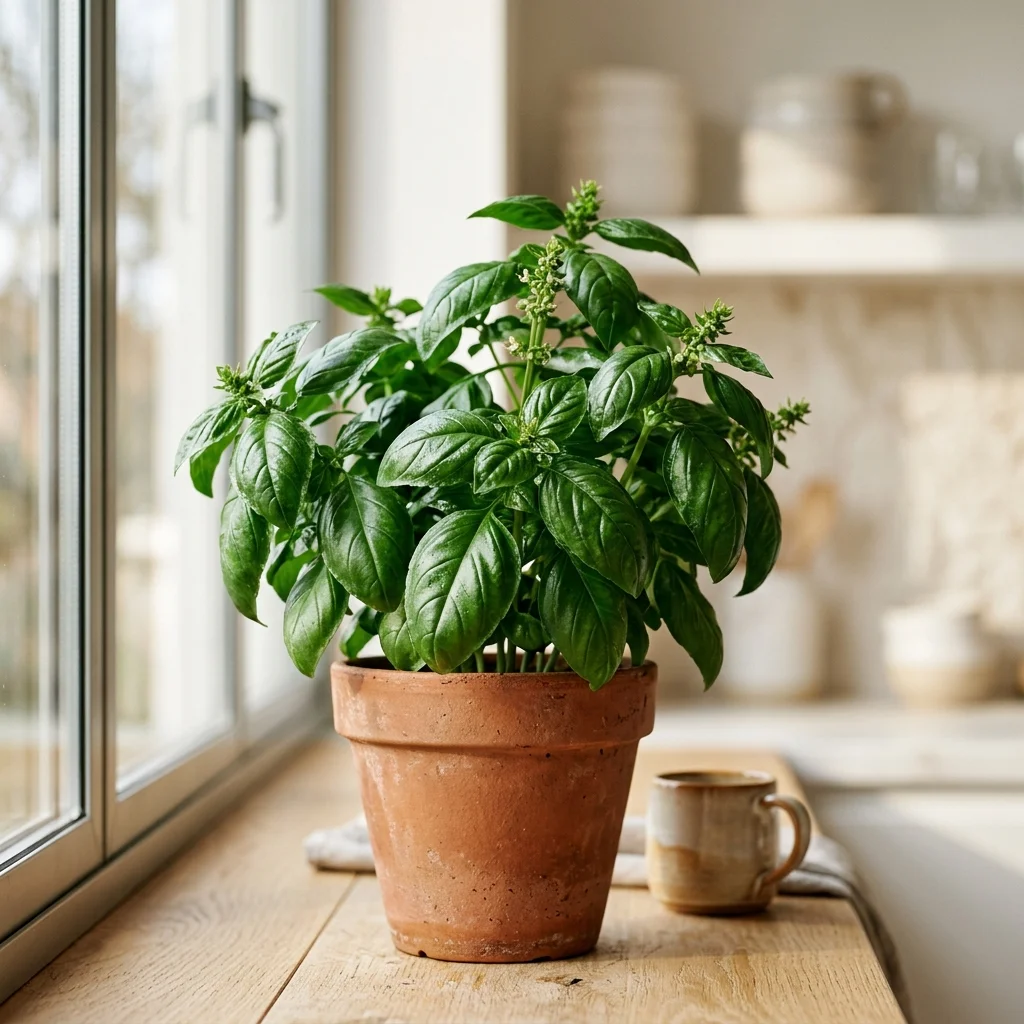
How to Identify Sweet Basil
Sweet Basil (Ocimum basilicum) is a remarkable botanical species widely appreciated for its unique aesthetic and structural appeal. Recognizing its definitive visual traits is key to distinguishing it from other similar plants.
-
✔
Key Visual Features: Bushy, upright growth with smooth, square stems. Leaves are large, opposite, ovate, and slightly cupped or blistered, with a glossy sheen. Produces terminal spikes of small, tubular white flowers.
-
✔
Color Variations: Vibrant, glossy emerald-green foliage. (Some specialty cultivars offer deep purple or ruffled leaves, but classic sweet basil is brilliant green).
-
✔
Common Confusions: Often confused with other basil varieties (like Thai or lemon basil), but sweet basil has significantly larger, softer, more cupped leaves and a pure, sweet, anise-clove aroma without sharp citrus notes.
Complete Care & Cultivation Guide
Follow our detailed scientific care guide to keep your Sweet Basil thriving and gorgeous all year round.
Common Diseases & Treatment
Root Rot (Overwatering)
Symptoms: Leaves turn soft and yellow at the base, shrivel and drop prematurely, accompanied by a mushy root system and foul soil odor.
Powdery Mildew
Symptoms: A dusty white or gray powdery coating spreads across the broad leaves, causing distorted growth in stagnant rooms.
Frequently Asked Questions
Q: Why is my Sweet Basil flowering, and is that bad?
A: Flowering (bolting) signals the end of the basil's life cycle. The plant shifts energy from producing leaves to producing seeds, causing the foliage to become tough, bitter, and woody. Always pinch off flower buds immediately.
Q: How often should I water my potted Sweet Basil?
A: Basil is very thirsty. Keep the soil consistently moist but never soggy. If the large leaves begin to droop and wilt, it desperately needs deep watering and will usually recover within an hour.
Q: Why do the leaves on my Sweet Basil turn black in the fridge?
A: Basil is a tropical plant that severely resents cold temperatures. The cold damages the cell walls, causing them to oxidize and turn black. Always store fresh basil on the counter in a glass of water, like a bouquet of flowers.
Q: How do I harvest Sweet Basil to make it bushy?
A: Never pick just the large bottom leaves. Always harvest by snipping the stem just above a pair of lower leaves. This forces the plant to split into two new branches, creating a massive, bushy plant.