Sweet Clover Care & Identification Guide
Sweet Clover (Melilotus officinalis), also known as yellow sweet clover, is a tall, branching biennial legume highly valued for its sweet, vanilla-hay fragrance and its profound ability to improve poor soils. Thriving in sunny, dry, disturbed areas, it is an exceptional nitrogen-fixing cover crop and one of the finest nectar sources for honeybees in the world. While its delicate yellow flower spikes bring wild beauty to the garden, it must be dried carefully, as improper curing can cause the coumarin within to become toxic to livestock.





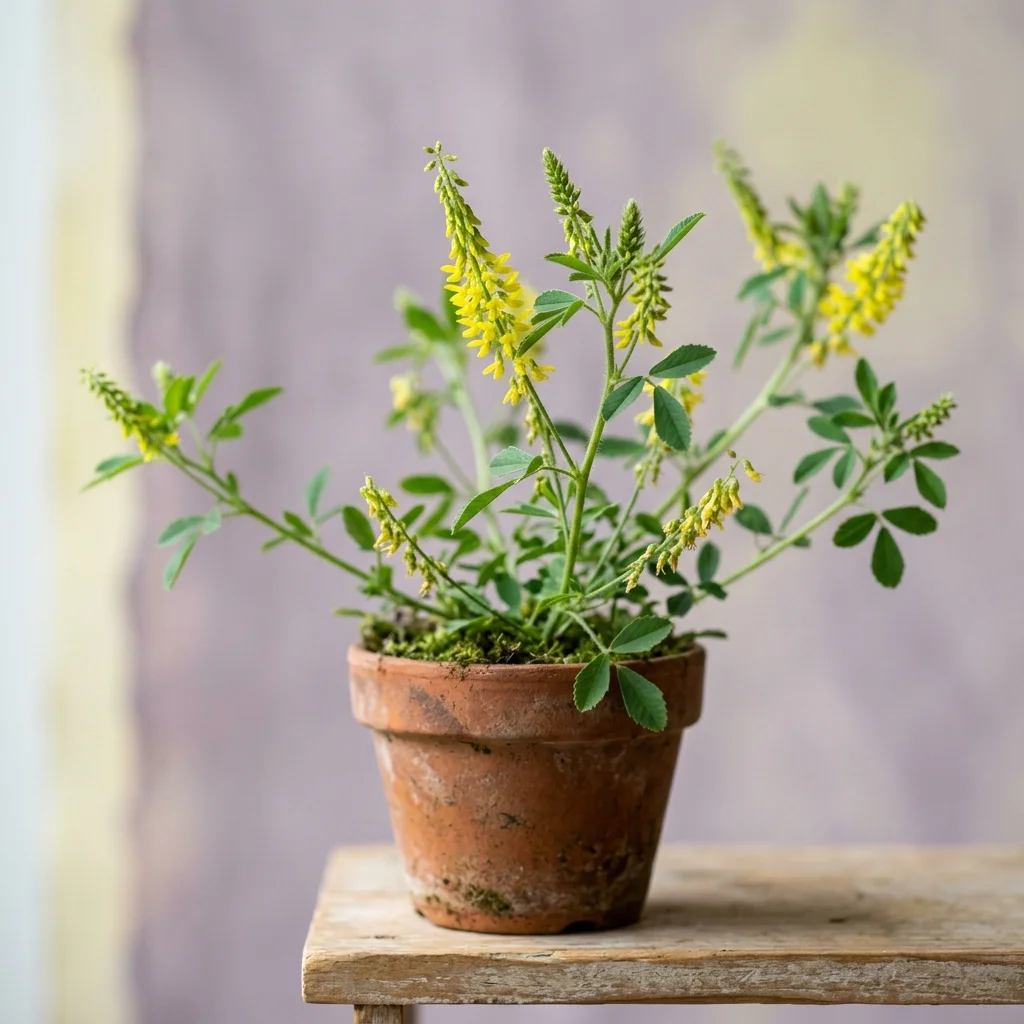
How to Identify Sweet Clover
Sweet Clover (Melilotus officinalis) is a remarkable botanical species widely appreciated for its unique aesthetic and structural appeal. Recognizing its definitive visual traits is key to distinguishing it from other similar plants.
-
✔
Key Visual Features: Tall, slender, branching stems (often reaching 4-6 feet) bearing trifoliate (three-parted) leaves with finely toothed edges. Produces elongated, slender racemes of tiny, bright yellow, pea-like flowers.
-
✔
Color Variations: Bright green foliage with stark, lemon-yellow floral spikes. (A close relative, Melilotus albus, has white flowers).
-
✔
Common Confusions: Can be confused with alfalfa (which has purple flowers) or other clovers, but sweet clover grows much taller and has distinct, elongated yellow floral spikes rather than round clover heads.
Complete Care & Cultivation Guide
Follow our detailed scientific care guide to keep your Sweet Clover thriving and gorgeous all year round.
Common Diseases & Treatment
Root Rot (Overwatering)
Symptoms: Leaves turn soft and yellow at the base, shrivel and drop prematurely, accompanied by a mushy root system and foul soil odor.
Foliage Rust
Symptoms: Small powdery orange or brown pustules appear on the linear leaves under humid, poorly ventilated indoor conditions.
Frequently Asked Questions
Q: Is Sweet Clover toxic?
A: When fresh or properly dried, it is safe. However, if sweet clover is baled or dried while damp, molds convert the natural coumarin into dicoumarol, a powerful anticoagulant that is highly toxic to grazing animals.
Q: Will it improve my garden soil?
A: Yes, incredibly well. As a legume, it fixes nitrogen into the soil. Its deep, strong taproot also breaks up heavy, compacted clay, making it an excellent, hard-working cover crop.
Q: Does Sweet Clover spread like a weed?
A: It can self-seed prolifically in bare, disturbed soil. To prevent it from taking over, mow or cut the tall plants down while they are flowering, before the seed pods mature.
Q: Why doesn't it smell sweet when fresh?
A: The signature sweet, vanilla-hay aroma (from coumarin) is only released as the plant wilts and dries. Freshly picked sweet clover has very little scent.