Sweet Marigold Care & Identification Guide
Sweet Marigold (Tagetes lucida), often called Mexican Mint Marigold or Texas Tarragon, is a fantastic, heat-loving perennial that serves as an absolutely perfect substitute for French tarragon in hot climates. Native to Mexico and Central America, it thrives in blazing sun and handles drought with ease. In late summer and autumn, when most herbs look tired, it bursts into a brilliant display of golden-yellow, edible flowers, while its smooth green leaves provide a continuous harvest of sweet, intense anise flavor.





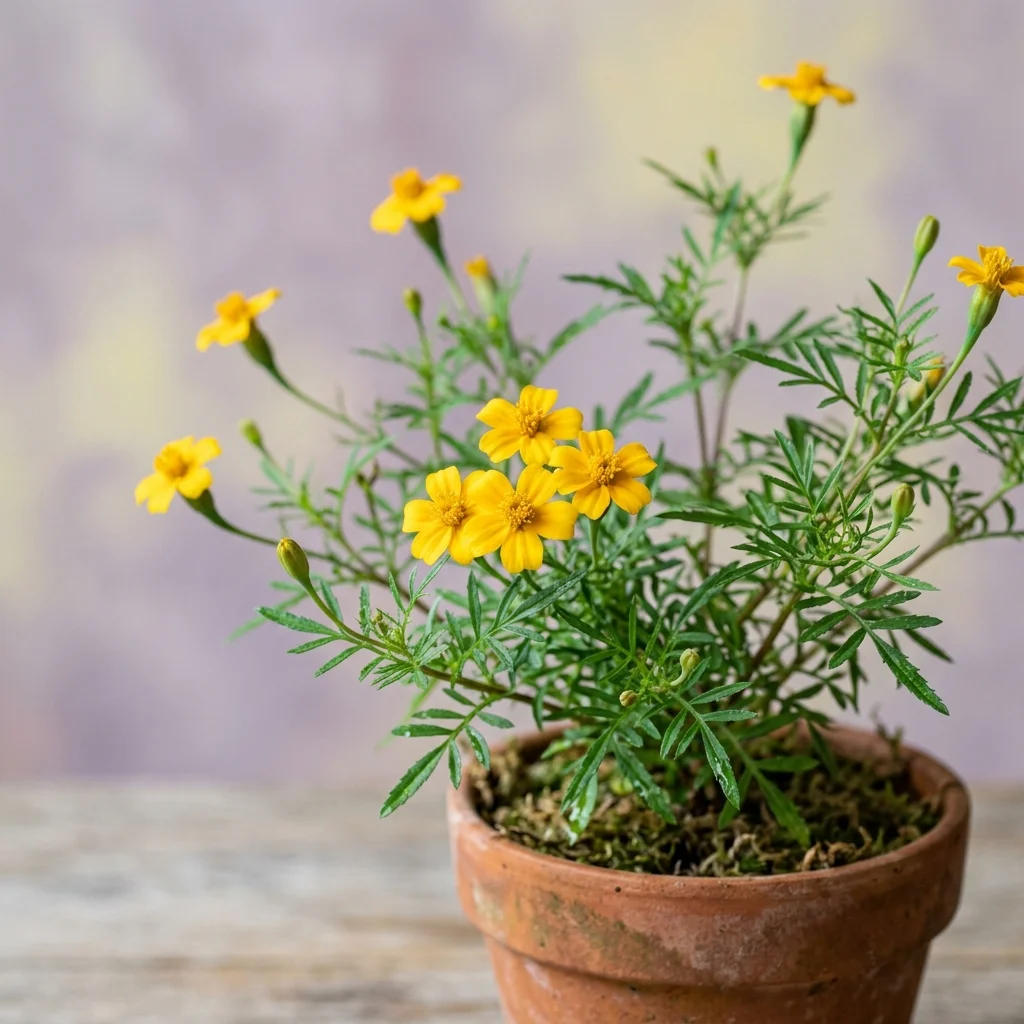
How to Identify Sweet Marigold
Sweet Marigold (Tagetes lucida) is a remarkable botanical species widely appreciated for its unique aesthetic and structural appeal. Recognizing its definitive visual traits is key to distinguishing it from other similar plants.
-
✔
Key Visual Features: Upright, bushy growth with smooth, un-lobed, lance-shaped, bright green leaves (unlike the highly dissected leaves of standard marigolds). Produces loose clusters of small, bright golden-yellow, five-petaled flowers.
-
✔
Color Variations: Bright, solid green foliage with vibrant yellow-gold blossoms.
-
✔
Common Confusions: Because its leaves are smooth and entire, it looks nothing like standard ornamental marigolds. It is occasionally confused with tarragon, but its bright yellow autumn flowers are a definitive identifier.
Complete Care & Cultivation Guide
Follow our detailed scientific care guide to keep your Sweet Marigold thriving and gorgeous all year round.
Common Diseases & Treatment
Root Rot (Overwatering)
Symptoms: Leaves turn soft and yellow at the base, shrivel and drop prematurely, accompanied by a mushy root system and foul soil odor.
Foliage Rust
Symptoms: Small powdery orange or brown pustules appear on the linear leaves under humid, poorly ventilated indoor conditions.
Frequently Asked Questions
Q: Can I use Sweet Marigold instead of Tarragon?
A: Absolutely. In hot, humid climates where delicate French tarragon simply melts and dies, sweet marigold thrives and provides an almost identical, sweet anise-licorice flavor for cooking.
Q: Does Sweet Marigold survive the winter?
A: It is a tender perennial (hardy only to Zone 8). In colder climates, it will die back to the ground. You must heavily mulch the roots or grow it in a pot and bring it indoors before the first freeze.
Q: Are the flowers edible?
A: Yes, the bright yellow flowers are edible, possessing a slightly milder anise flavor than the leaves. They make a beautiful, spicy-sweet garnish for salads and desserts.
Q: How often should I water it?
A: It is highly drought-tolerant once established. Water it deeply when the top two inches of soil are dry, but never let it sit in soggy, waterlogged soil, which will cause root rot.