Thai Basil Care & Identification Guide
Thai Basil (Ocimum thrysiflora) is a stunning, robust culinary herb that defines the flavor of Southeast Asian cuisine with its powerful, spicy, anise-licorice punch. Noticeably hardier and more heat-tolerant than Italian sweet basil, it thrives in blazing sun and warm, humid conditions. With its striking deep purple stems, vibrant green leaves, and gorgeous clusters of magenta flowers, it is as beautiful in an ornamental border as it is essential in a simmering bowl of green curry.





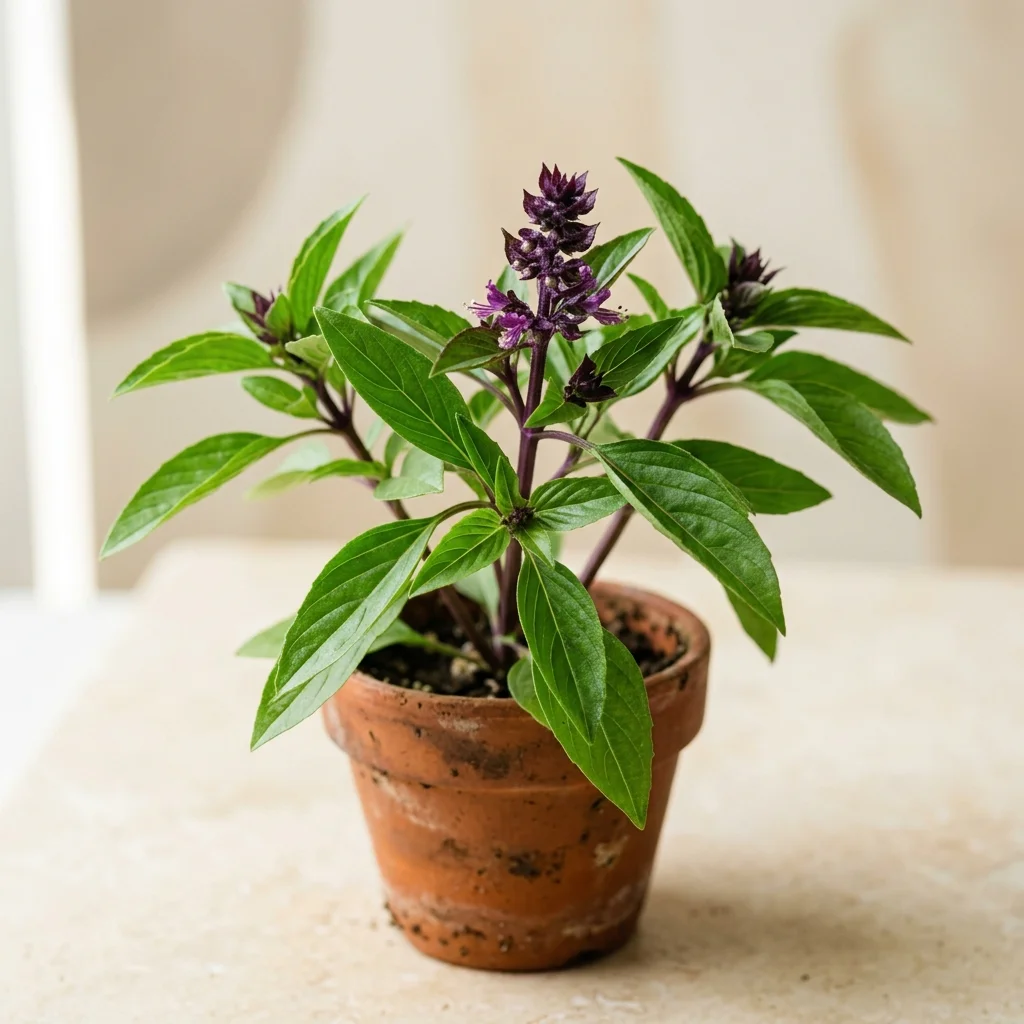
How to Identify Thai Basil
Thai Basil (Ocimum basilicum var. thyrsiflora) is a remarkable botanical species widely appreciated for its unique aesthetic and structural appeal. Recognizing its definitive visual traits is key to distinguishing it from other similar plants.
-
✔
Key Visual Features: Upright, bushy growth with striking dark purple, square stems. Leaves are narrower, more pointed, and firmer than sweet basil, with slightly serrated edges. Produces compact, highly ornamental spikes of deep purple and pink flowers.
-
✔
Color Variations: Bright green leaves contrasting sharply with dark purplish-black stems and vibrant magenta-purple floral bracts.
-
✔
Common Confusions: Often confused with sweet basil (which has larger, rounder, softer leaves, green stems, and a sweeter clove scent) or holy basil (which is fuzzier and has a much more medicinal, peppery aroma).
Complete Care & Cultivation Guide
Follow our detailed scientific care guide to keep your Thai Basil thriving and gorgeous all year round.
Common Diseases & Treatment
Root Rot (Overwatering)
Symptoms: Leaves turn soft and yellow at the base, shrivel and drop prematurely, accompanied by a mushy root system and foul soil odor.
Powdery Mildew
Symptoms: A dusty white or gray powdery coating spreads across the broad leaves, causing distorted growth in stagnant rooms.
Frequently Asked Questions
Q: Does Thai Basil wilt as easily as Sweet Basil?
A: No, Thai basil has thicker, sturdier leaves and firmer stems, making it significantly more resilient to heat and less prone to sudden wilting than delicate Italian sweet basil.
Q: Can I let Thai Basil flower?
A: Yes, the purple flowers are incredibly beautiful, edible, and highly attractive to bees. However, like all basils, allowing it to flower heavily will eventually slow leaf production and slightly toughen the foliage.
Q: How do you use Thai Basil in cooking?
A: Because its leaves are sturdier, Thai basil can withstand higher cooking temperatures. It is traditionally tossed into hot curries, stir-fries, and pho right at the end of the cooking process to release its spicy, anise-like flavor.
Q: Does Thai Basil survive the winter?
A: No, it is a frost-tender tropical annual. It will die completely at the first sign of frost. You must harvest all remaining leaves or bring the pot indoors to a very warm, bright window before winter.