Wild Thyme Care & Identification Guide
Wild Thyme (Thymus serpyllum), often called creeping thyme or mother-of-thyme, is an incredibly resilient, low-growing evergreen subshrub that forms a dense, intensely aromatic, and walkable carpet of greenery. Native to the rocky, dry scrublands of Europe, it demands baking sun and excellent drainage. Bursting into a spectacular sea of vibrant pink or purple flowers in mid-summer, it is the ultimate, drought-tolerant lawn alternative, perfect for planting between stepping stones where every footstep releases a cloud of savory herbal fragrance.





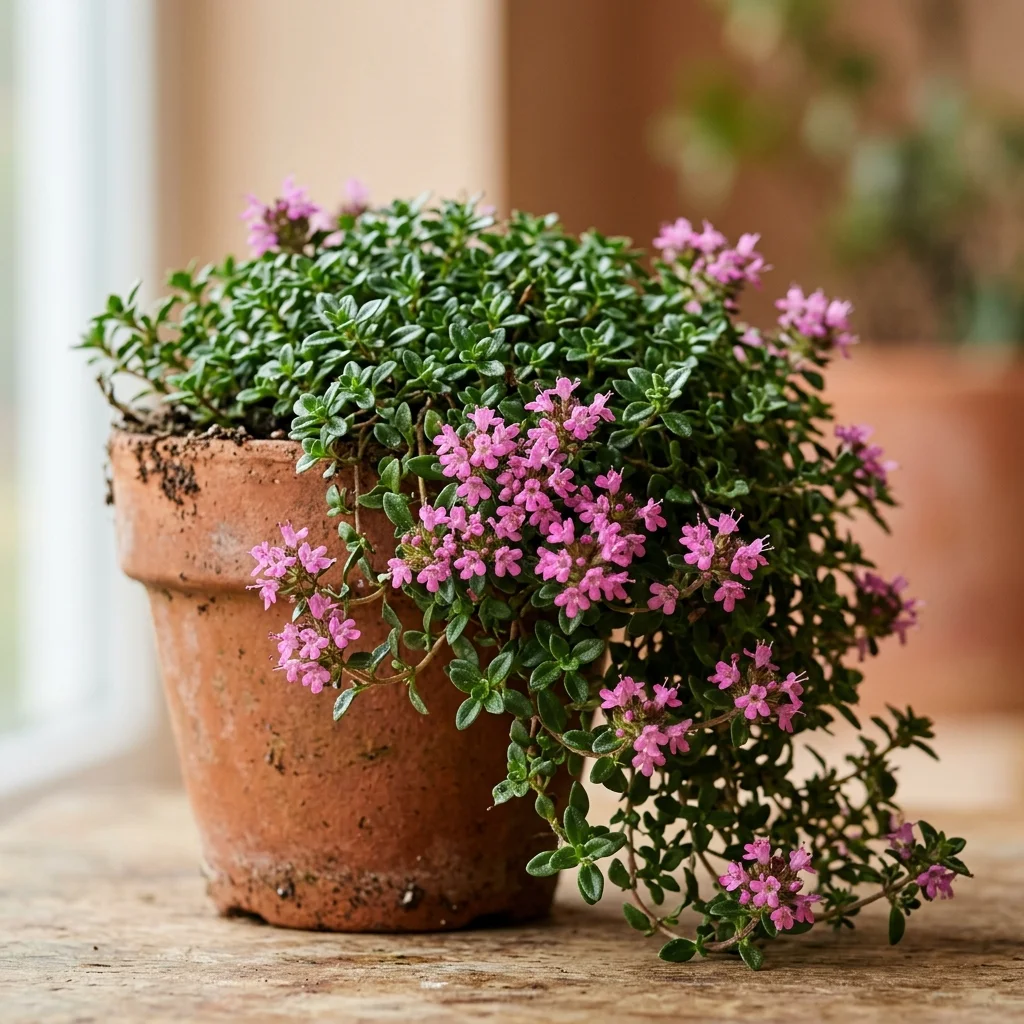
How to Identify Wild Thyme
Wild Thyme (Thymus serpyllum) is a remarkable botanical species widely appreciated for its unique aesthetic and structural appeal. Recognizing its definitive visual traits is key to distinguishing it from other similar plants.
-
✔
Key Visual Features: A completely prostrate, creeping mat of woody stems that root as they spread. Leaves are incredibly tiny, oval, and smooth-edged. Produces dense, globe-like clusters of tiny, vibrant pink, purple, or magenta flowers that completely cover the foliage.
-
✔
Color Variations: Dark green, sometimes slightly hairy, tiny leaves. When in bloom, the entire plant turns into a vibrant, solid carpet of magenta or lilac.
-
✔
Common Confusions: Often confused with common culinary thyme (which grows in upright, bushy mounds) or creeping sedums (which have thick, fleshy succulent leaves and lack the potent, savory thyme aroma).
Complete Care & Cultivation Guide
Follow our detailed scientific care guide to keep your Wild Thyme thriving and gorgeous all year round.
Common Diseases & Treatment
Root Rot (Overwatering)
Symptoms: Leaves turn soft and yellow at the base, shrivel and drop prematurely, accompanied by a mushy root system and foul soil odor.
Foliage Rust
Symptoms: Small powdery orange or brown pustules appear on the linear leaves under humid, poorly ventilated indoor conditions.
Frequently Asked Questions
Q: Can I really walk on Wild Thyme?
A: Yes! It is incredibly tough and handles moderate, occasional foot traffic beautifully. When stepped on, the bruised leaves release a wonderful, savory aroma, making it ideal for planting between garden pavers.
Q: What kind of soil does Wild Thyme need?
A: It requires poor, rocky, sandy, and exceptionally well-draining soil. If planted in rich, heavy, or constantly wet garden loam, the center of the mat will rot, turn brown, and die out.
Q: Do I need to mow or prune Wild Thyme?
A: It never needs mowing, as it rarely grows taller than 2-3 inches. However, shearing off the dead flower heads with clippers after it blooms in mid-summer will keep the mat looking incredibly tidy and dense.
Q: Is Wild Thyme edible?
A: Yes, it is fully edible and shares the same savory flavor as common culinary thyme, though the tiny leaves and creeping, woody stems make it slightly more tedious to harvest for the kitchen.