Yarrow Care & Identification Guide
Yarrow (Achillea millefolium) is a legendary, rugged perennial herb deeply embedded in ancient mythology—reputed to have been used by Achilles to stanch the bleeding of his soldiers. A fierce, drought-tolerant survivor, it thrives in poor, rocky soil and intense sun, spreading rapidly via rhizomes. With its soft, incredibly finely cut, fern-like foliage and broad, flat-topped clusters of tightly packed flowers, it is an indispensable, low-maintenance staple for pollinator gardens and naturalized dryland meadows.





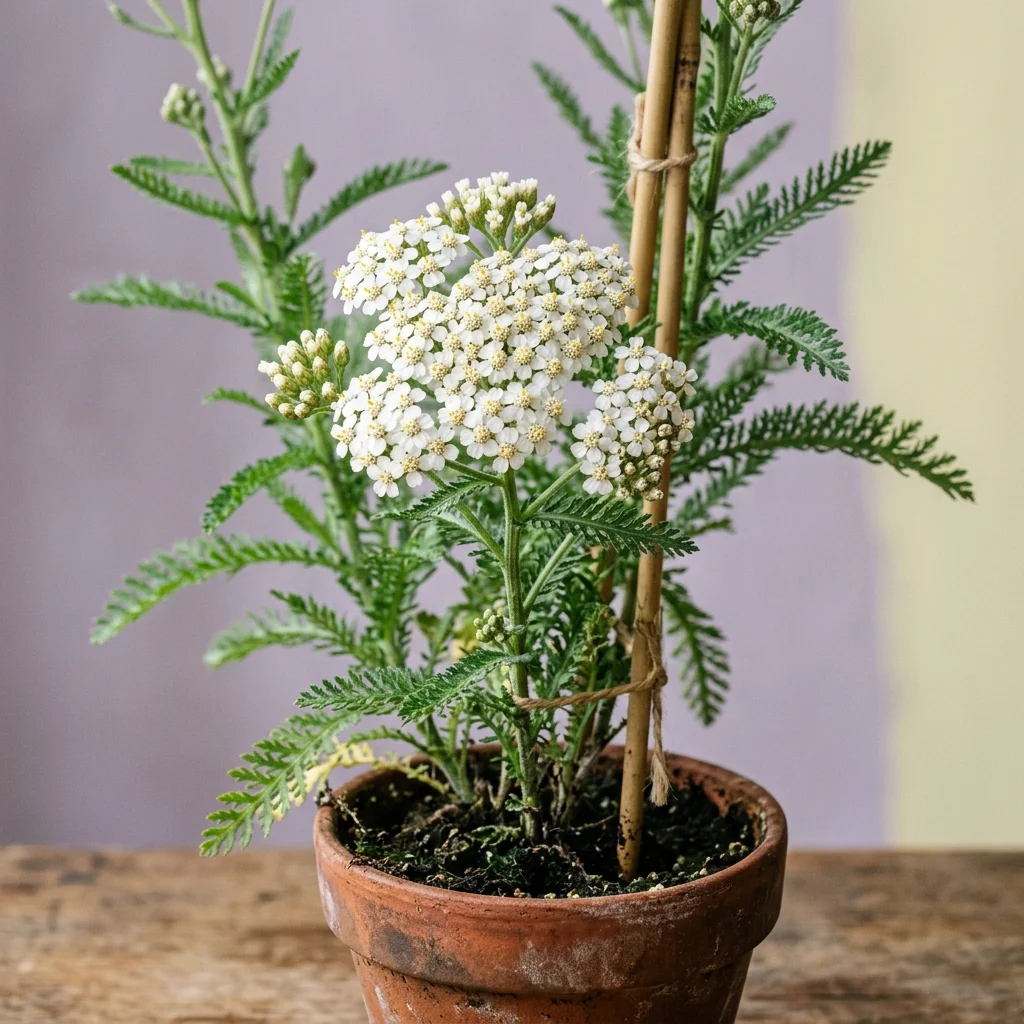
How to Identify Yarrow
Yarrow (Achillea millefolium) is a remarkable botanical species widely appreciated for its unique aesthetic and structural appeal. Recognizing its definitive visual traits is key to distinguishing it from other similar plants.
-
✔
Key Visual Features: Upright, stiff, slightly hairy stems bearing incredibly finely divided, lacy, feathery, fern-like leaves (giving rise to the name "millefolium" or thousand leaves). Produces dense, flat-topped terminal clusters (corymbs) of tiny, tightly packed, five-petaled flowers.
-
✔
Color Variations: Dark green to grayish-green, feathery foliage. Wild yarrow produces pure white flowers, but modern ornamental cultivars come in brilliant shades of yellow, red, pink, and orange.
-
✔
Common Confusions: Often confused with Queen Anne's Lace or highly toxic poison hemlock (which are much taller and have different floral structures) or tansy (which has yellow, petalless button flowers). Yarrow's ultra-fine, feathery leaves and spicy, pine-like aroma set it apart.
Complete Care & Cultivation Guide
Follow our detailed scientific care guide to keep your Yarrow thriving and gorgeous all year round.
Common Diseases & Treatment
Root Rot (Overwatering)
Symptoms: Leaves turn soft and yellow at the base, shrivel and drop prematurely, accompanied by a mushy root system and foul soil odor.
Foliage Rust
Symptoms: Small powdery orange or brown pustules appear on the linear leaves under humid, poorly ventilated indoor conditions.
Frequently Asked Questions
Q: Will Yarrow take over my garden?
A: Yes, it can be highly aggressive. It spreads rapidly via creeping underground rhizomes and prolific self-seeding. To control it, divide the clumps every few years and rigorously deadhead the fading flowers before they drop seed.
Q: Why is my Yarrow flopping over?
A: Yarrow thrives on neglect. If planted in rich, heavily fertilized garden soil, or if it doesn't receive full, blazing sun, it will grow weak, leggy, and flop completely onto the ground.
Q: How do I harvest Yarrow for medicinal use?
A: Harvest the aerial parts (the leaves and the flat flower heads) in mid-summer when the plant is in full bloom and the volatile oils are at their absolute peak. Hang them upside down in a dark place to dry.
Q: Does Yarrow require a lot of water?
A: No, it is exceptionally drought-tolerant once established. It prefers dry, poor, well-draining soil and will suffer from root rot or powdery mildew if kept constantly wet.