Bear's Paw Care & Identification Guide
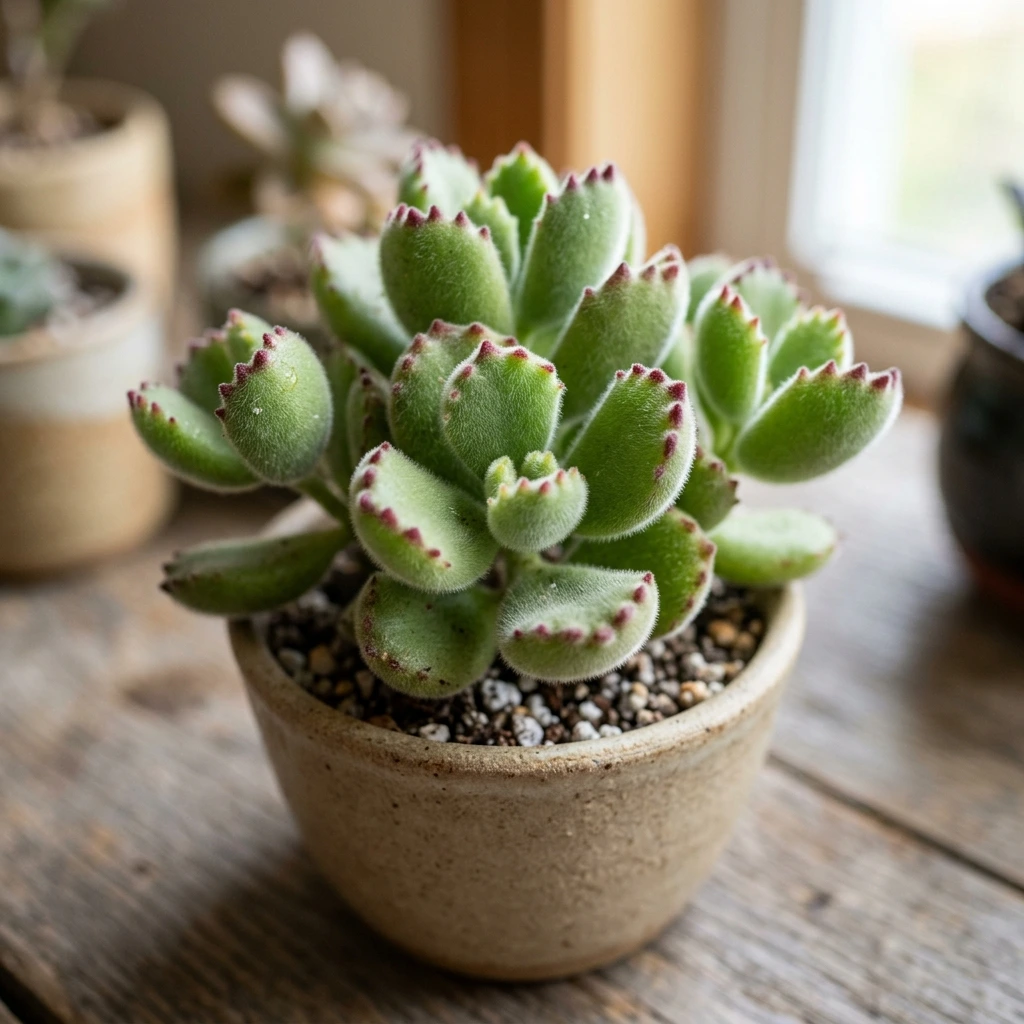
The Bear's Paw is an exceptionally cute, low-growing shrubby succulent native to South Africa. Famous for its thick, fuzzy, bell-shaped green leaves with prominent dark red teeth at the tips that look like tiny claws, it is a highly popular, slow-growing novelty houseplant. It is widely celebrated by botanists for its distinct environmental adaptability and structural appeal.





How to Identify Bear's Paw
An exceptionally cute, low-growing shrubby succulent with fleshy, fuzzy leaves that perfectly resemble small bear paws.
-
✔
Key Visual Features: Opposite, obovate, thick succulent leaves covered in soft, velvety white hairs, featuring 3 to 10 prominent red-purple teeth at the tips.
-
✔
Color Variations: Bright yellowish-green foliage with contrasting deep red or chocolate-brown tips ('claws').
-
✔
Common Confusions: Unique look, but sometimes confused with other Cotyledon species, easily recognized by the fuzzy hair cover and claw-like red teeth.
Complete Care & Cultivation Guide
Follow our detailed scientific care guide to keep your Bear's Paw thriving and gorgeous all year round.
Common Diseases & Treatment
Leaf Drop (High humidity / Overwatering)
Symptoms: Plump fuzzy leaves turn slightly yellow and drop off at the slightest touch without drying.
Powdery Mildew (Fungal)
Symptoms: A white, dusty, powdery coating appears on the fuzzy green leaves, causing distortion.
Frequently Asked Questions
Why are the teeth on my Bear's Paw turning red?
That is a great sign! The red 'claws' are caused by gentle sunlight and temperature drops (stress color). More bright, indirect morning sun will make the claws darker and highly contrasting.
Can I spray water on Bear's Paw leaves?
No. The thick velvety hairs (trichomes) capture water easily. If water stays on the leaves, it will block transpiration and trigger powdery mildew or leaf rot. Always water the soil directly.
How do I propagate Bear's Paw?
Unlike other succulents, Bear's Paw is difficult to grow from single leaves. Propagate using stem cuttings: cut a stem with at least 2 pairs of leaves, let it dry for 3 days, and plant in sandy succulent soil.
Is Bear's Paw safe for cats and dogs?
It contains cotyledontoxins, which are mildly toxic if chewed in large quantities. It may cause drooling or stomach upset in curious pets, so keep it out of their reach.