Bladderwort Care & Identification Guide
Utricularia, commonly known as Bladderworts, are highly unique carnivorous plants that possess the fastest trapping mechanism in the plant kingdom. Terrestrial species form a beautiful, delicate carpet of tiny green leaves on the damp soil surface, resembling moss. Underneath the soil, they grow a complex network of stolons equipped with microscopic, vacuum-sealed bladders. When soil microbes or tiny insects touch the trigger hairs, the bladder door snaps open in milliseconds, sucking the prey inside. It is widely celebrated by botanists for its distinct environmental adaptability and structural appeal.





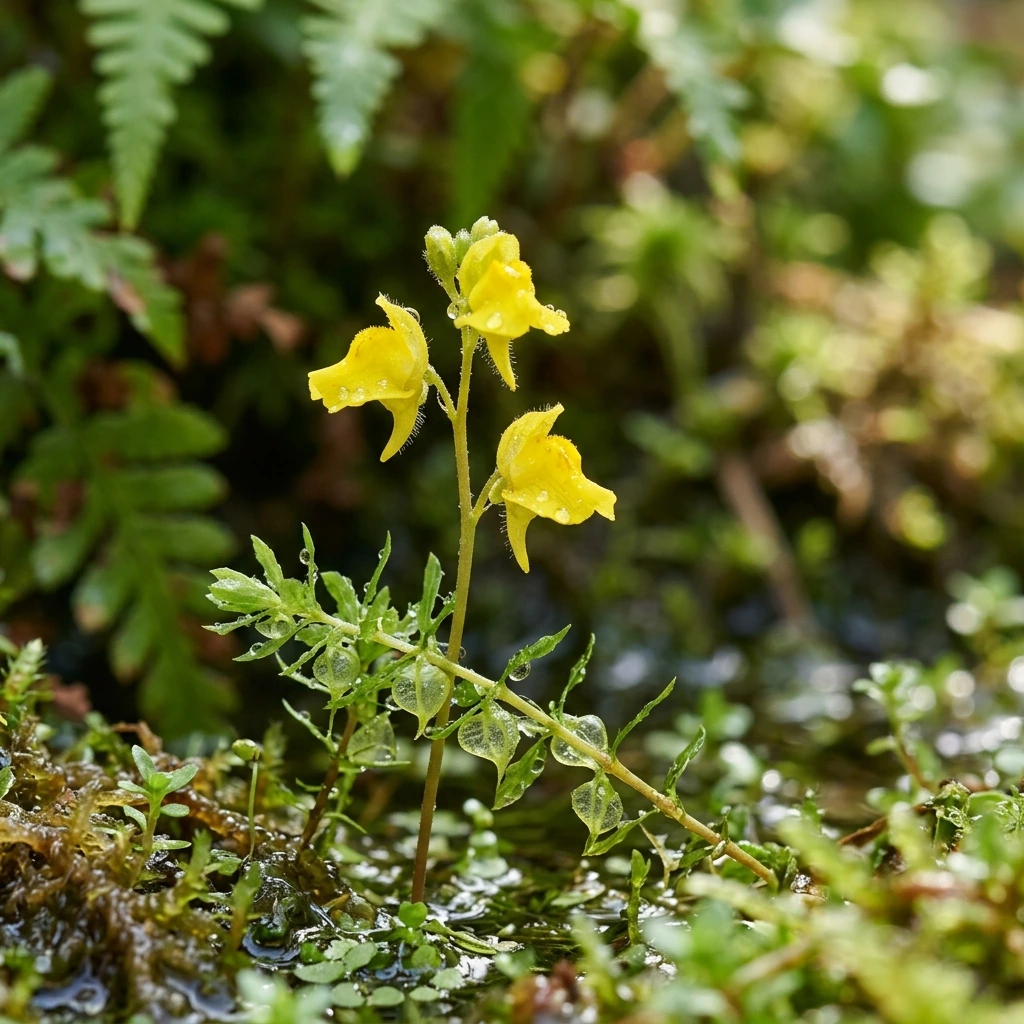
How to Identify Bladderwort
A delicate, moss-like carnivorous plant forming a dense carpet of tiny green leaves and producing exquisite, orchid-like flowers.
-
✔
Key Visual Features: Extremely small, spoon-shaped or thread-like leaves forming a dense mat; subterranean root-like stolons carrying tiny, transparent bladder traps; tall, wiry flower stalks.
-
✔
Color Variations: Bright grass-green foliage; flowers are highly varied, often resembling tiny yellow, white, or purple orchids.
-
✔
Common Confusions: Easily mistaken for ordinary moss or liverworts when not in flower, but can be distinguished by its distinct, tall orchid-like spurred blooms and underground bladder stolons.
Complete Care & Cultivation Guide
Follow our detailed scientific care guide to keep your Bladderwort thriving and gorgeous all year round.
Common Diseases & Treatment
Drying Out (Leaf Dieback)
Symptoms: The delicate, moss-like green carpet quickly turns yellow, shrivels, and dries up due to lack of moisture.
Algae Infestation
Symptoms: Green, slimy algae grows over the damp soil surface and suffocates the tiny Bladderwort leaves.
Frequently Asked Questions
Where are the traps of the terrestrial Bladderwort?
Unlike other carnivorous plants, Bladderwort traps are hidden completely underground or underwater. They consist of thousands of microscopic bladder traps attached to root-like stolons in the damp soil.
How fast is the Bladderwort trap?
The trap is incredibly fast, taking less than a millisecond to operate. It uses negative pressure to suck in water and tiny organisms like protozoa or flea larvae when trigger hairs are touched.
Why is my Bladderwort not flowering?
Bladderworts need consistent, bright indirect light and high moisture levels to bloom. When happy, they produce beautiful, orchid-like flowers on tall, delicate stalks that rise above the moss-like leaves.
Is Utricularia safe around household pets?
Yes, Bladderworts are 100% non-toxic and safe for pets. They are physically very small and look like ordinary moss, so keep them protected from curious cats who might dig up the wet soil.