Butterwort Care & Identification Guide
Pinguicula, commonly known as Butterworts, are delightful carnivorous plants with a rosette of fleshy, succulent-like leaves. The leaf surfaces are covered in microscopic, glue-secreting glands that give them a greasy feel. Tiny gnats and fruit flies stick to the leaves, and the plant secretes digestive enzymes to absorb nutrients. In spring, they produce stunning, violet-like flowers on tall stalks. It is widely celebrated by botanists for its distinct environmental adaptability and structural appeal.





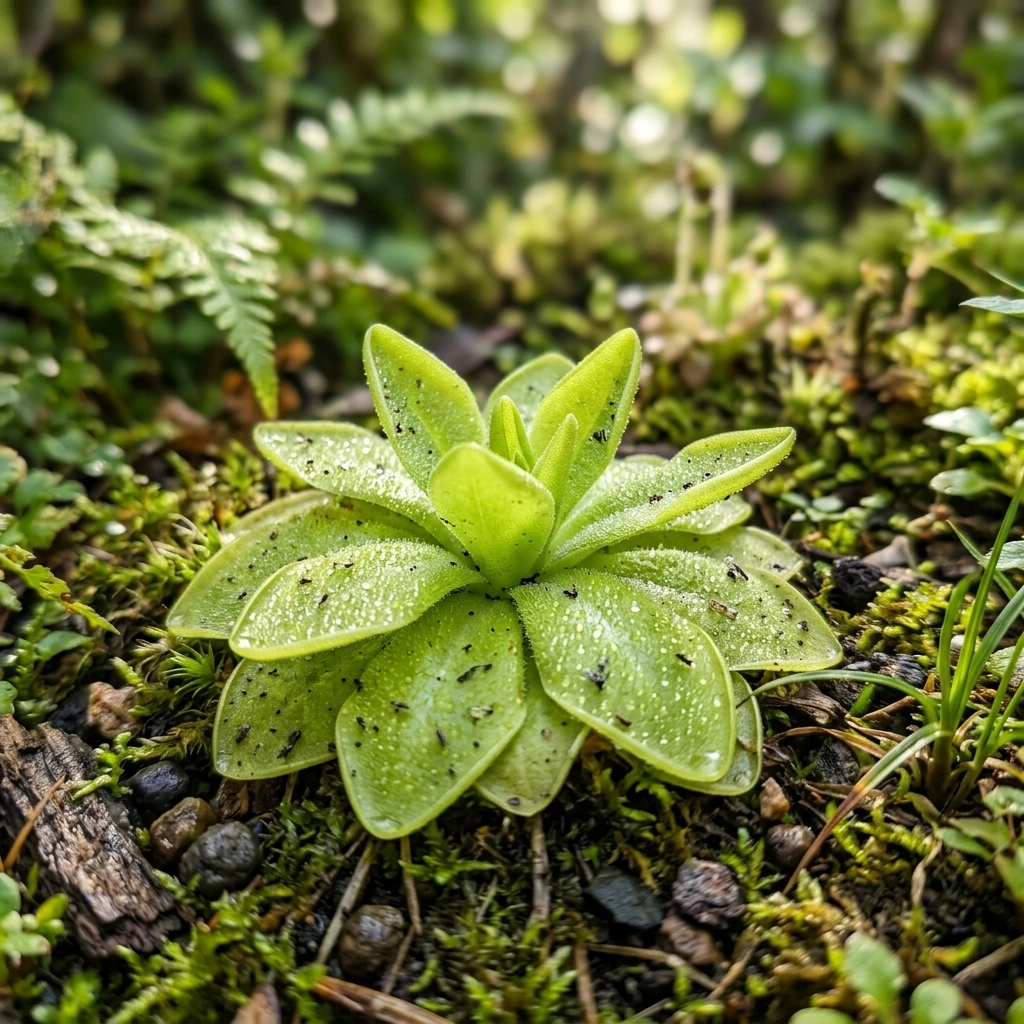
How to Identify Butterwort
A charming, rosette-forming carnivorous plant that resembles a small pale-green succulent, producing delicate purple flowers.
-
✔
Key Visual Features: Rosette of flat, fleshy, smooth-edged leaves with a sticky, greasy upper surface; single long flower stems holding a spurred flower.
-
✔
Color Variations: Light lime green, pale yellow, or beautiful pinkish-purple foliage under high light; flowers are typically purple, pink, or white.
-
✔
Common Confusions: Often confused with true succulents like Echeveria due to the rosette shape, but can be distinguished by the sticky, greasy surface of the leaves and spurred flowers.
Complete Care & Cultivation Guide
Follow our detailed scientific care guide to keep your Butterwort thriving and gorgeous all year round.
Common Diseases & Treatment
Crown Rot
Symptoms: The center of the leaf rosette turns brown, soft, and mushy, and leaves detach easily at the base.
Succulent Phase Leaf Rot
Symptoms: Lower leaves rot during winter due to cold temperatures combined with wet soil.
Frequently Asked Questions
How does a Butterwort catch insects?
Butterwort leaves are covered in thousands of tiny, invisible glands that secrete sticky mucilage, making the leaf feel greasy. Small insects (like fungus gnats) land on the leaf, get stuck, and are digested by enzymes.
Why is my Butterwort changing its leaf shape in winter?
Pinguicula (particularly Mexican species) are dimorphic. In winter, they enter a dry phase and grow a tight rosette of small, non-sticky succulent leaves. Reduce watering during this time until active carnivorous growth returns in spring.
Can I use tap water for my Butterwort?
No, Butterworts are highly sensitive to minerals. You must use distilled water, reverse osmosis water, or clean rainwater. Mineral buildup from tap water will turn leaf tips yellow and rot the root system.
Is the Butterwort toxic to household pets?
Pinguicula is completely non-toxic to cats, dogs, and humans. Their greasy leaves pose no threat if licked, but the leaves are very brittle and easily snapped, so keep them safe from curious paws.