Chinese Evergreen Care & Identification Guide
The Chinese Evergreen is a lush, highly ornamental plant loved for its spectacularly patterned leaves. Incredibly adaptable and low-maintenance, it brings a rich tropical vibe. Native to humid Asian rainforests, it appreciates warmth and humidity. It is widely celebrated by botanists for its distinct environmental adaptability and structural appeal.





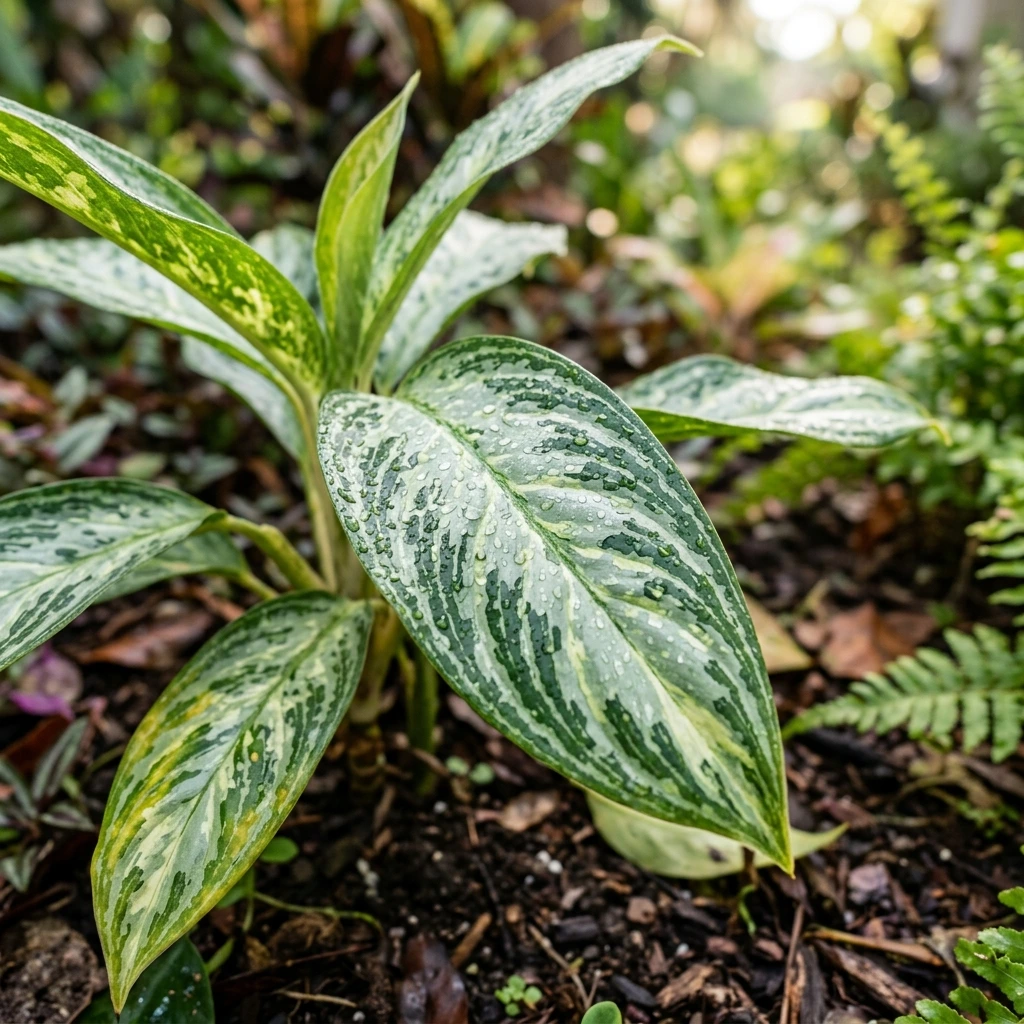
How to Identify Chinese Evergreen
Aglaonema commutatum is a compact foliage plant with large, glossy, oval leaves carried on thick, succulent upright stems.
-
✔
Key Visual Features: Oblong-lanceolate leaves with diverse silver, cream, pink, or red variegation, growing in a rosette pattern on fleshy stems.
-
✔
Color Variations: Rich green base highly variegated with silver-gray, creamy white, or vibrant pink/red splashes.
-
✔
Common Confusions: Sometimes confused with Dieffenbachia (Dumb Cane), but Aglaonema leaves are typically smaller, grow on shorter stems, and exhibit silver-gray rather than yellow variegation.
Complete Care & Cultivation Guide
Follow our detailed scientific care guide to keep your Chinese Evergreen thriving and gorgeous all year round.
Common Diseases & Treatment
Cold Damage
Symptoms: Leaves turn greyish-brown, become soft and soggy, and drop rapidly after exposure to cold air or drafts.
Fungal Stem Rot
Symptoms: Stem bases turn mushy and dark brown; leaves turn yellow, droop and collapse.
Frequently Asked Questions
Why are the edges of my Chinese Evergreen leaves turning brown?
This is usually caused by low humidity or dry air. Mist the plant regularly, use a room humidifier, or place the pot on a wet pebble tray to improve air moisture.
What are the green-and-white flower spikes growing on my Aglaonema?
These are inflorescences (spathes) typical of aroids. They are not highly ornamental and consume a lot of energy. You can snip them off to keep leaves lush.
How do I keep the pink or red colors on my variegated Chinese Evergreen vibrant?
Colorful cultivars need plenty of bright, indirect sunlight to maintain their red or pink pigments. Keep them near a bright, shaded window.
What is the best watering schedule for a Chinese Evergreen?
Water when the top 2 inches of soil are dry. In winter, reduce watering and let the soil dry out slightly more. Never let the pot sit in standing water.