Chinese Money Plant Care & Identification Guide
Famous for its unique round, pancake-like leaves that resemble green coins, the Chinese Money Plant (or UFO Plant) is a beloved modern classic. Native to the mountainous regions of Yunnan, China, it propagates easily by producing small 'pup' offsets. It is widely celebrated by botanists for its distinct environmental adaptability and structural appeal.




How to Identify Chinese Money Plant
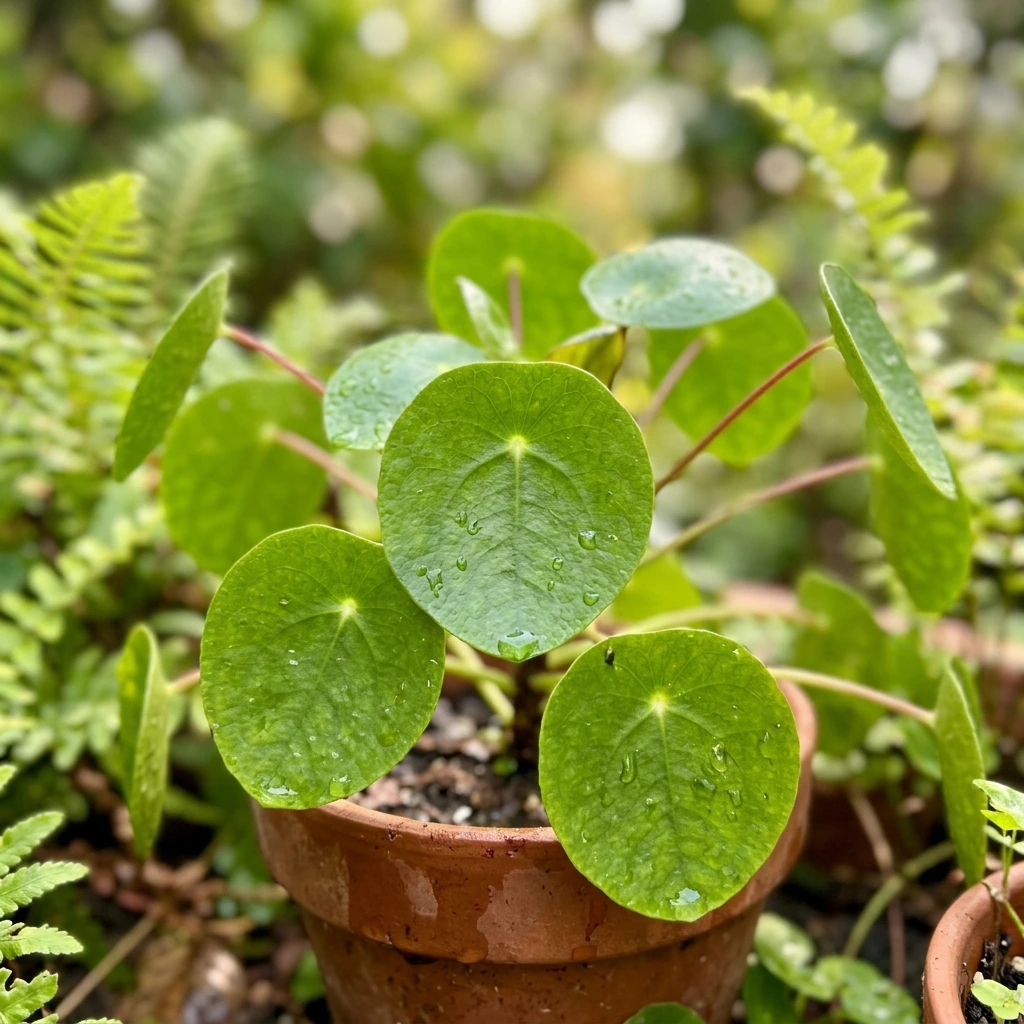
Pilea peperomioides features smooth, circular, bright green leaves that attach centrally to long, slender reddish petioles.
-
✔
Key Visual Features: Perfectly round waxy leaves resembling green coins, growing radially from a single upright central stem.
-
✔
Color Variations: Bright glossy lime-green to rich emerald green.
-
✔
Common Confusions: Frequently confused with Peperomia polybotrya (Raindrop Peperomia), but Pilea leaves are thinner, perfectly round rather than teardrop-shaped, and grow on longer, thinner stems.
Complete Care & Cultivation Guide
Follow our detailed scientific care guide to keep your Chinese Money Plant thriving and gorgeous all year round.
Common Diseases & Treatment
Root Rot (Overwatering)
Symptoms: Leaves turn yellow, lose their firm texture, and drop off; roots turn mushy and black.
Powdery Mildew
Symptoms: A white, dusty fungal coating appears on the round green leaves, leading to leaf curling.
Frequently Asked Questions
Why are my Chinese Money Plant leaves curling inward like cups?
Leaf curling (cupping) is usually a response to heat stress, low humidity, or watering issues. Move it to a cooler spot away from direct hot sun and mist it.
What are the tiny white spots on the back of my Pilea leaves?
These are completely normal. They are mineral stomata (pores) through which the plant expels excess mineral salts from tap water. They are harmless and can be wiped away.
How do I propagate the small baby plants (pups) growing in the soil?
Once the pups are about 2-3 inches tall, gently cut their connecting rhizome 1 inch beneath the soil using a clean knife. Pot them directly in moist potting soil.
Why is my Pilea losing its lower leaves?
Losing occasional lower leaves is a normal aging process as the plant grows taller. However, rapid leaf drop can indicate overwatering or sudden cold drafts.