Dumb Cane Care & Identification Guide
The Dumb Cane is a highly striking, fast-growing tropical foliage plant native to Central and South America. Famous for its broad, lush, highly variegated leaves featuring elegant marble patterns of white, cream, and green, it is a magnificent room-decor piece. It is widely celebrated by botanists for its distinct environmental adaptability and structural appeal.





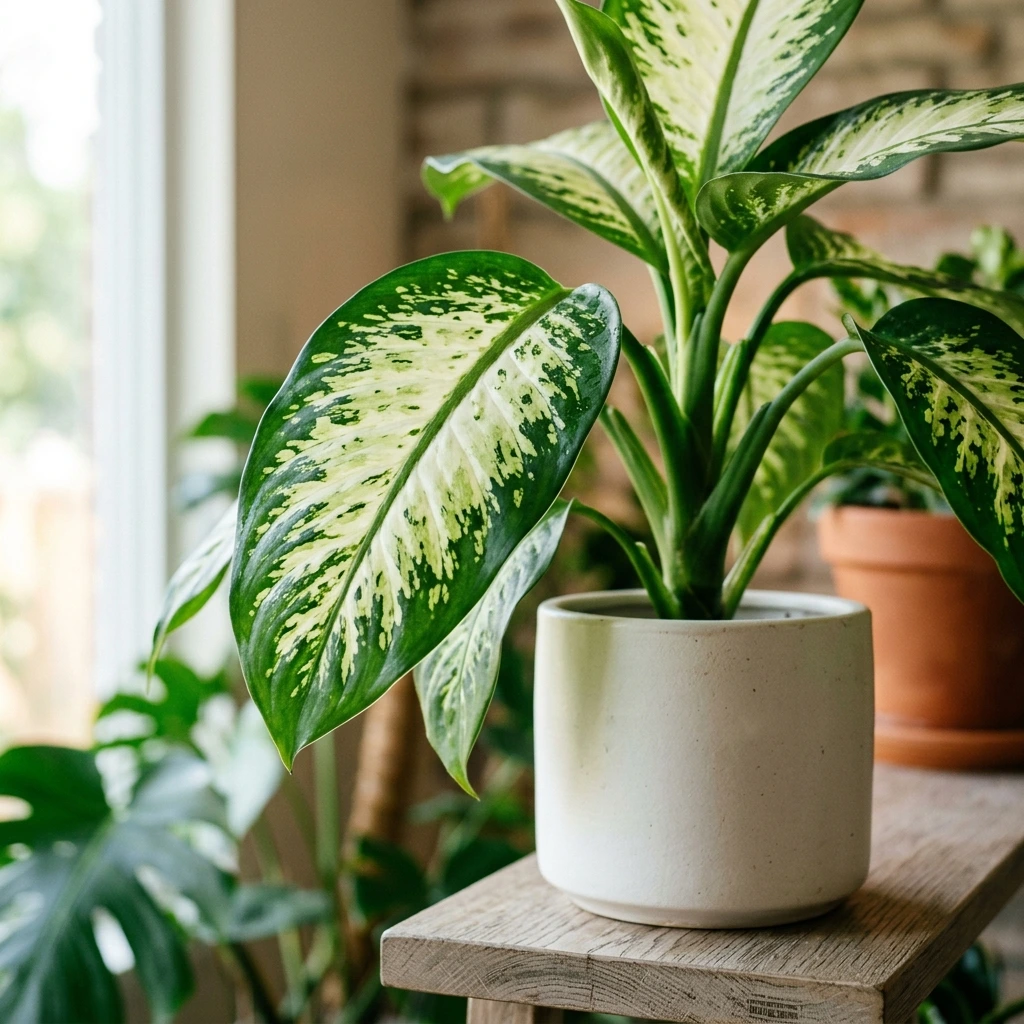
How to Identify Dumb Cane
A large, lush foliage plant with broad, showy, highly variegated leaves growing on thick, fleshy upright stems.
-
✔
Key Visual Features: Broad, oblong leaves with prominent central variegation patterns, growing alternately on sturdy, reed-like fleshy stalks.
-
✔
Color Variations: Deep forest-green borders with a highly contrasting center of creamy white, yellow, or pale green marbling.
-
✔
Common Confusions: Sometimes confused with Aglaonema (Chinese Evergreen), but Dumb Cane has much larger, broader leaves and thicker, upright cane-like stems.
Complete Care & Cultivation Guide
Follow our detailed scientific care guide to keep your Dumb Cane thriving and gorgeous all year round.
Common Diseases & Treatment
Stem Rot & Leaf Meltdown
Symptoms: Fleshy stalks turn translucent, yellow, and mushy; leaves drop and decay.
Spider Mites Infestation
Symptoms: Fine webbing under leaves, speckled yellow spots, and dusty appearance on foliage.
Frequently Asked Questions
Why are my Dumb Cane leaves turning yellow?
Lower leaves turn yellow and drop as part of its natural aging process to form a cane trunk. However, if many leaves turn yellow simultaneously, it is a sign of severe overwatering or keeping the plant in dry cold drafts.
Is Dumb Cane safe for homes with cats and dogs?
No, Dumb Cane is highly toxic to both cats and dogs. Ingestion will cause severe drooling, mouth pain, swelling, and difficulty swallowing. Always keep it in a secure place out of their reach.
How much light does Dumb Cane need?
Dumb Cane thrives in bright, indirect light. Direct hot sunlight will scorch the leaves and fade its beautiful variegation, while low light will slow its growth and make the leaves lose their vibrant color patterns.
Why is my Dumb Cane 'crying' or dripping water from leaf tips?
This is a natural process called guttation. When the soil is very wet, the plant's roots absorb water and release excess moisture through tiny pores on the leaf tips. It is harmless, but serves as a warning that you might be watering a bit too frequently.