Elephant Ear Care & Identification Guide
The Elephant Ear is a spectacular, large-leafed tropical perennial native to the humid forests of East and Southeast Asia. Highly prized for its dramatic, upright, shield-shaped leaves that can grow up to 3 feet long, it brings an instant jungle-like grandeur to any room. It acts as a stunning architectural centerpiece, thriving in warm, humid spaces. It is widely celebrated by botanists for its distinct environmental adaptability and structural appeal.





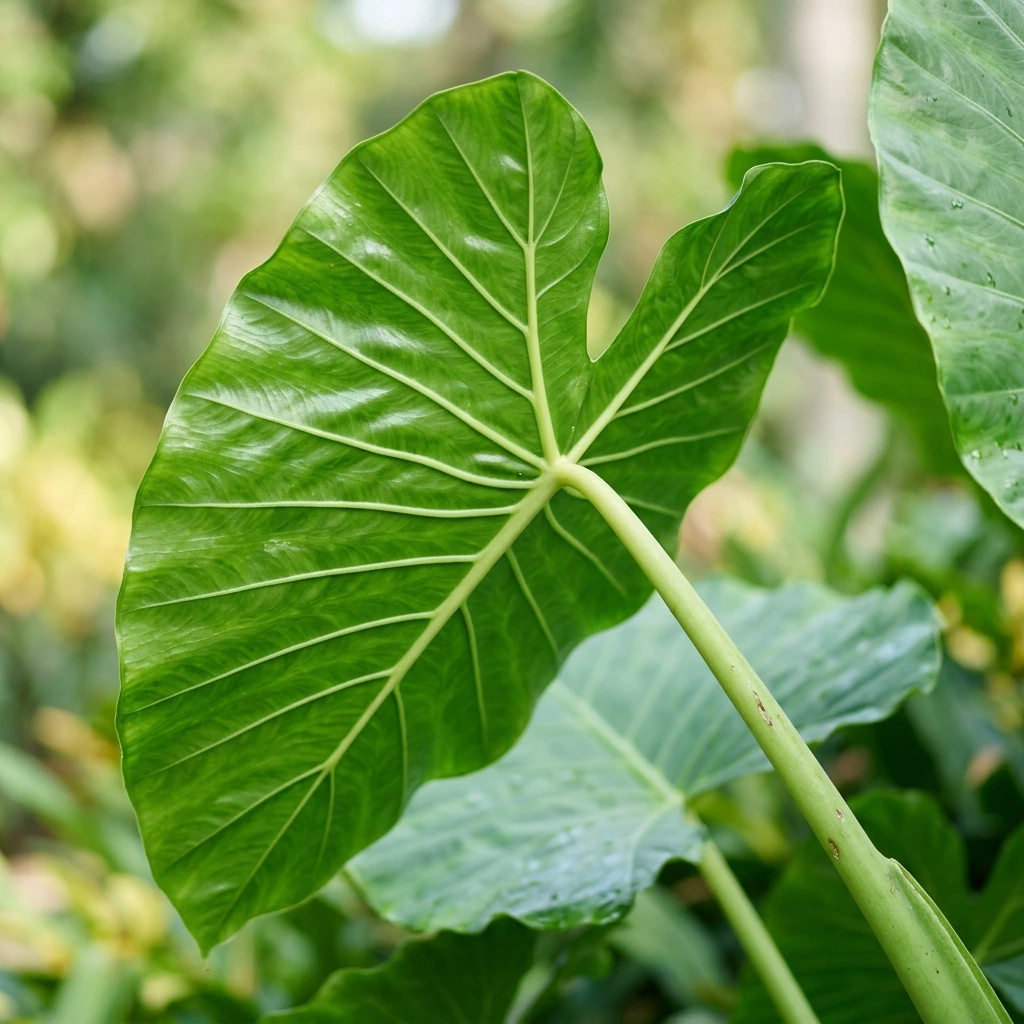
How to Identify Elephant Ear
A majestic tropical plant featuring giant, upright, heart-shaped green leaves that resemble the ears of an elephant.
-
✔
Key Visual Features: Thick, upright, rhizomatous stems; massive, shield-shaped (peltate) leaves with prominent, light green veins.
-
✔
Color Variations: Vibrant, glossy lime-green to emerald-green foliage; thick green leaf stalks.
-
✔
Common Confusions: Distinguished from Colocasia by its leaf position: Alocasia leaves point upwards toward the sky, whereas Colocasia leaves droop downwards toward the earth.
Complete Care & Cultivation Guide
Follow our detailed scientific care guide to keep your Elephant Ear thriving and gorgeous all year round.
Common Diseases & Treatment
Bacterial Leaf Spot (Xanthomonas)
Symptoms: Dark brown, water-soaked spots with bright yellow halos on the massive leaves.
Pythium Corm Rot
Symptoms: Main stem base becomes soft, slimy, and black; leaves yellow and collapse.
Frequently Asked Questions
Why is my Elephant Ear plant 'crying' (dripping water from leaf tips)?
This is a natural process called 'guttation'. When the soil is moist, the roots absorb water and release excess moisture through tiny pores on the leaf tips. It is completely normal, but it can be a sign that the soil is highly saturated, so let the topsoil dry slightly.
Why are the lower leaves of my Elephant Ear turning yellow and dying?
As the plant grows, it naturally sheds its older, outer leaves to direct energy toward producing massive new leaves from the center. As long as new leaves are emerging, losing an occasional lower leaf is normal. Cut it off at the base.
Does Alocasia odora go dormant?
Yes, Alocasias can go dormant in winter if light levels drop or temperatures fall below 12°C (54°F). If it loses its leaves, do not throw it away. Keep the corm dry and warm, and it will sprout fresh leaves in spring.
Is the Elephant Ear toxic to dogs and cats?
Yes, all parts of Alocasia contain insoluble calcium oxalate crystals. Chewing the leaves releases these crystals, causing immediate burning of the mouth, swollen tongue, drooling, and difficulty swallowing. Keep it out of reach of pets.