False Shamrock Care & Identification Guide
False Shamrock is a spectacular, bulbous herbaceous perennial native to Brazil. Renowned for its highly dynamic, deep-purple triangular leaves that resemble a swarm of butterflies, it exhibits 'nyctinasty'—its leaves open wide in response to daytime light and fold down elegantly at night. In spring and summer, it produces delicate, trumpet-shaped pale pink or lavender flowers that contrast beautifully with the dark foliage. It is widely celebrated by botanists for its distinct environmental adaptability and structural appeal.





How to Identify False Shamrock
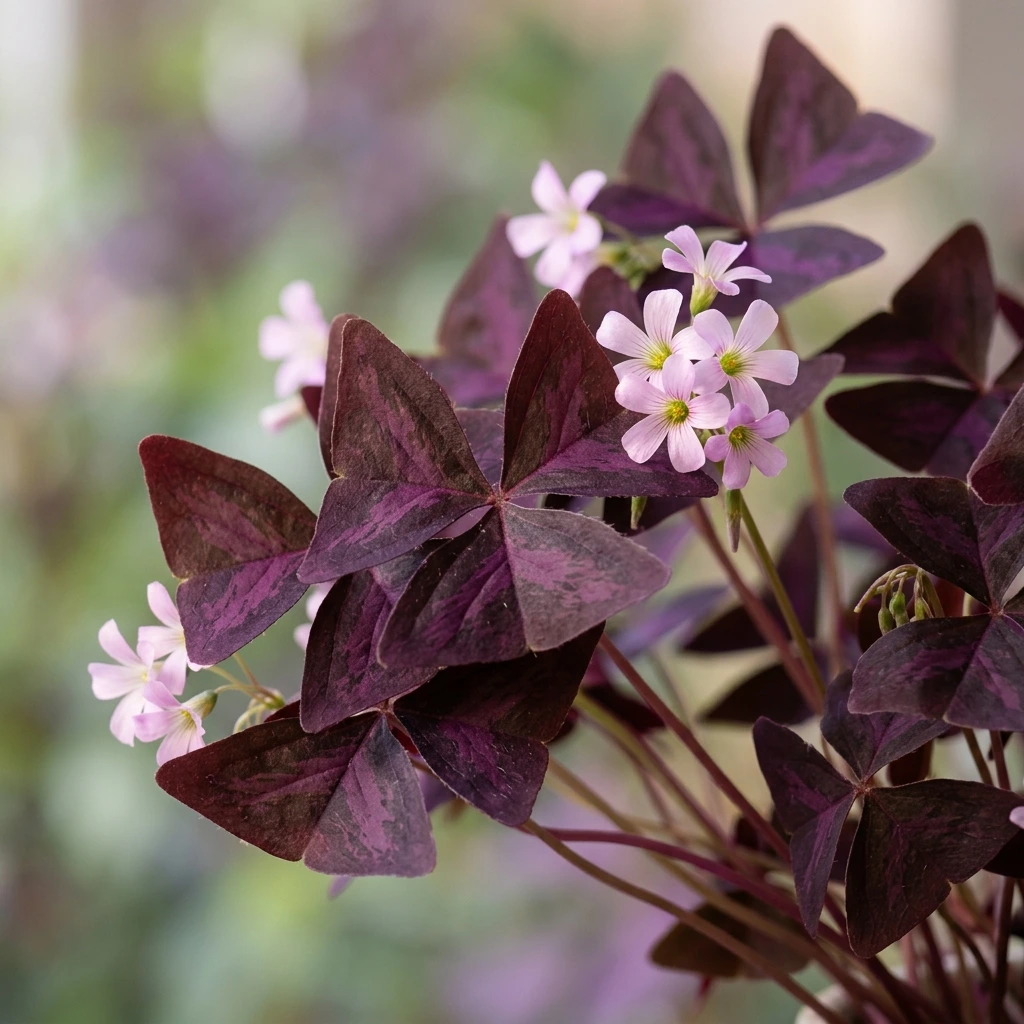
A striking bulbous plant featuring deep purple, trifoliate leaves resembling shamrocks, and delicate pale pink blossoms.
-
✔
Key Visual Features: Three symmetrical triangular leaflets arranged in a clover-like shape; exhibits dramatic day-night opening and folding movement.
-
✔
Color Variations: Rich, deep plum or maroon-purple foliage with a darker triangular mark in the center; pale pinkish-white flowers.
-
✔
Common Confusions: May be confused with traditional green clover or shamrocks, but easily distinguished by its triangular purple leaflets and deep crimson underside.
Complete Care & Cultivation Guide
Follow our detailed scientific care guide to keep your False Shamrock thriving and gorgeous all year round.
Common Diseases & Treatment
Bulb Rot
Symptoms: Stems turn mushy and collapse at the soil line, and bulbs become soft, watery, and foul-smelling.
Rust Fungus
Symptoms: Bright orange or yellow powdery spots (pustules) appear on the undersides of the purple leaves.
Frequently Asked Questions
Why do my Oxalis leaves close up during the day?
Oxalis leaves close at night (nyctinasty) and also when they are stressed by too much heat, bright direct light, or severe underwatering. If they close in the day, check if the plant is receiving hot direct sunlight or needs water.
My False Shamrock is losing all its leaves and dying in winter. What should I do?
Do not throw it away! Oxalis triangularis naturally goes into dormancy once or twice a year, especially in winter. Stop watering, cut back dead foliage, and place the pot in a cool, dark room. After 4-8 weeks, resume light watering and bright light to trigger fresh new growth.
How do I propagate False Shamrock?
Oxalis is propagated by dividing its tiny, pinecone-like underground rhizomes (bulbs). When the plant is dormant or during spring repotting, gently separate the bulbs and plant them 1 inch deep in fresh potting soil.
Is False Shamrock toxic to cats and dogs?
Yes, Oxalis triangularis contains soluble calcium oxalates and oxalic acid. While its sour taste usually deters pets, ingestion of large amounts can lead to drooling, vomiting, diarrhea, and potentially acute kidney damage. Keep it out of reach.